 English
  Français
 Español


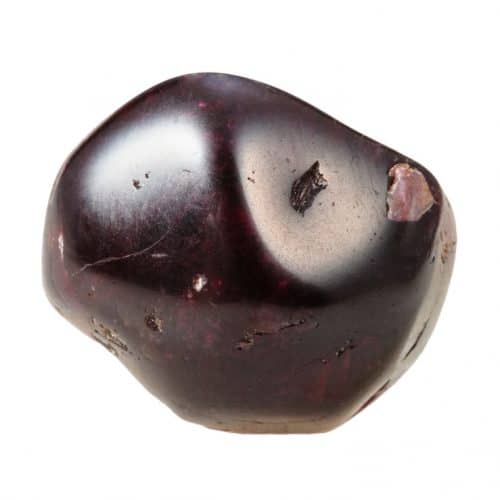
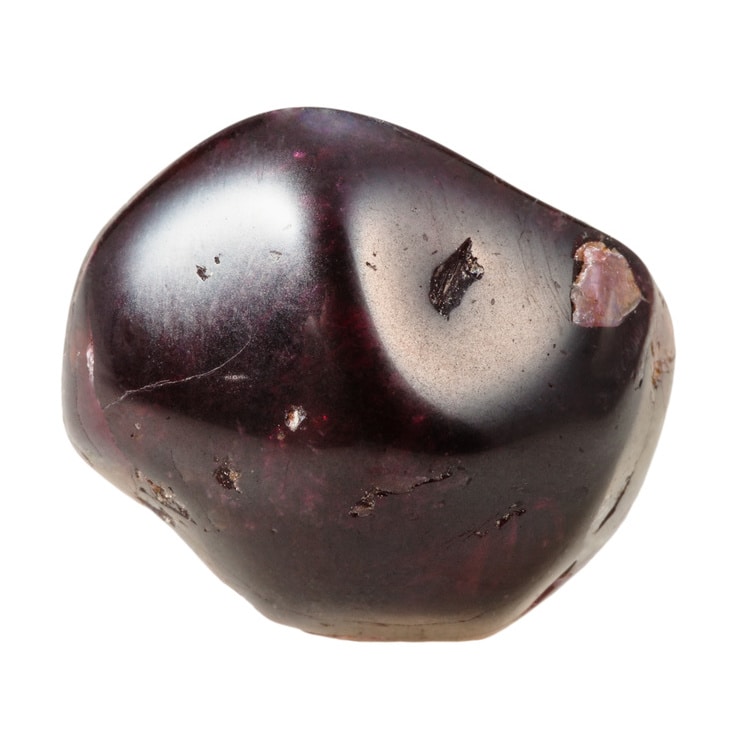
Garnet is a remarkable natural stone. Known for its blazing red color, it also comes in a range of varieties displaying superb yellow, orange and green hues. Its virtues supporting health and psychological balance make it a precious resource. The stone of blood, of the heart, of strength and passion, garnet is a mineral with must-have benefits.
The mineralogical properties of garnets
The garnet group brings together a large family of stones in varied hues, the best known of which remains red. The main countries mining this mineral are India, Brazil, China, Australia, the United States, Tanzania and Madagascar. Today it is used both in jewelry-making for its aesthetic qualities and in industry for its abrasive power.
Technical characteristics
- Group: the garnets
- Crystal system: cubic
- Composition: silicates of aluminium, manganese, calcium, chromium, iron or magnesium
- Colors: a wide range of colors (except blue) in shades of red, yellow, purple, orange, brown and green
- Density: from 3.5 to 4.3
- Hardness: from 6 to 7.5 on the Mohs scale
- Transparency: transparent to translucent
- Luster: vitreous
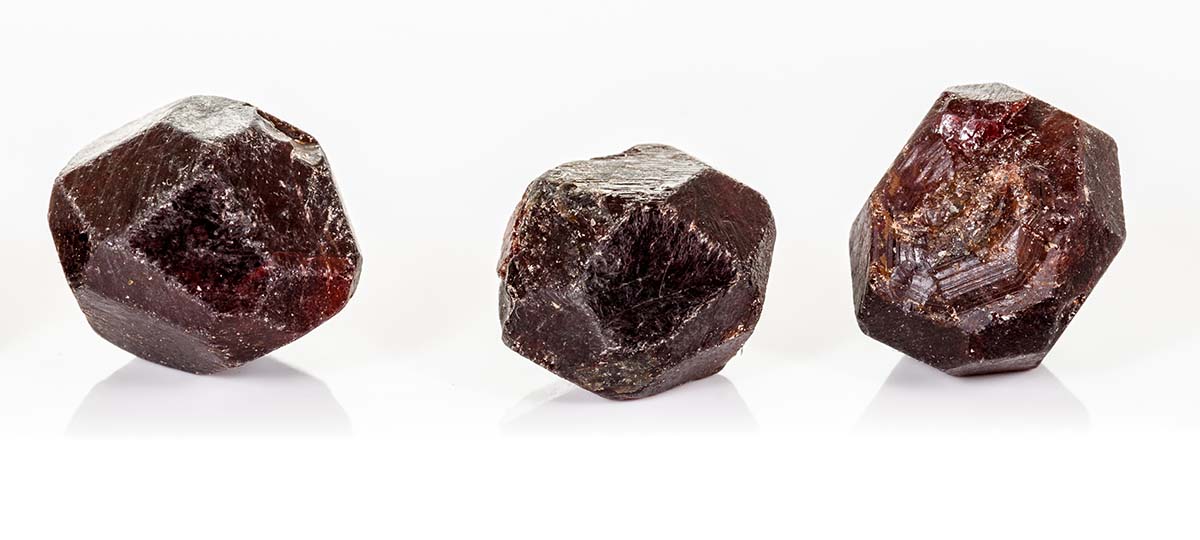
- Forms: crystals, dodecahedron or trapezohedron, rounded crystals, sandy aggregates
- Deposits: very widespread across the world and depending on the different varieties
The main varieties
- Almandine Garnet: from red to deep purple, almandine occurs in igneous rocks and its density is 3.5.
- Pyrope Garnet: deep red or yellow, pyrope has a density of 4.3 and hides within metamorphic rocks. Along with almandine, it is the most popular of the garnets.
- Grossular Garnet: in variable hues except red, grossular forms in metamorphic limestones. Its density is 3.5.
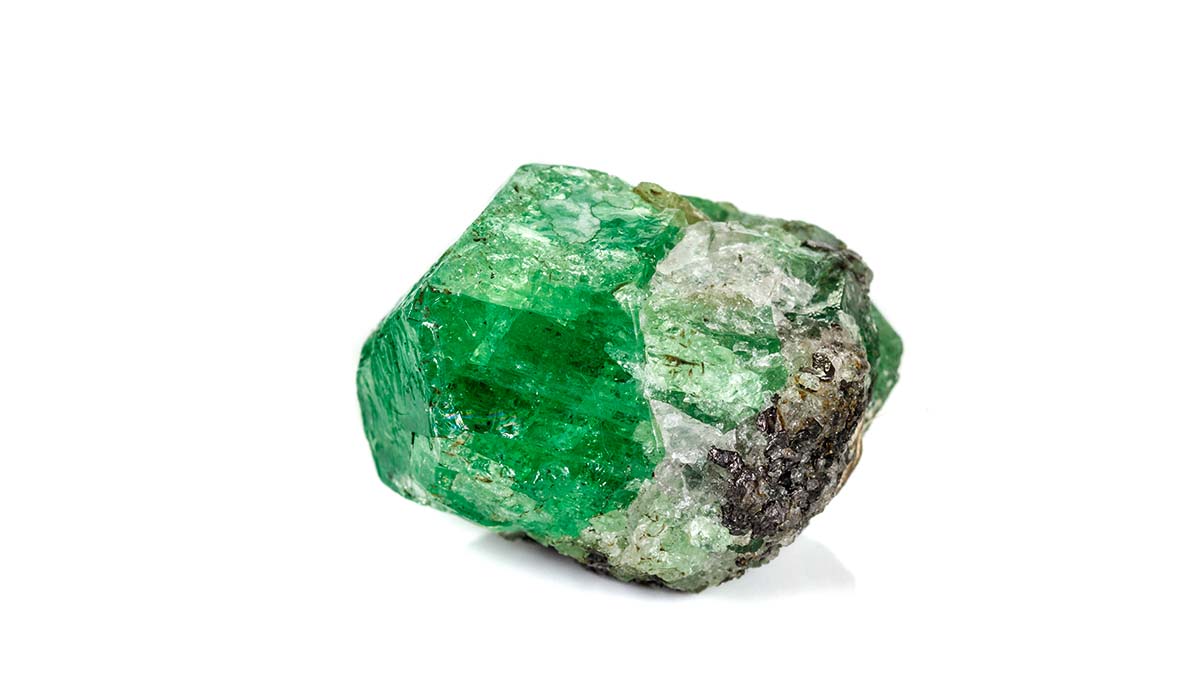
- Uvarovite Garnet: emerald green, uvarovite has a density of 3.8, and these stones are found in chromium-bearing deposits.
- Spessartine Garnet: dark brown or reddish black, spessartine garnet is found in rhyolites and in metamorphic rocks, its density reaching 4.2.
Garnet jewelry and objects
-
 Select options This product has multiple variants. The options may be chosen on the product pageQuick View
 -
Out of stock
 Select options This product has multiple variants. The options may be chosen on the product pageQuick View
 -
-
-

Etymology and meaning of garnet
The name “garnet” seems to find its origins in the Latin word “granatus“, which denotes the presence of grains. It could also draw on the expression “malum granatum” meaning, in the dead language, “grained apple”. One can sense in it a reference to the pomegranate and its red color. But the reference could also be linked to the shape of that fruit’s seeds, recalling that of the stone which is the subject of this article.
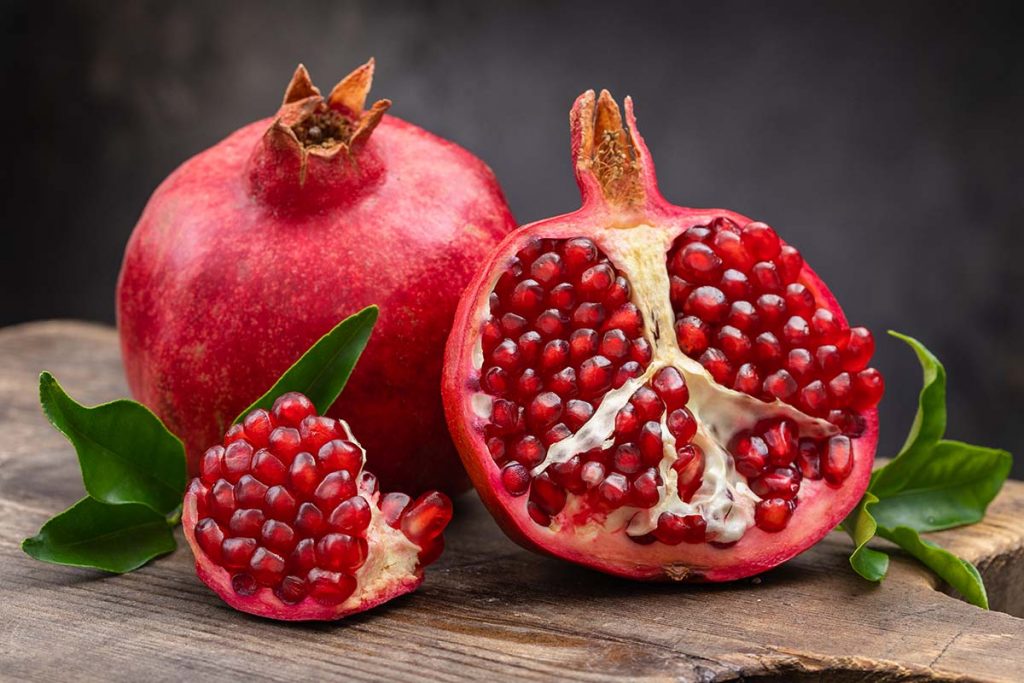
Garnets were called “carbunculus” by Pliny the Elder, a Latin term used to designate burning coal. It was also named “carbuncle” or red gem. The term “garnet” appeared for its part in the 13th century, from the pen of a German philosopher, Albertus Magnus.
The history of Garnet
Garnet and its first admirers
Garnet stones have been known to humankind for millennia. The earliest traces of them are found in the writings of Theophrastus, a philosopher of the 3rd century BC, and of Pliny the Elder, a Roman naturalist. But this family of minerals had already won over more ancient civilizations. This is attested by archaeological discoveries linked to the Sumerians as well as the rich necklaces, set with garnets, of the pharaohs of ancient Egypt.
In the eyes of these peoples, garnet symbolized blood, fire and power. Anecdotes and legends illustrate its place in the collective imagination of those eras. According to the Bible, the lantern that guided Noah through the darkness during the flood was made of garnet. As both a symbol of the guide and of light, these red minerals were meant to carry the dead toward Valhalla, the paradise of the Vikings.
In the Middle Ages, jewelry and sacred stone
This magnificent stone was then adopted by the barbarians after the fall of the Roman Empire. They made jewelry from it, notably present in Celtic culture. In the Middle Ages, in Europe, garnet was perceived as a means of rising from a spiritual standpoint. In the time of the Crusades, it served as a protective stone with which knights’ armor was equipped. The Native Americans, too, had noticed the exceptional properties of this mineral, to which they attributed a sacred character.
The modern uses of garnet
The blazing color of garnet has exerted a significant influence on the perception of this stone through the ages. Closer to our era, in the 19th century, the Hunzas – Pakistani warriors – fired on the British invader with bullets carved from garnet. They had faith in the deadly power of this blood-colored ammunition.
In the industrial era, garnet, with its remarkable hardness, served as an engraving tool on other stones. Today, it is used in sanding for its abrasive qualities. In our modern societies, it is a semi-precious stone of first choice for jewelers. Finally, and above all, it holds a privileged place among the treatments championed by lithotherapy.
The properties of garnet in lithotherapy
Through its many virtues allied with power and grounding, garnet comes to the support of several astrological signs. Libra will make it a source of combativeness, a trait it sometimes lacks. Scorpio and Leo will see their natural tendencies toward determination and courage reinforced. Gemini, for their part, will draw from it a new ability to center themselves in order to reach their goals.
Blood red, garnet is naturally associated with the heart chakra. An organ it helps to support, balance and cleanse. Its benefits in terms of perseverance and courage reveal its deep accord with the solar plexus chakra and the root chakra.
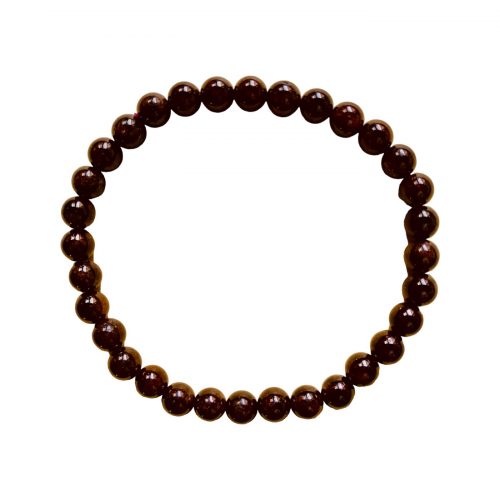
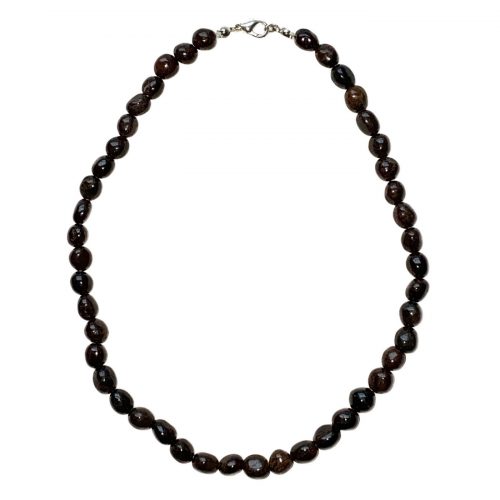
Use through direct contact is the simplest and most effective way to benefit from the many virtues of natural stones. Placed against the skin, worn as jewelry (pendant, bracelet, necklace, etc.) or in a garment pocket, the immediate proximity of the garnet of your choice will have the expected effect. Garnet can also be used in massage oil or in the form of an elixir.
Virtues against ailments of physical origin
A symbol of blood, reflected by its beautiful red color, garnet is valued for its beneficial action on blood circulation and the heart. It is also recognized for its stimulating effect on sexual energy, its ability to regulate appetite and to eliminate toxins.
Balancing cardiac function
A privileged ally of the heart and blood, this is the central virtue attributed to garnet. This mineral, precious for its purifying and balancing action, cleanses the blood, regulates blood pressure and stimulates blood circulation. It therefore contributes to the good health of the heart, limiting cardiac disorders and blood diseases.
Source of energy
Lithotherapy credits garnet with the art of fostering resilience and dynamism in the face of serious illnesses. The patient is thus better equipped to confront the ordeal that awaits with energy and optimism. This positive attitude increases their chances of recovery. The risks of depression, linked to the illness, are also reduced.
Cleansing the liver and detoxification
The garnet stone has a purifying action on the blood, but also on the liver and gallbladder. It activates intestinal functions to balance the digestive system. The combination of these properties makes it an ideal mineral for detoxification. Eliminating toxins from the blood and liver, garnet influences one’s state of health in a holistic manner.
Regulating the digestive system
In addition to its positive impact on intestinal transit, garnet stimulates appetite. It is therefore an appropriate natural remedy for supporting situations of anorexia or for people who wish to gain weight.
Care for skin conditions
Certain varieties of garnet, such as uvarovite and grossular, are reputed for their benefits in the dermatological field. The fight against skin conditions, such as herpes, allergies or eczema, will therefore benefit from the use of these natural stones.
Sexual stimulation
A symbol of power, energy and passion, it was only logical that garnet would play a role in sexual balance. The stone acts as a stimulant for men and serves to combat impotence. For women, it helps to increase libido and to nourish confidence in their power of seduction.
Virtues against ailments of psychic and psychological origin
As a symbol of strength, energy and passion, garnet is a resource stone in matters of grounding and commitment. It replenishes, stimulates and balances the mind and fosters concentration and the achievement of one’s goals.
Security and openness
Among its benefits for psychological balance, garnet is used for its reassuring virtues. By calming the mind, the stone brings peace and joy. It fosters access to the expression of one’s emotions, broadening the horizons of withdrawn people. These properties sometimes make it possible to heal past traumas and to unblock deeply anchored emotional knots.
Source of energy and courage
True to its symbolism centered on strength, the garnet stone is a genuine source of energy that brings about perseverance and courage. A mineral of choice for stimulating vital energy and facilitating action, as when facing energy-draining ordeals. It is less advisable for people with a restless and nervous nature.
Grounding force
Many false hindrances get in the way of the goals, wishes and dreams of many individuals. Garnet helps to remove these obstacles, to refocus the mind, and to strengthen patience, concentration and commitment. This grounding action stimulates determination and the taste for a job well done, and therefore fosters the achievement of one’s goals.
Replenishment and soothing
The stones of the garnet group are also associated with aestheticism, with a taste for beauty and refinement. A mineral to favor when one feels the need to immerse oneself in a cocoon, to prioritize comfort and to replenish oneself. It also carries a soothing effect in the event of a significant psychological shock.
Which stones should you combine with garnet?
Depending on which of garnet’s virtues you wish to call upon, you can combine it with other minerals. These synergies have the effect of multiplying its power or of directing it in a more specific way. Generally speaking, you can use rock crystal to amplify the powers of a stone, whether within the framework of a lithotherapy session or simply by wearing the two minerals together. But other combinations are recommended for more precise purposes.
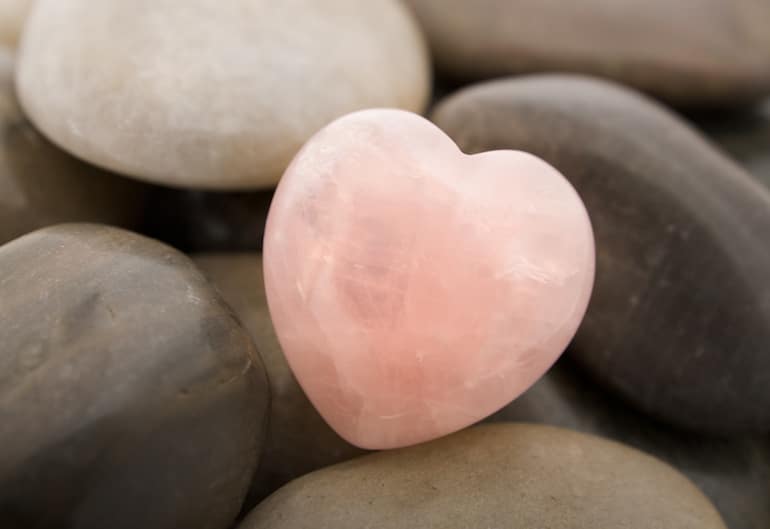
To bring dynamism and vitality, use garnet in combination with stones of similar properties, such as carnelian, iron eye and onyx. Paired with aquamarine, rose quartz or kunzite, you will benefit from its detoxifying action for a blood-purification cure.
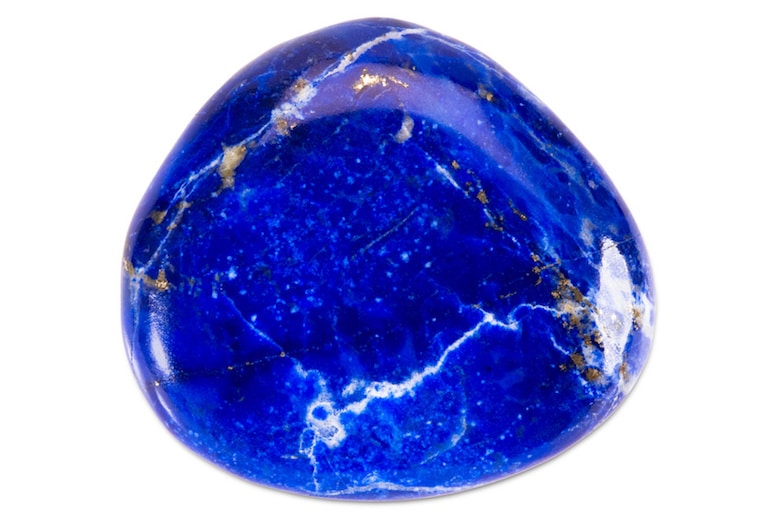
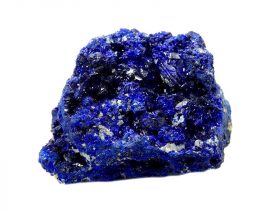
Rose quartz also pairs with garnet for the purpose of harmonizing romantic relationships. Combine it with tiger’s eye to create a genuine cocoon of protection. Alongside lapis lazuli, it contributes to a fine openness of mind and fosters serenity.
How to cleanse and recharge the garnet stone?
Like the other lithotherapy stones, garnet must be regularly cleansed and recharged to preserve all its properties and to allow you to keep receiving its benefits.
Cleaning is done by immersing the stone in a bath of salted distilled water, or under a trickle of running water. Other stone cleansing methods can of course be used, such as smudging or burial. The important thing is to carry out regular cleanings, as soon as you feel your stone needs it.
Recharging will then be carried out optimally thanks to intense exposure to sunlight or through prolonged contact with a quartz cluster or an amethyst geode.




Leave a Reply