 English
  Français
 Español

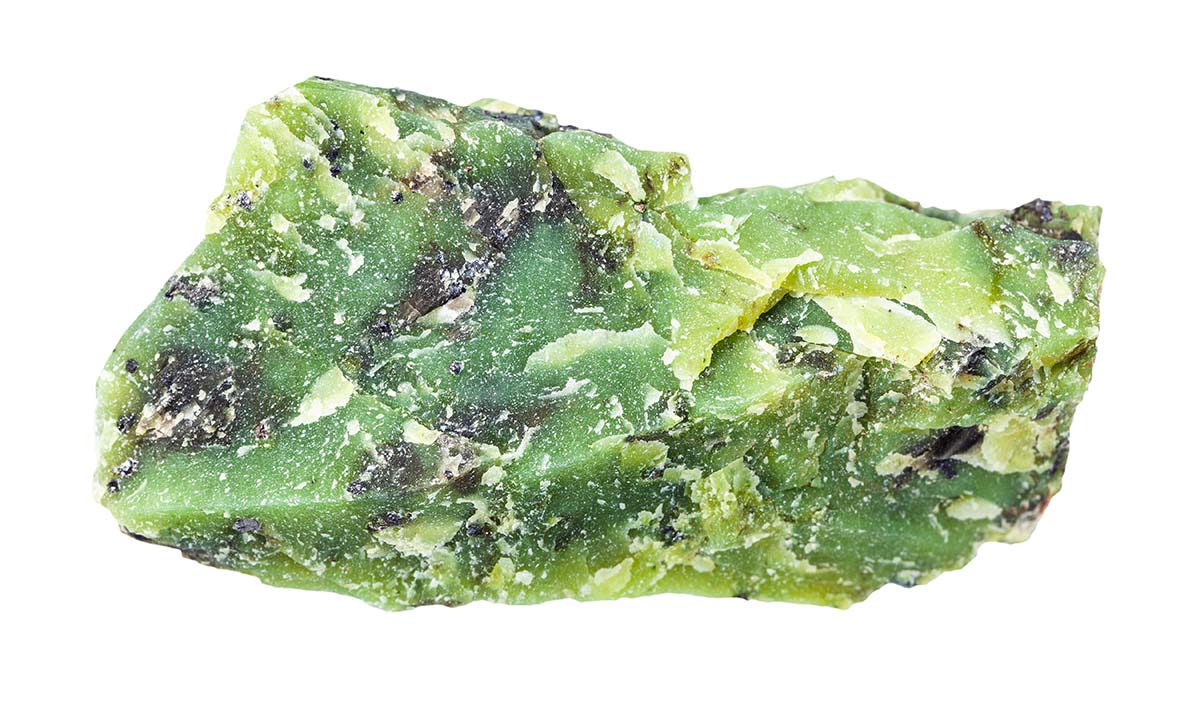
This name alone already evokes a creative and generous world, rich in symbols and philosophical references. Serpentine is a magnificent stone imitating the winding patterns of a snake’s rough skin. Beyond its undeniable ornamental qualities, it is popular in lithotherapy for its many virtues, chief among which are the notions of protection and healing.
The mineral properties of serpentine
Serpentine encompasses a set of mineral varieties rich in several components and resulting from a long process of rock metamorphism.
| Group | Silicates |
| Crystal system | Monoclinic, polymorphous |
| Composition | Basic magnesium silicate |
| Colors | Various shades of green, olive green, ochre |
| Density | 2.4 to 2.6 |
| Hardness | 2.5 to 4 |
| Transparency | Translucent to opaque |
| Luster | Vitreous |
| Forms | Compact masses or fibrous aggregates |
| Deposits | Numerous in Europe, Russia and the United States |
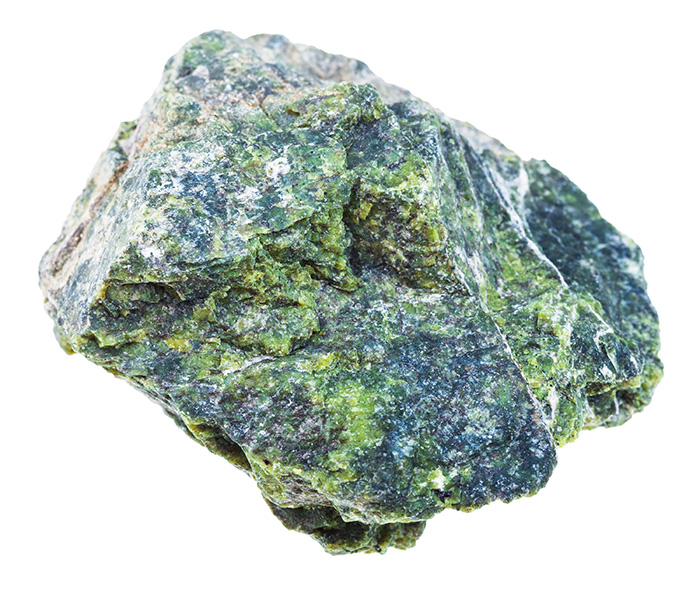
The main varieties of serpentine
Due to the various stages of mineral alteration processes, multiple varieties of serpentine coexist in nature. The three best known and most widespread are antigorite, chrysotile and lizardite.
Antigorite is the form of serpentine most commonly used in the fields of jewelry and sculpture.
The exceptional properties of chrysotile, better known as asbestos, made it a material of choice in the construction industry. Its harmful health consequences were discovered late and naturally led to a ban on its use. Lithotherapy obviously does not make use of this variety.
Lizardite has a very fine grain and is mainly used in the composition of serpentine marbles.
Etymology of the word “serpentine”
The appearance of serpentine evokes the scales and hues that can be observed on the skin of certain reptiles. The origin of its name therefore holds no mystery: it comes from the Latin “serpentinus,” meaning snake. This stone is also referred to by the term ophiolite, from the Greek “ophios,” which also means snake.
The history of serpentine

The symbol of the shield among the ancients
Serpentine has been used by humans for a very long time. During Antiquity, it was used to craft seals, notably by the Egyptians. Like a shield, this stone with its reptilian appearance has always symbolized protection and healing in the eyes of its devotees. The ancients credited it with the power to cure poisonings and snakebites. The Romans attributed to it the talents of a guardian angel of the spirit.
Serpentine, an artistic inspiration
The aesthetic qualities of serpentine did not escape the eyes of artists and craftspeople throughout history. This is evidenced by its use among Native Americans, for example, who used this mineral to create precious and ornamental objects such as vases or jewelry. The Maori of New Zealand also drew inspiration from it to design symbolic sculptures.
Contemporary uses
Today, serpentine remains a highly prized ornamental stone. It displays its charms in the fields of jewelry, marble work and sculpture. In the last century, the chrysotile variety, whose use is now prohibited, was heavily exploited in the construction and manufacturing sector. Serpentine is also the preserve of lithotherapy, which attributes to it many beneficial properties for the balance of body and mind.
The properties of serpentine in lithotherapy

Protection, soothing and healing are the key words that define the exceptional virtues of serpentine in lithotherapy. In keeping with the metaphor of the shield, it symbolizes strength, care and the benevolence provided to its users. The astrological signs associated with it are Gemini, Scorpio and Pisces.
This stone concentrates its favorable actions on the throat chakra and the crown chakra. The former represents the space of communication and self-expression. Serpentine untangles confused or unspoken feelings to allow them to be embraced and expressed serenely. The crown chakra is the heart of knowledge and consciousness. It will benefit from the stone’s virtues through a kind of benevolent, soothing aura that liberates the mind.
Virtues against ailments of physical origin
An anti-migraine stone
Serpentine has a powerful effect on migraines and headaches, as suggested by its connection to the crown chakra. Through its calming and protective virtues, it reduces tension, frees the mind and promotes relaxation. Nerve pain and strain in the cervical area are thereby diminished. An ideal mineral for people who regularly suffer from migraines.
A powerful relaxant
This stone with green hues is a wise choice for all those who suffer from physical tension. Whether muscular or nervous, it will be rendered harmless in contact with serpentine. It warms the muscles, loosens the tendons and unties knots. A rocky substance to use without hesitation during stretching sessions.
A shield against illness
By keeping anxiety and sources of stress at bay, serpentine preserves a state of well-being conducive to balanced health. In this way, combined with its action in favor of cell regeneration, it constitutes, for human beings, a shield against illness.
Virtues against ailments of psychic and psychological origin
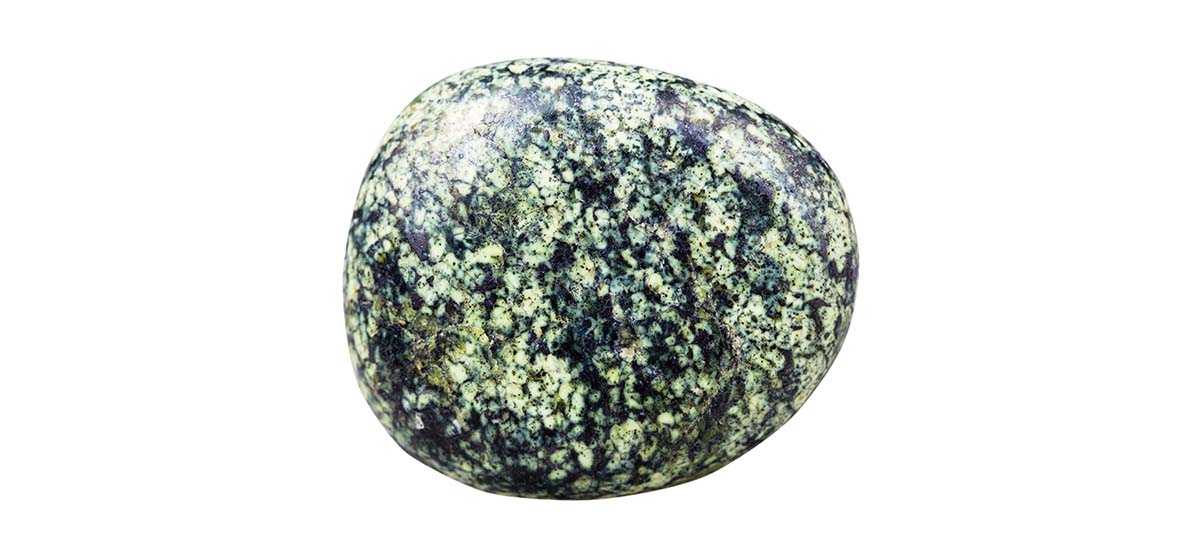
A repellent against negativity
Serpentine is THE stone of choice for driving away every possible and imaginable nuisance. It banishes worries, harmful rumination, dark thoughts and melancholy. Acting like a talisman, it offers powerful protection against both inner and outer aggressions.
A support for talking about oneself
It is also a mineral of choice for people experiencing blockages in terms of self-expression. In keeping with its action on the throat chakra, serpentine frees speech and boosts the courage to accept oneself, to embrace oneself and to tell one’s own story.
A gateway to dreams
Serpentine also has an entirely unique virtue: facilitated access to dream interpretation. It strengthens the memory and awareness of the adventures experienced during sleep. It helps each person decode the symbolism of their dreams, interpret their meaning and draw new insights from them.
Which stones should be paired with serpentine?
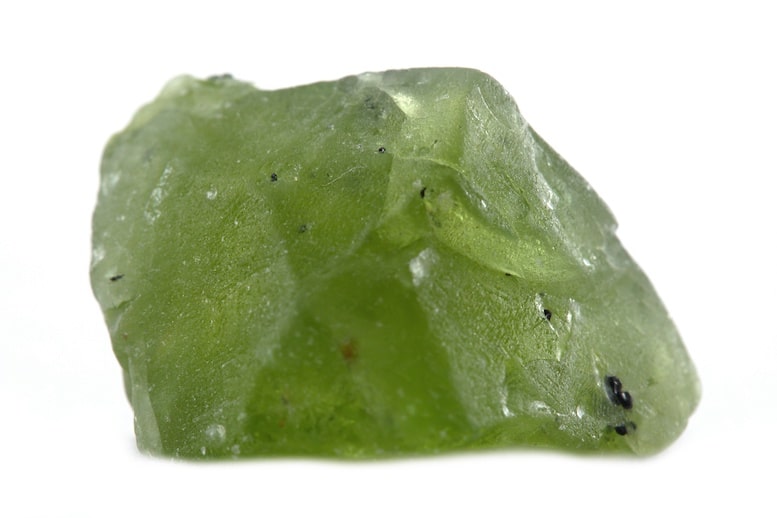
Alongside stones of similar colors, the properties of serpentine are multiplied tenfold. For this reason, its pairing with aventurine, peridot and jade stone is recommended. Together, they promote the connection between the mind and the body. A phenomenon that helps, in particular, to optimize dream interpretation.
If one wishes to act on the throat chakra and reinforce serpentine’s positive action on the capacity for expression, then aquamarine is the stone to turn to. Together, these two minerals have a remarkable liberating effect on speech and combat throat ailments.
How to cleanse and recharge serpentine?
Between each use, serpentine must be cleansed and recharged to ensure its effectiveness and the power of its properties. Simply immerse the stone in distilled water to cleanse it. A few hours on a quartz cluster in the light of the moon or under the sun’s rays will recharge it.





Leave a Reply