 English
  Français
 Español

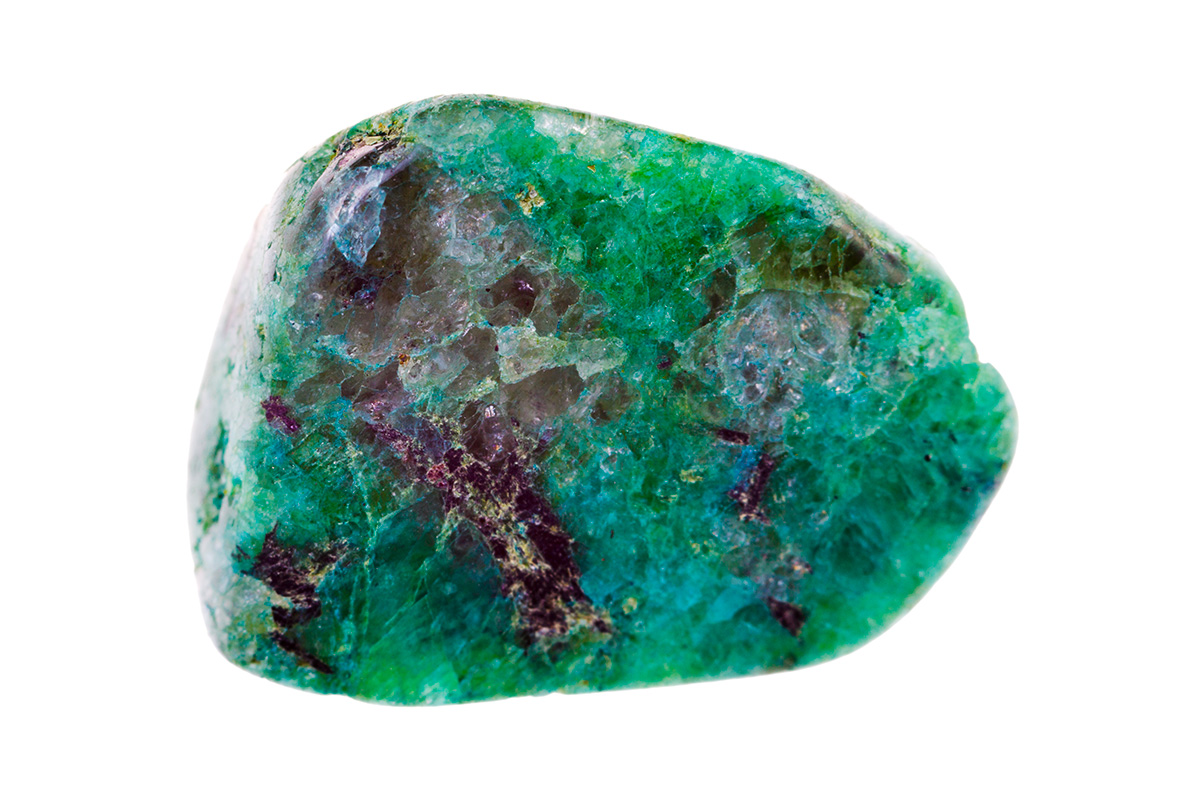
A precious mineral with multiple benefits, chrysocolla is known as a stone of communication and serenity. The Egyptians commonly called it the “stone of wisdom”, and it is even said that the impetuous Cleopatra was in the habit of wearing one of these fine stones as a necklace during her travels. Since its discovery in Antiquity, chrysocolla has been used for its mysterious powers and its beneficial effects on the body and mind. Discover the characteristics and virtues of these natural stones in lithotherapy.
Mineral properties of the natural stone chrysocolla
In terms of etymology, the word chrysocolla comes from the Greek chrysos (gold) and kolla (glue), which once referred to all the elements used in the crafting of gold.
| Group | Silicates |
| Crystal system |
Amorphous |
| Composition | Hydrous copper silicate, may contain traces of aluminium and silica |
| Colours | Green, blue-green, turquoise blue |
| Density | 2.2 |
| Hardness | 2 to 4 on the Mohs scale |
| Transparency | Semi-opaque |
| Lustre | Vitreous, earthy, or powdery |
| Forms | Geode, polished stone |
| Deposits | Chile, United States (Arizona, Nevada), Mexico, Peru, Zaire, Russia (Urals) |
How to recognise chrysocolla?
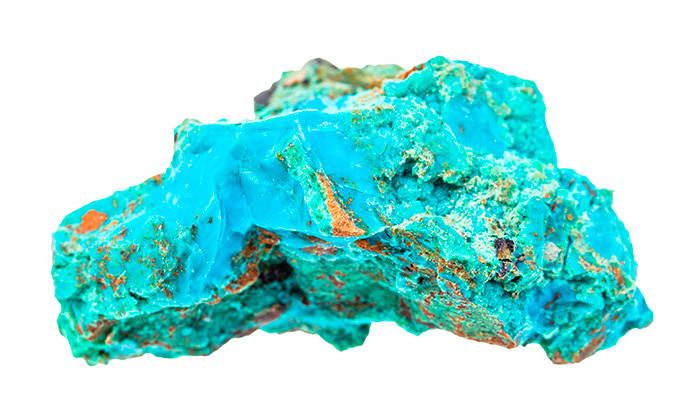
This fine, delicate stone is easily distinguished from other minerals by its blend of green, blue-green or turquoise blue shades. The more or less pronounced presence of copper gives it the distinctive feature of a rocky appearance evoking the look of the Earth seen from space.
A chrysocolla stone rarely displays a single hue. Predominantly green or blue, each gem is unique and singular. Its colour depends on the microscopic presence of other minerals in its composition, such as copper, quartz, opal, or chalcedony.
These blends give rise to the formation of multiple varieties of chrysocolla, such as:
- eilat stone: blue-green chrysocolla containing fragments of malachite and turquoise;
- stellarite, or chrysocolla quartz: a predominantly light-blue stone which, as its name suggests, combines chrysocolla with quartz;
- parrot wing: greenish-brown, like the animal of the same name, this fine stone combines chrysocolla with jasper.
In its rough state, chrysocolla is a rather earthy-looking stone; it is only once polished that its brilliant blend of colours appears.
Physical benefits of chrysocolla
An ally against joint pain
Using a chrysocolla stone in lithotherapy can relieve back pain, rheumatism, or arthritis problems. It is a particularly effective stone for ailments related to the body’s skeletal structure.
Tones the heart
On the circulatory level, this semi-precious stone strengthens the heart and contributes to better blood circulation. It can thus reduce the sensation of heavy legs or minimise muscle cramps.
Eases menstrual pain
Strongly linked to feminine energies, the chrysocolla stone can help lessen the pain associated with the female cycle or with motherhood. In particular, it can help women give birth with less pain.
Acts on the respiratory tract
Chrysocolla is a stone that can also help relieve certain sore throats, bronchitis, colds, and other ENT disorders.
Soothes digestive disorders
This natural stone can also act on the liver and soothe certain digestive problems. It supports the body’s natural purification by contributing to its detoxification, and regulates insulin production.
Calms heat linked to fire
As in the past, chrysocolla can still be used to soothe certain burns, or in cases of high body temperature. It can thus soothe sunburn, or prove useful in cases of fever.
Benefits of psychic and psychological origin
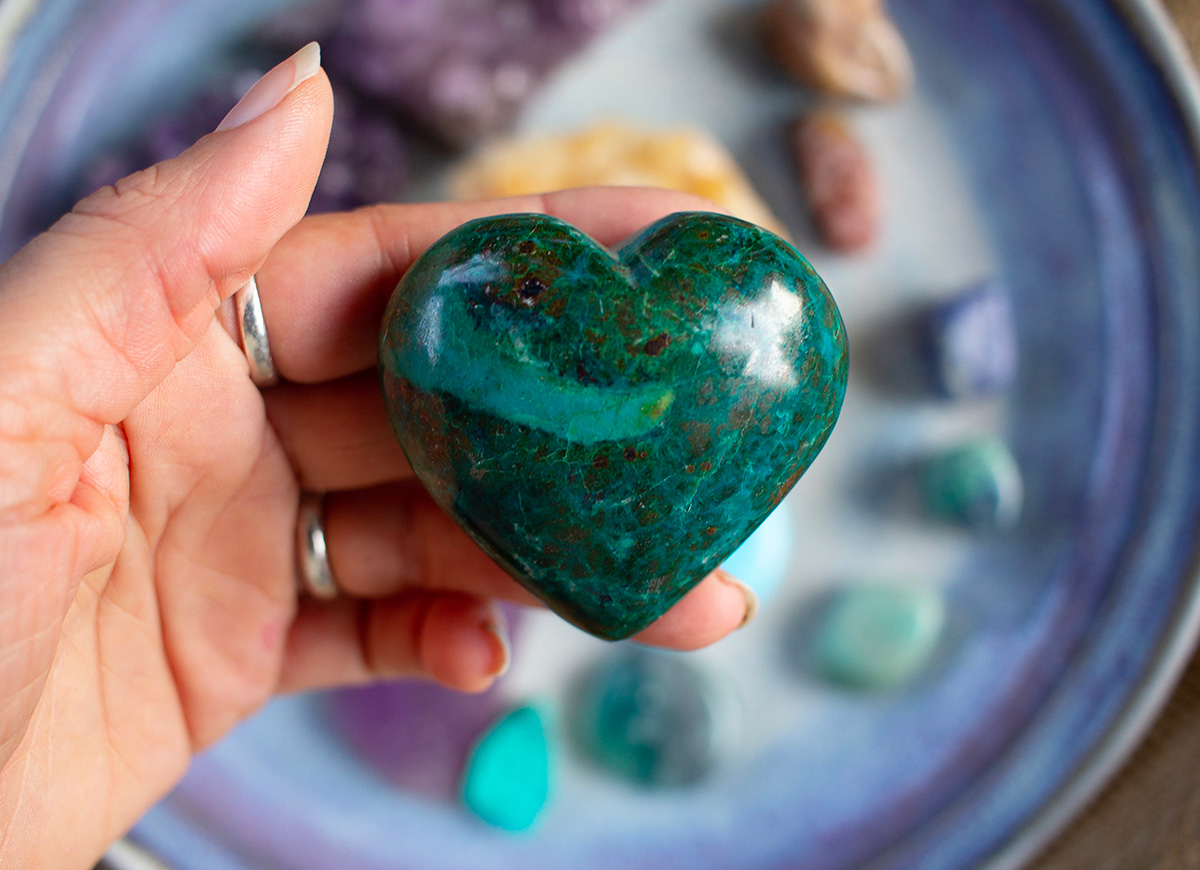
While chrysocolla is best known as a remarkable stone of contact linked to communication, it offers many other virtues in lithotherapy.
A stone conducive to relational exchanges
The chrysocolla stone is known to promote spontaneity and authenticity in dialogue. It strengthens the bonds between people and encourages feelings of unconditional love, tolerance and compassion during conflicts. Moreover, it encourages forgiveness by driving away feelings of resentment and jealousy.
A stone of soothing for people and places
Chrysocolla brings tranquillity and inner peace to whoever wears it. It is a stone of tranquillity and serenity that has the ability to regulate moods. Thus, its beneficial vibrations soothe overwork and people prone to nervousness and anxiety. It drives away feelings of guilt, as well as tensions generated towards oneself or others.
This remarkable stone also has the ability to harmonise the energy of places charged with conflicting energies. It absorbs negative energies and helps create a healthier, more serene atmosphere.
Develops intuition and creative expression
These natural stones are particularly conducive to the practice of meditation and relaxation. They thus make it easier to refocus on oneself and express one’s creativity, which is also why chrysocolla is sometimes called the “stone of musicians”. Its influence on the third eye chakra directly contributes to the development of intuition and clarity of mind.
How to use chrysocolla in lithotherapy?
Worn as necklaces, the stone has a direct effect on the throat and heart. Its positive energies will diffuse, however, whatever the piece of jewellery worn (rings, bracelets, other gold jewellery, etc.).
Polished or tumbled stones also have the advantage of being able to be taken anywhere by slipping them into a handbag, a jacket pocket or a trouser pocket.
For a true lithotherapy treatment, pebble stones are ideal. They are specially polished to be placed on the areas one wishes to treat. A chrysocolla pebble can thus be placed on the throat or the heart, and possibly combined with other stones to provide a genuine treatment.
Placed at the entrance to or inside a room, the chrysocolla stone has the ability to balance the energies of the place.

Which chakras does this stone act on?
Lithotherapy associates the colour of minerals with that of the chakras corresponding to those same shades. Thus, a mineral acts more specifically on the chakras corresponding to its dominant hue. Each chrysocolla is singular in its chemical composition and colourings. So, depending on the colour of one of these stones, it will act more or less on:
- the throat chakra: represented by the colour light blue, it is the energy centre of communication and expression. The organs attached to this area of the body are the throat, the tongue, the vocal cords and the thyroid.
- The heart chakra: associated with the green hue, a symbol of soothing and linked to the gentleness of nature. This energy centre corresponds to feelings of love, compassion, forgiveness, and to the authenticity of speech. It also concerns the organs contained in the rib cage (heart, lungs) and the entire arterial and vascular system.
- The third eye chakra, indigo blue, is the seat of intuition and creativity.
The characteristic blue-green tone of the chrysocolla stone symbolises balance. Beyond its benefits in the relational sphere, it also relates to being more imaginative and disciplined in one’s actions.
Caring for and cleansing your chrysocolla stone

What constitutes the very essence of lithotherapy is the energetic interactions of stones with their environment. Indeed, a mineral’s action stems from a constant phenomenon of absorption and emanation of energies. After a certain time, stones become energetically charged and lose their effectiveness. This is why it is essential to cleanse them, then recharge them with energy.
Cleansing your chrysocolla
Regularly, the chrysocolla stone can be cleansed:
- a few minutes in a bath of salt-free water;
- by smudging with a stick of incense.
These actions have the effect of “washing” the mineral of accumulated energies. In both cases, pay particular attention to the intention you bring to the act of cleansing.
Recharging chrysocolla
Once your chrysocolla is cleansed, you can recharge it with energy so that it regains all its therapeutic capacities and virtues. To do this, you can:
- expose your chrysocolla stone to moderate sunlight for a few hours. Prefer a shady spot or exposure to morning light or light at the end of the day.
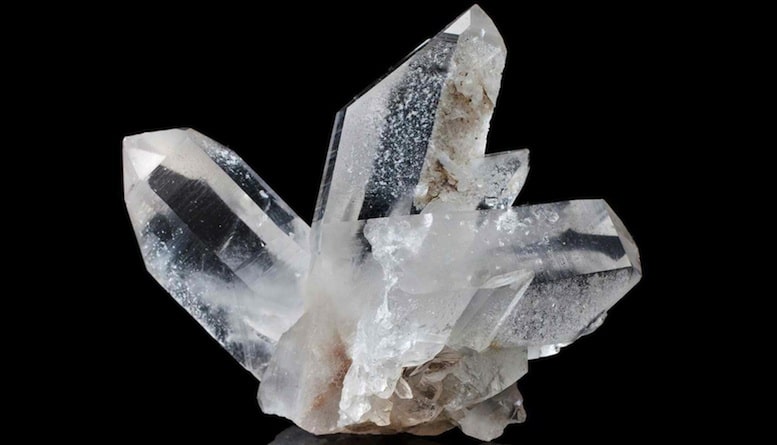
- Recharge the mineral on a cluster of quartz, such as rock crystal, which amplifies the recharging phenomenon and the stone’s powers.
- Expose the gem all night to the light of the full moon.
Once the stone is recharged, wipe it with a soft cloth. Your chrysocolla is once again ready to use and recharged with beneficial energies.
Chrysocolla jewellery and tumbled stones
Which stone to pair with chrysocolla for a treatment?
Combining minerals in lithotherapy has the effect of pooling the virtues of each stone. In this sense, each of them gives off a certain amount of vibrational information that resonates with that of the body or the environment in which it is found.
Chrysocolla is preferably paired with stones that act on the same chakras. For this reason, minerals of the same colours are favoured, that is to say in blue-green tones:
- to act on the throat chakra: turquoise, larimar or tumbled amazonite are excellent allies;
- for the heart chakra: chrysocolla can be paired with aventurine, jade or malachite.
Chrysocolla and astrological signs
Stones in lithotherapy are beneficial to everyone, but certain zodiac signs may prove more sensitive to the effects of chrysocolla. This is notably the case for people born under the sign of Taurus, Libra or Aquarius.






Leave a Reply