 English
  Français
 Español

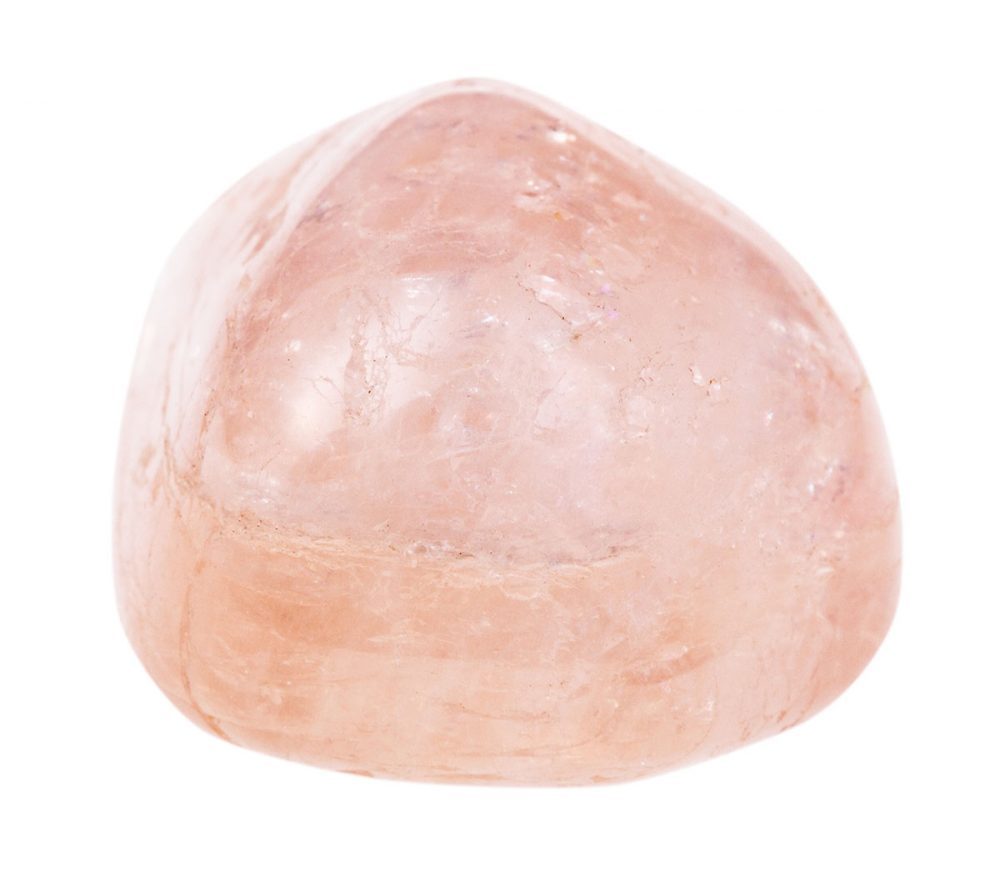
Morganite, a symbol of protection and delicacy, is a semi-precious stone from the beryl family that is very powerful in lithotherapy. Close to rose quartz and kunzite in its effects and its hue, the properties and virtues of morganite differ according to its shades of colour. This crystal, also called the Angel Stone, should be used conscientiously, as its virtues can vary from one stone to another. Now discover the many benefits of this remarkable mineral.
Characteristics of morganite
Mineralogical properties
It is the presence of caesium, manganese and other alkaline elements in its chemical composition that gives its colour to the morganite stone. Depending on the angle of the light, its hue offers magnificent and varied shades of pink. Most often pure, this stone usually contains inclusions that are invisible to the naked eye.
| Group | Beryls. |
| Crystal system | Hexagonal. |
| Composition | Aluminium beryllium silicate, Al2,Be(Si6O18). |
| Colours | Pale pink, peach blossom to deep pink, with possible shades of mauve or bright red. |
| Density | Between 2.66 and 2.87. |
| Hardness | Between 7.5 and 8 on the Mohs scale. |
| Transparency | Transparent to translucent. |
| Lustre | Vitreous. |
| Habit | Prismatic or tabular crystals. |
| Deposits | Brazil, Madagascar, Mozambique, Rhodesia, U.S.A. |
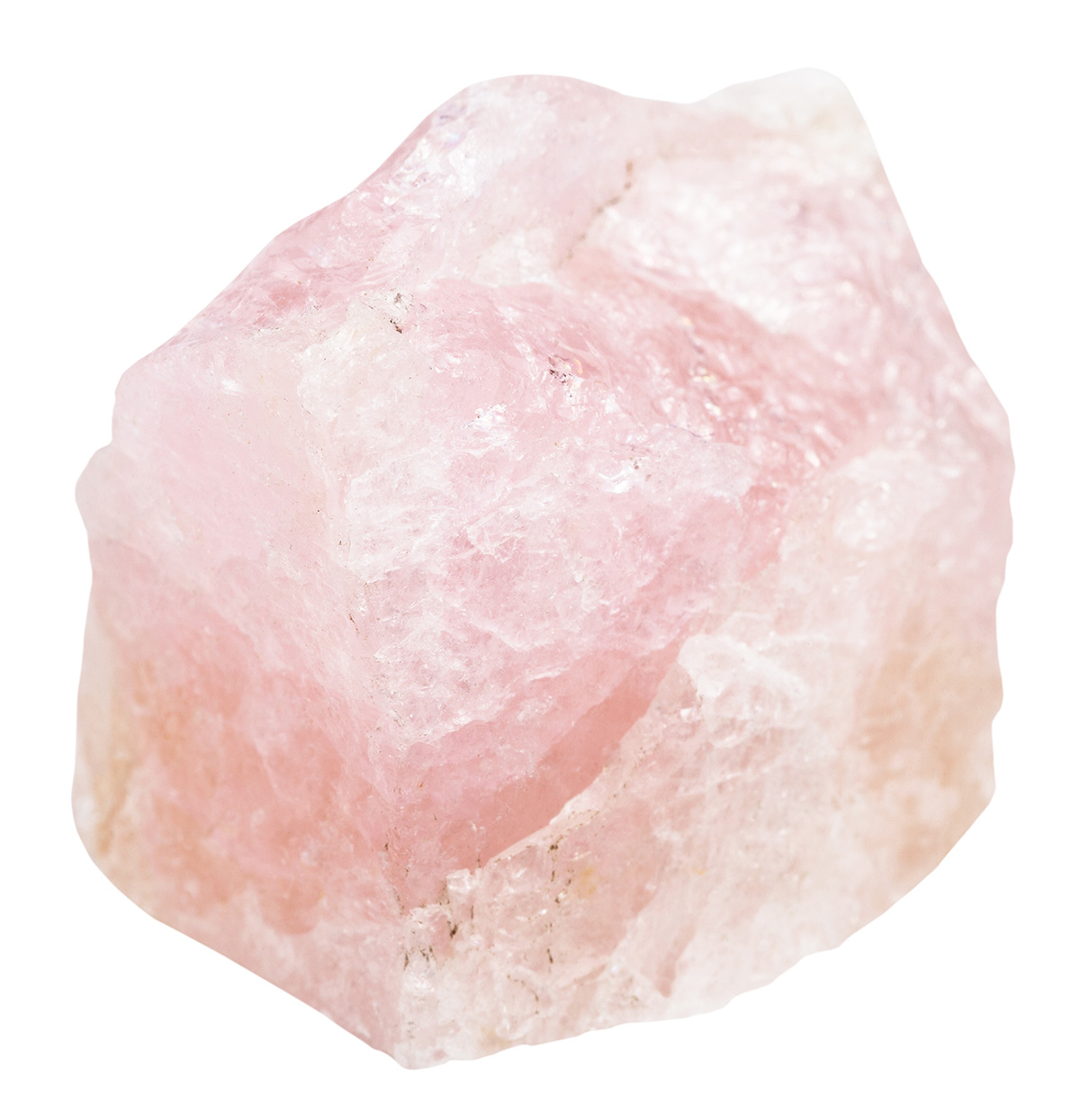
Morganite Jewellery and Objects

Where does the name “morganite” come from?
Discovered in Madagascar in 1911, this mineral was first called “pink beryl“, because of its colour. It was only later that the gemmologist George Frederick Kunz gave it its current name, in tribute to John Pierpont Morgan, an American mineral collector and banker who happened to be his employer.
History and origins
Since its discovery is relatively recent, this crystal is not the subject of any particular myths. We do know, however, that Native American traditions associated it with the “prairie rose”, because of its sweet yet thorny energy. Other pink-coloured stones may have been confused with it before its discovery. Throughout history, morganite has been associated with passion and romance.
There are many varieties of morganite, differing according to their extraction area: morganite from Nigeria, for example, displays a particularly vivid pink hue, while imperial morganite shows a tone more reminiscent of salmon, which is more natural. Morganite from Madagascar, for its part, is rather pastel, and is often cut into beads for engagement or wedding rings. There is also peach-coloured morganite, or more simply pink morganite.
Furthermore, some morganites display a “cat’s eye” effect, a kind of concentrated luminous line crossing the stone vertically through its centre. To this day, the most remarkable one is on display at the British Museum in London. Originating from Madagascar, it weighs nearly 600 carats.
Virtues and properties of morganite in lithotherapy
Physical properties and benefits
An orange-pink morganite can help to reduce breakouts of juvenile acne and help make the skin softer. This type of mineral can also prove beneficial in cases of dermatosis such as psoriasis or eczema.
Associated with the area of the heart and lungs, morganite can have positive effects on certain heart disorders and other respiratory discomforts. Thus, its therapeutic benefits can act in cases of tuberculosis, asthma attacks or bronchitis. This stone also has the ability to regenerate and stimulate blood circulation, while promoting the oxygenation of the blood. It can also prove very beneficial against hay fever or other forms of seasonal allergies.
The morganite stone also has the ability to soothe the nervous system and to reduce stress. It is a stone of balance for the body’s energies, as well as for masculine and feminine polarities. Overall, it helps to restore vitality to the whole body.
Finally, morganite could help to relieve motion sickness (in the car, seasickness, airsickness, etc.).
Psychological properties and benefits
Strongly associated with love and happiness, pink morganite promotes the building and strengthening of these feelings. It is also known and reputed to soften the harshness of turbulent romantic relationships, and to ease sadness following the loss of a loved one (a break-up, a death, etc.). It is also beneficial for healing traumatic wounds resulting from past separations.
This type of mineral also fosters the development of compassion, attentiveness and tolerance towards others. It is a stone of universal love. Morganite can also soften certain behaviours or feelings linked to sexism or racism, or to other forms of discrimination.
A pale pink morganite can soothe the inner turmoil generated by certain emotional disturbances and the effects that follow from them. More generally, it is a stone of calm that acts on anxiety and stress.
An orange-pink “peach blossom” m/articles/magnetite/organite can help to increase one’s powers of seduction. It is also said to act on improving sexual performance and libido.
These stones can also prove conducive to the development of self-confidence, notably by helping one to stay focused on one’s goals and to achieve them. Furthermore, morganite encourages reflection, decision-making, and the expression of one’s needs.
How to use morganite in lithotherapy?

Morganite can be used in therapeutic care, either at a distance or directly. Pebbles or massage stones are, moreover, greatly appreciated for this purpose; they can be placed directly on the heart chakra, or used to massage this area.
Stone elixirs based on morganite, pure or combined with emerald, can be prepared and ingested. They can also be applied locally to the heart chakra.
Morganite is a semi-precious stone that is particularly conducive to the practice of meditation, since it brings a sense of calm. Polished stones, whether cabochons or tumbled stones, are very common and can be used anywhere. Simply hold them in your hand mindfully for a few moments to feel the vibrations of the stone.
Finally, a wide range of semi-precious stone jewellery is available and particularly appreciated in the trade: morganite set on an engagement ring is very common, just as a morganite stone necklace makes a perfect gift for Valentine’s Day. These gems can also be found in the form of bracelets, earrings, and so on.
Chakras, stones and astrological signs associated with morganite
The sublime pink of morganite directly associates it with the area of the heart chakra. This corresponds to the organs located in the rib cage and to feelings of love.
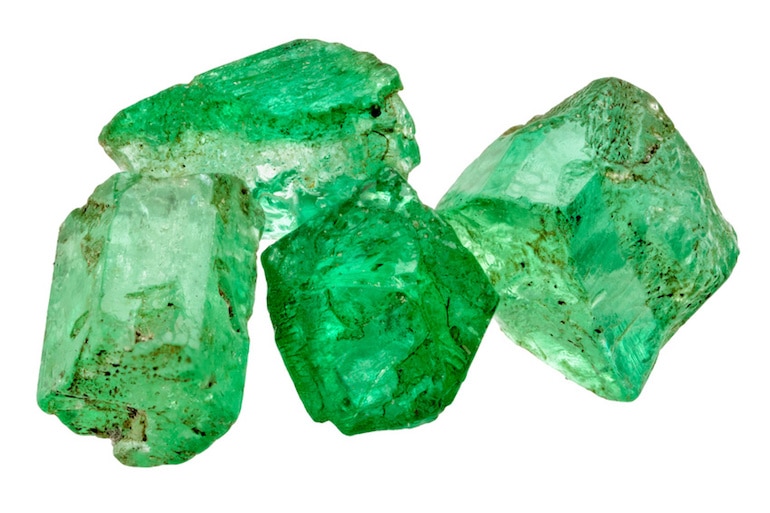
Combined with emerald, purplish-pink morganite forms an extraordinary synergy acting on the expression of loving and affectionate feelings. These two stones also help with the reception of, and sensitivity to, the feelings circulating within one’s social environment. On the physical level, they are beneficial against cardiac dysfunctions. You can create these combinations by means of polished stones or by making elixirs. White diamond pairs perfectly with the morganite stone in fine jewellery. Their respective colours form a sublime aesthetic alliance on any piece of jewellery. The same is true for rose gold and white gold.
Morganite can prove beneficial for all astrological signs. It nonetheless has more affinity with the signs of Cancer, Aquarius, Libra and Taurus.
How to cleanse and recharge morganite?
You can cleanse a morganite by holding it under a trickle of pure water or running water, or by letting it soak in a bath of very lightly distilled salt water for a few hours.
Depending on its opacity, morganite can be recharged in the sun or under the full moon. The clearer and more transparent a stone is, the less it tolerates sunlight. It is also possible to recharge the stone on a cluster of quartz that has itself been recharged beforehand.




Leave a Reply