 English
  Français
 Español

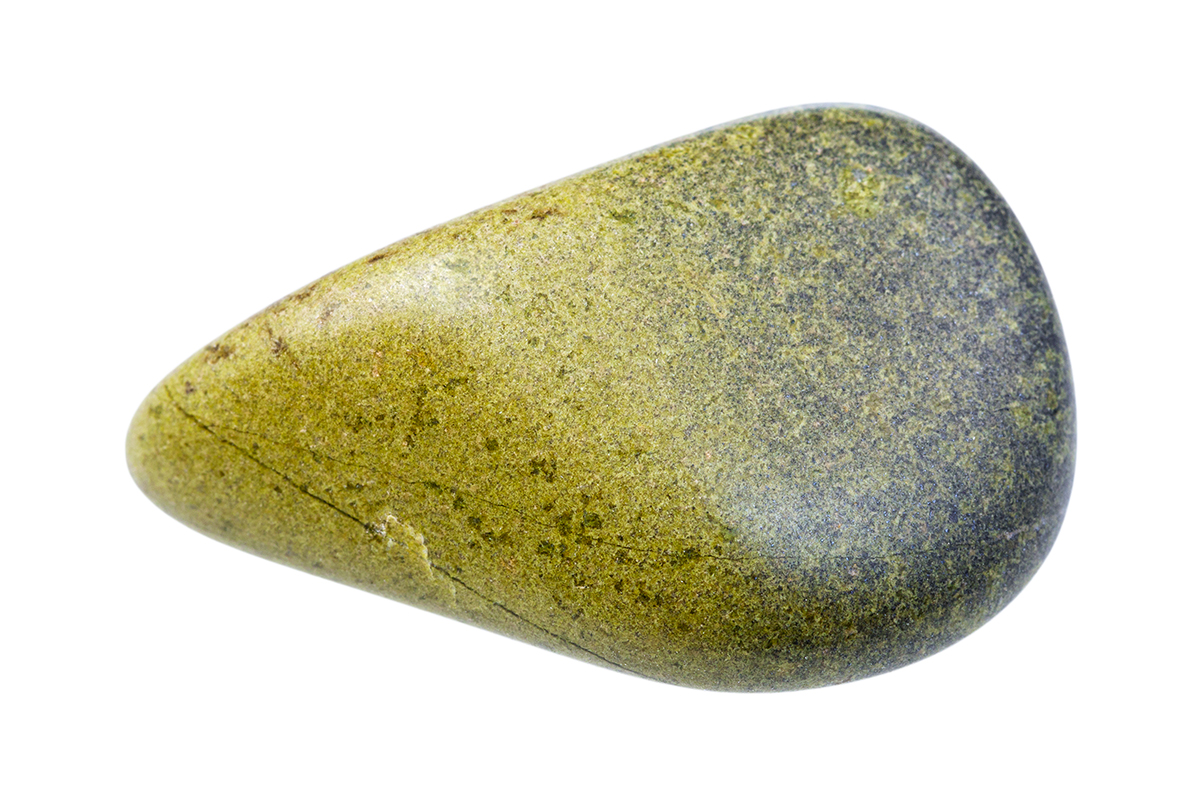
A powerful protective stone, epidote is a fine gemstone from the silicate family, more specifically the sorosilicate group. Generally green in color, this precious mineral also displays different shades that give it all its charm. While its origins remain relatively mysterious, the properties and virtues of epidote offer numerous benefits on both the physical and psychological levels.
Characteristics of Epidote
Mineralogical Properties of Epidote
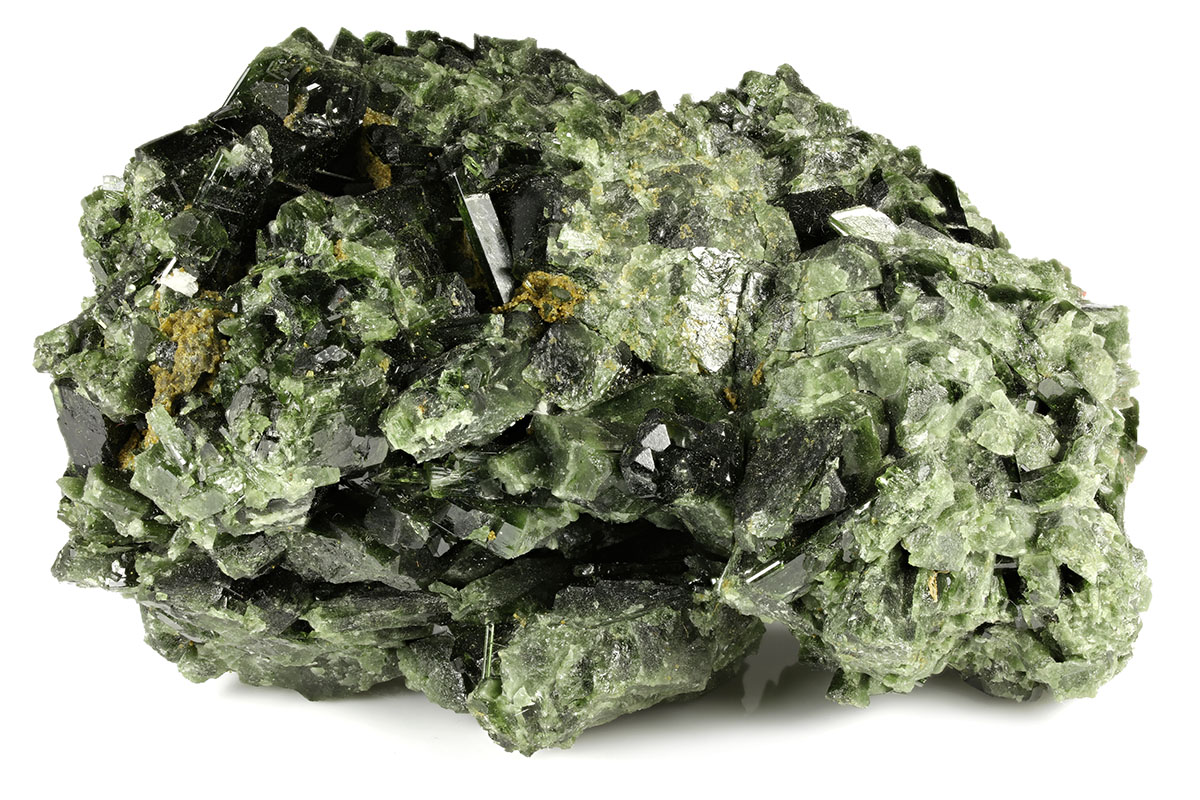
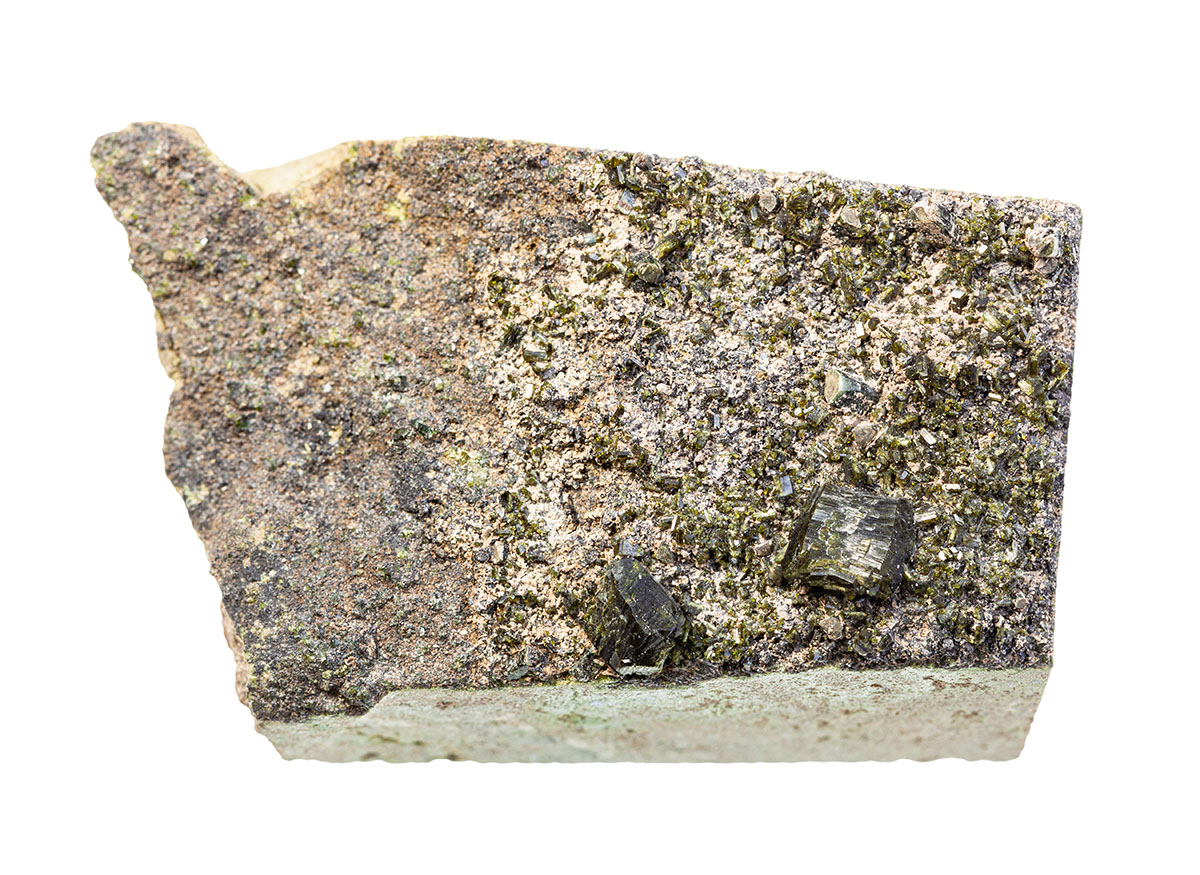
This high-quality semi-precious stone is found primarily in metamorphic or hydrothermal rocks, contact metasomatic rocks, or sedimentary rocks such as limestone. It forms at low temperatures but under high pressure, as is the case when in contact with eruptive magma.
| Group | Silicates, sorosilicate subgroup |
| Crystal System | Monoclinic |
| Composition | Calcium, iron and aluminum silicate, with possible traces of magnesium or manganese. Chemical formula: Ca2(Fe,Al)Al2(SiO4)(Si2O7)O(OH) |
| Colors | Green to brownish green, yellow green, with possible traces of red, yellow, or shades of pink |
| Density | Between 3.33 and 3.5 |
| Hardness | Between 6 and 7 |
| Transparency | Opaque to transparent |
| Luster | Resinous to pearly |
| Form | Prismatic, isometric, tabular crystals, twins, druses |
| Deposits | Numerous: United States, France, Madagascar, Norway, Pakistan, Austria, Mozambique, Alaska, Austria, Myanmar, Brazil, China, Ireland, South America (Peru), Russia |
Where Does the Name “Epidote” Come From?
The epidote stone takes its name from the Greek epidosis, associated with the notion of having received an increase, an addition, a complement. The Encyclopaedia Universalis, for its part, attributes this qualifier to the “transverse sections of crystals that are often parallelepiped-shaped.”
This gem was first described in France in 1801 by the abbot and mineralogist René Just Haüy, co-founder (with Jean-Baptiste Romé de L’Isle) of geometric crystallography and gemology. In 1874, other deposits of these semi-precious stones were discovered in the Unaka Mountains in the southern United States. In tribute to this location, epidote was then named Unakite. Later, its pistachio green color also earned this mineral the name pistacite.
History and Origins of Epidote Stone
The history and origins of this gem are unfortunately not very well known. The first epidote crystals were reportedly discovered in France in 1801 at Bourg d’Oisans, a municipality located in the Rhône-Alpes region, by the mineralogist René Just Haüy. He is presumed to be the author of the earliest writings about this stone. Other deposits of this semi-precious mineral were subsequently found in the Unaka Mountains in the southern United States in 1874.
To this day, there are no links connecting epidote to any particular myths or traditions. However, its use in lithotherapy is common in many countries and has demonstrated its effectiveness for many years.
Virtues and Properties of Epidote in Lithotherapy
Physical Properties and Benefits
Epidote stone is first and foremost known for its physical protection virtues, whether at the bodily level or for material possessions. Indeed, this stone has the ability to absorb electromagnetic waves. Its high vibrations also act on the entire body and all its systems. It is a precious ally for the functioning of the immune system and the nervous system. It also contributes to the regeneration of tissues, blood, and various cells.
This gem is also renowned for balancing energies at the heart level and contributing to the proper functioning of the entire cardiovascular system. It also has beneficial effects on the thyroid gland, the digestive system (particularly the liver and gallbladder), the adrenal glands, and may also reduce certain bladder-related conditions.
Energizing, epidote provides energy, helps fight fatigue, and can help accelerate recovery processes. It also helps the body eliminate toxins and fats more easily, which can lead to weight loss or stabilization. Moreover, the high calcium content in its chemistry makes it very useful for bone-related problems, such as bone decalcification or joint issues.
The color of epidote crystals is also strongly linked to femininity. As such, these minerals can have a positive effect on fertility issues in women, as well as on the regulation of menstrual cycles and the ovulation process. Epidote stone also contributes to the beautification and regeneration of skin and hair.
Psychological Properties and Benefits
A spiritual stone, epidote is conducive to meditation, thus facilitating introspection and personal development. It can also encourage the growth of extrasensory abilities or the visualization of past lives.
A crystal linked to positivity and self-confidence, epidote dispels feelings of unease and helps restore inner strength and calm. It can help overcome life’s challenges by becoming an active participant in one’s own life and developing feelings of gratitude. It is also a stone of abundance and luck that attracts positive energies, favorable to prosperity in all areas of life.
These semi-precious minerals can also support the process of letting go of disruptive elements such as certain family patterns or harmful relationships. They thus allow one to lead a life with greater presence and authenticity. Particularly beneficial after a separation, epidote also soothes heartache.
This connection to the heart also lends itself to recentering and gaining a better understanding of one’s needs. Epidote stone promotes feelings of love and understanding toward oneself and others. It encourages sincere and empathetic communication, which can help improve interpersonal relationships.
How to Use Epidote in Lithotherapy?
Raw epidote crystals are very often used for their neutralizing effect on electromagnetic waves. You can, for example, place them near connected devices (Wi-Fi, Bluetooth). These minerals are generally large enough to diffuse their energies throughout an entire room, even if their presence is purely ornamental. Epidote is often carved into small statues or decorative Buddha figurines.
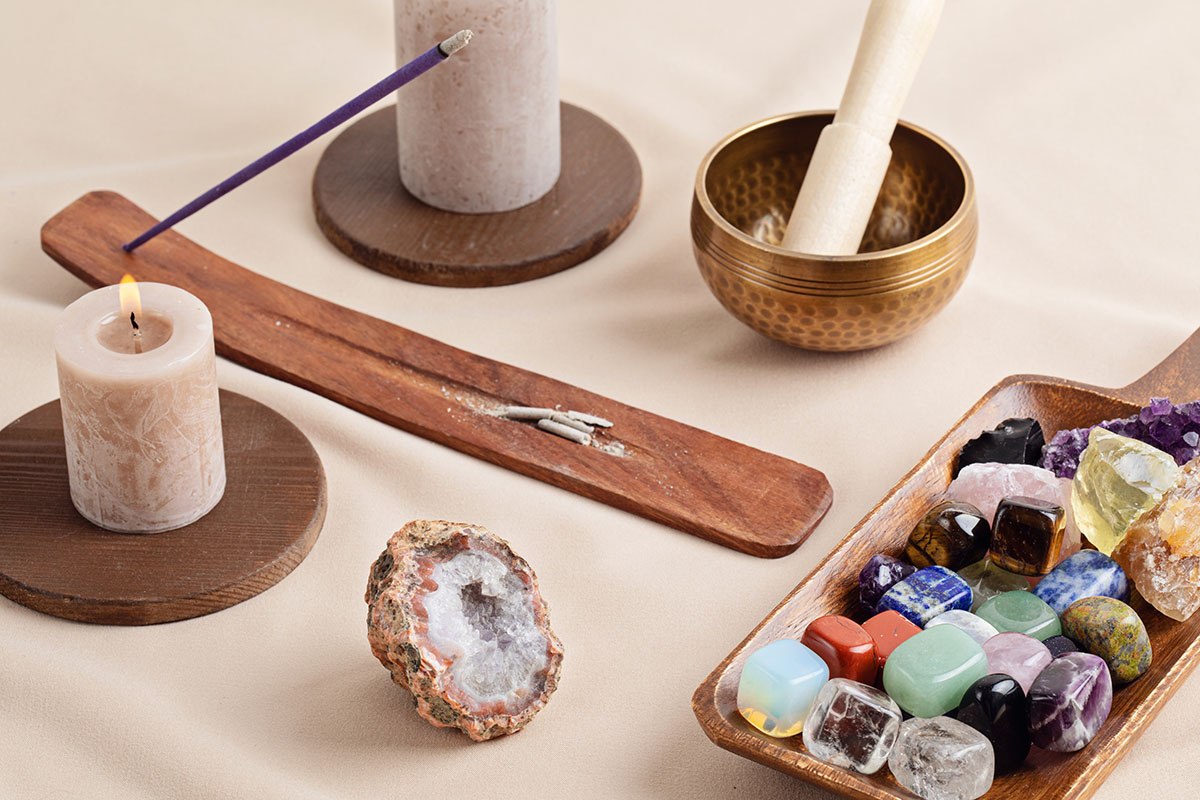
Fine, tumbled, or polished epidote stones are also used in jewelry making for semi-precious and natural stone jewelry. Bracelets, rings, pendants — they come in all shapes and for all tastes. This format of minerals is also valued in therapeutic care. Small epidote stones can be placed on different chakras, carried on your person throughout the day, or held in your hand for a few minutes for a specific need.
Finally, stone elixirs made from epidote can also prove very beneficial. To enjoy the benefits of the minerals and depending on the desired effect, simply drink them or apply them to the skin.
Chakras, Stones, and Astrological Signs Associated with Epidote
Which Chakras Is Epidote Associated With?
Epidote has the distinctive feature of acting on the entire body. Nevertheless, it is from the heart chakra that its high vibrations flow, in a manner even more closely linked to the solar plexus chakra and the root chakra.
Which Stones Can Be Paired with Epidote?
Epidote can be paired with many stones of the same color or connected to the same chakras. Among them, we can mention calcite, magnetite, actinolite, diopside, titanite, andradite garnet, and tourmaline.
It can also be paired with other epidote varieties: piemontite (red with pink or brown shades); allanite (black or brown); tawmawite (deep green); zoisite; and clinozoisite. You can also use epidote with a group of stones from the same geological environment (albite feldspar, chlorite, garnet, prehnite, vesuvianite, etc.).
Which Astrological Signs Is Epidote Associated With?
You can confidently use epidote regardless of your birth sign. Its vibrations are beneficial for everyone, particularly for the signs of Gemini, Libra, and Virgo.
How to Cleanse and Recharge Epidote?
The cleansing and purification of stones must be done with care. To cleanse an epidote, you can soak it for a few hours in slightly salted demineralized water. You can also choose to cleanse your stone with incense or sage.
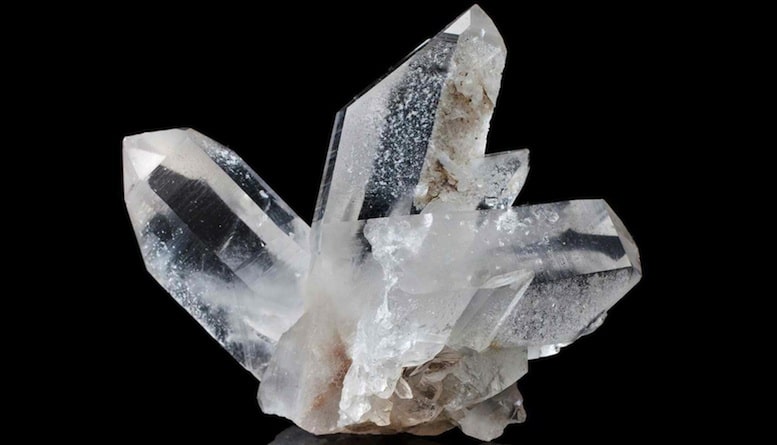
To recharge epidote stones, you can opt for a few hours of exposure to sunlight or on a recharged quartz cluster. Burying it in the earth is also possible but will take longer.



Leave a Reply