 English
  Français
 Español

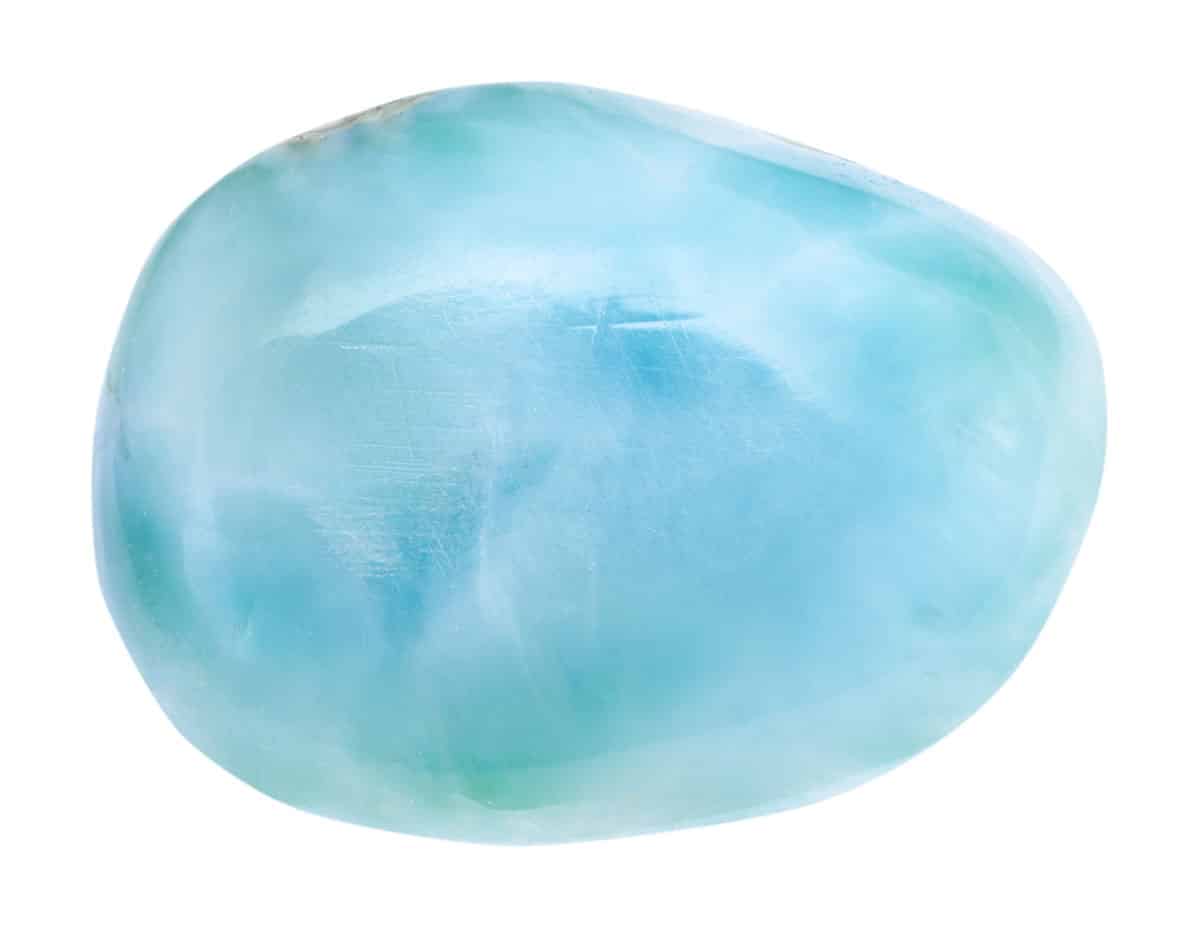
Larimar stone, a blue-colored gemstone extracted from a highly protected mine in the Dominican Republic, is closely related to pectolite. Light blue or white, sometimes green, this semi-precious stone of volcanic origin is associated with the peaceful calm of sky and sea, happiness, inner peace and self-expression. These natural stones have long proven their worth in lithotherapy and offer numerous benefits on both a physical and psychological level. Here are the properties and virtues of larimar.
Characteristics of Larimar Stone
Mineralogical Properties
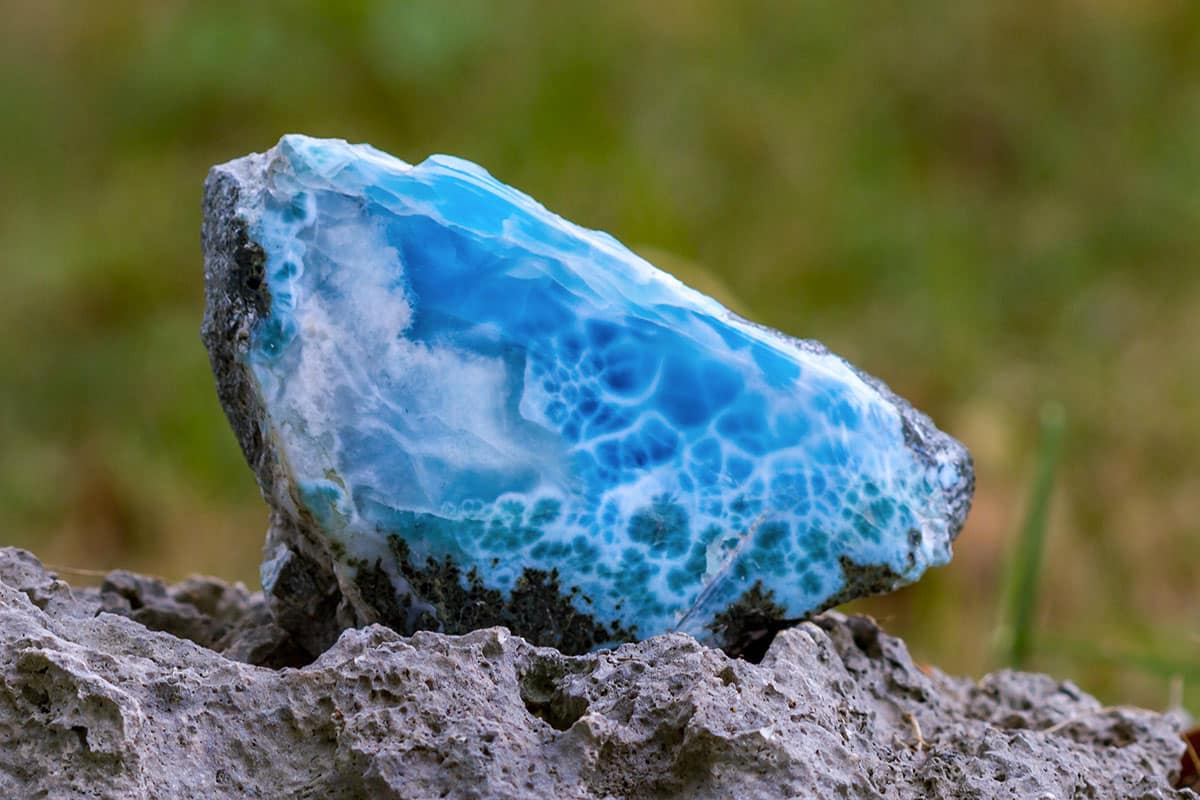
The structure of larimar closely resembles that of pectolites. It is the more or less pronounced presence of copper in the crystal’s composition that gives it its varying shade of blue.
| Group | Quartz silicates |
| Crystal System | Presumed triclinic |
| Composition | Hydrated sodium and calcium silicate, formula NaCa2(OH/Si3O8) |
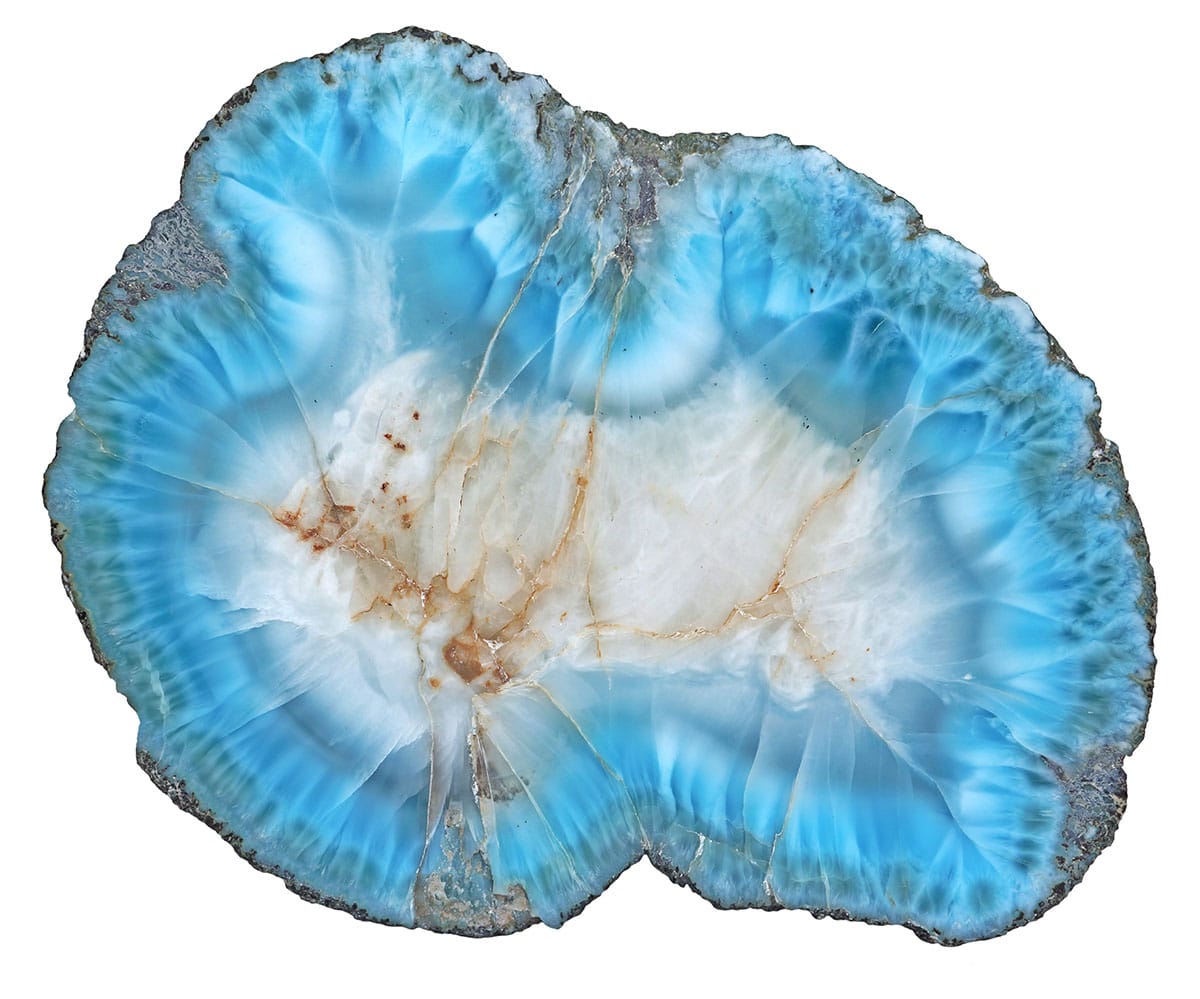
| Colors | Sky blue veined with white, green, depending on composition |
| Density | Between 2.62 and 2.90 |
| Hardness | Between 4.5 and 7 on the Mohs scale |
| Transparency | To light |
| Luster | Silky to vitreous |
| Forms | Various depending on extraction |
| Deposits | Island of Saint-Domingue in the Dominican Republic |

Where Does the Name “Larimar” Come From?
The name of the larimar stone is believed to be a blend of the first name “Larissa” (or “Lari,” depending on the source), the daughter of miner Miguel Dominguez, and the word “mar,” meaning “sea” in Spanish.
Its generic name, pectolite, originates from the Greek “pektos,” meaning “assembled.” The suffix “-lite” refers to stone.
Often mistakenly confused with turquoise, it is not uncommon to hear larimar referred to as ‘Caribbean turquoise‘ or ‘Dominican turquoise.’ These designations are now prohibited by the International Confederation of Jewellery, Silverware, Diamonds, Pearls and Stones (CIBJO).
Officially discovered in a mine in the Dominican Republic in 1974 by Miguel Dominguez, larimar stone has since been the subject of several myths among the country’s inhabitants. These myths link it to the legend of Atlantis and have also earned larimar the title of “Stone of the Atlanteans” or “Stone of Atlantis.”
Origin and History of Larimar Stone
The Taino Indians, the first inhabitants of the island of Saint-Domingue (formerly known as Hispaniola), are believed to have been the first to know and use larimar stone. The use of pectolites at that time was purely ornamental.
This remarkable blue stone was then spotted in 1915 on a deserted island by Miguel Domingo Fuertes de Loren, a pastor from Saint-Domingue. However, he was denied access to this island by local authorities for security reasons. In 1974, it was finally a miner named Miguel Dominguez who officially discovered a deposit of natural stones now known as blue pectolite. Miguel Mendez officially registered the trade name “Lari-mar” two years before the start of its mining.
Rumor has it that the island of Bahoruco, in the Dominican Republic, remains to this day the sole deposit of these natural stones, and that access to it is strictly restricted and secured. In the larimar mine (also known as Los Chupaderos), a group of 200 miners and workers organized into a cooperative hold the monopoly on its extraction. Mining is exclusively artisanal and is carried out across roughly a hundred shafts, of which about thirty are active. This raises questions about the provenance of this famous blue stone on retail websites scattered across the globe. Due to its rarity, larimar stone is quite expensive from sellers whose stone sourcing is reliable.
The existing traditions surrounding this natural stone remain rather vague. Some sellers call this crystal “Stone of the Atlanteans” or “Stone of Atlantis.” But this mythical continent, from Plato’s perspective in “The Legend of Atlantis,” is located more in the Mediterranean. A famous 19th-century American prophet named Edgar Cayce reportedly predicted the discovery of a healing blue stone originating from Atlantis, an island in the Caribbean. Larimar stone was discovered a few years after his death. For many years, only the inhabitants of the Dominican island knew of the existence of these semi-precious stones and used them for their therapeutic benefits.
Despite certain grey areas surrounding the history and origins of this blue gemstone, larimar stone is linked to a strong significance of inner peace. It represents a cloud in a peaceful sky, the ethereal form of matter, and metamorphosis. It is a soothing stone that offers numerous qualities recognized throughout the world.
Virtues and Properties of Larimar in Lithotherapy
Physical Properties and Benefits
Larimar primarily acts on the throat area. As such, its benefits concern all the organs and physical abilities related to this part of the body: the vocal cords, mouth, tongue, use of the voice, taste, bronchial tubes, and more. Larimar stone can therefore have positive effects on most ailments that may occur in these areas.
Its effects extend into the thoracic area, acting in the same way on the lungs and heart. Larimar stone can therefore prove very useful for pulmonary or cardiac issues, as well as for blood circulation in general.
This white mineral also offers benefits for the ENT (ear, nose and throat) region and the organs of sight, hearing and the sense of smell. It thus contributes to the proper functioning of these senses.
Larimar also presents benefits for cartilage and joints. It facilitates joint mobility and helps reduce certain stiffness that may prove painful or debilitating.
A volcanic stone, natural larimar is also used to cool the fire of certain burns and to aid in the regeneration of skin tissue.
Linked to the feminine, these blue colored crystals can also reduce pain related to childbirth, as well as certain discomforts associated with the onset of menopause. Associated with the thyroid gland, this fine stone acts favorably on the hormonal system and the overall proper functioning of the body.
Psychological Properties and Benefits
Larimar is a stone of calm and soothing. The purity of its color is reassuring and evokes maternal tenderness, which can help calm an agitated mind or certain anxieties. Its volcanic origins make it a beneficial stone for cooling the “fires” of anger or aggression.
It is also a stone linked to the heart, to feelings of love directed toward others and toward oneself. It encourages feelings of compassion, altruism and self-confidence. It promotes better verbal expression and improves communication skills.
This pure blue associated with celestial goodness also makes larimar a stone of beauty of the soul. It calls upon the candor, innocence and purity of the inner child of the person who uses it. Larimar can thus allow people who are sad or weighed down by heavy feelings to regain a certain lightness. This property can prove very beneficial, but should be considered with care so as not to fall into excessive naivety.
Larimar crystals also carry a meaning closely tied to intuition, to feeling things with the heart and connecting to higher planes. Its effects can therefore prove very positive for decision-making and creativity.
How to Use Larimar in Lithotherapy?
Like any mineral in lithotherapy, larimar can be used in many different ways. The delicacy of its sky-blue color and the reach of its virtues make it a highly appreciated gemstone for precious and natural stone jewelry. Preferably worn as a necklace around the neck, larimar can also be fashioned into many other types of jewelry: rings, bracelets, earrings, and more.
Another of its most common uses in lithotherapy involves polished or tumbled larimar stones. These can simply be carried on one’s person for a constant effect, or held in the hand for a few moments when a more immediate sense of calm is needed. This type of crystal can also be used in therapeutic treatments, placed on the areas of the body where one wishes it to act (chest, throat, forehead, etc.).
Larimar can also be used in therapeutic massage. Numerous larimar massage pebbles and stones are available on the market. They are specially shaped to allow a massaging and relaxing motion on the areas to be relieved.
Finally, stone elixirs or gem waters also prove highly effective for enjoying the virtues of larimar. Depending on the desired effect, they can be ingested or applied directly to the skin.
Chakras, Stones and Astrological Signs Associated with Larimar
Which Chakras Is Larimar Associated With?
Larimar is primarily associated with the throat chakra, but its effects also extend to the heart chakra and the crown chakra (third eye). All forms of this crystal (polished stones, bracelets or other jewelry) can be used for this purpose.
Which Stones Can Be Combined with Larimar?
Larimar stone can be combined with other stones corresponding to the throat chakra. These are generally sky blue in color, but may have a more or less dark shade. For example, it can be paired with blue opal, turquoise, kyanite or chrysocolla.
This mineral also pairs very well with minerals linked to the heart chakra. To name just a few, we can mention amazonite, chrysoprase, jade, rose quartz or garnet.
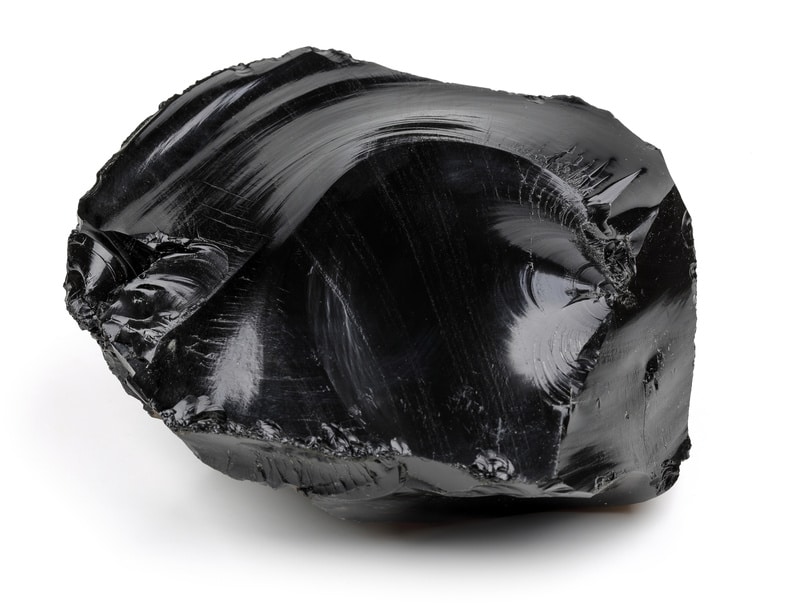
Larimar also combines perfectly with other gemstones from the same mineralogical environment such as rock crystal, obsidian, prehnite or malachite.
Which Astrological Signs Is Larimar Associated With?
While larimar stone is beneficial for all signs, it is particularly favorable to the air and water signs of Pisces, Aquarius and Virgo.
How to Cleanse and Recharge Larimar?
You can cleanse a stone of larimar with salt-free distilled water to release the energies accumulated through use. Alternatively, a stream of running water can suffice.
Due to its light color, this fine stone does not tolerate sunlight. To recharge a stone of larimar, prefer exposure to full moonlight, or place it on a cluster of quartz that has been previously recharged. This type of pectolite can also be recharged in early morning light, by smoke cleansing with Palo Santo or sage. This applies to all forms of minerals, including jewelry.




Leave a Reply