 English
  Français
 Español

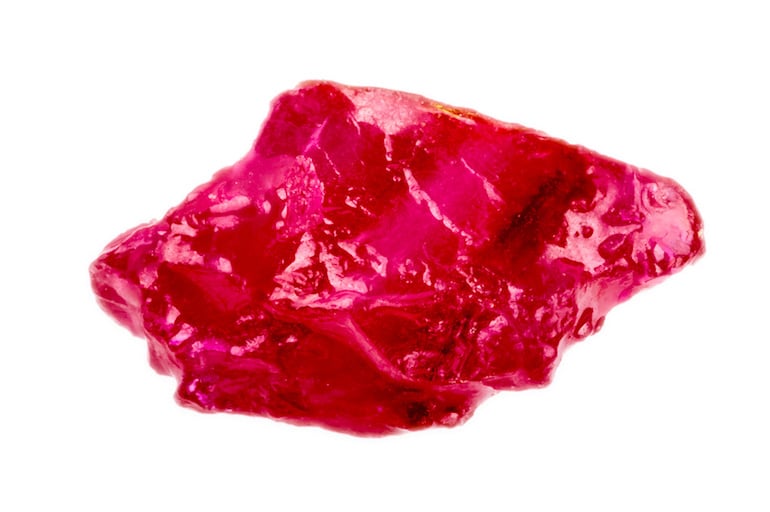
The favorite jewel of maharajas, shahs, sultans and caliphs, ruby also adorns the crowns and jewelry of Western sovereigns and princes. In the early 18th century, the Chevalier Chardin wrote down memories that read like something out of the One Thousand and One Nights:
The Persians call this stone the torch of the night, because of the property attributed to it of lighting up everything around. They also call it Cha mohoré, the royal stone, and Cha jevanan, the king of jewels, and they report that the carbuncle is produced in the head of a dragon, a griffin or a golden eagle…
The carbuncle, the ruby of ancient times, also covered other red stones. The blazing color was the deciding criterion, since red, linked to blood, wine and fire, stood for power, strength and courage.
Ruby held the first rank until the faceted cutting of diamond was fully mastered, which truly happened at the end of the 17th century. As J. de Mandeville wrote in the 14th century: “the ruby is the lord of all precious stones“.
In this article, discover the mineralogical characteristics of ruby, its place through history, the legends that surround it, and its virtues and properties in crystal healing, the ancestral art of healing with stones and crystals.
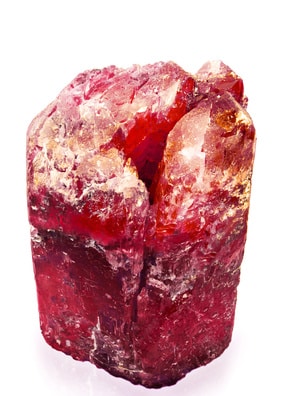 Mineralogical characteristics
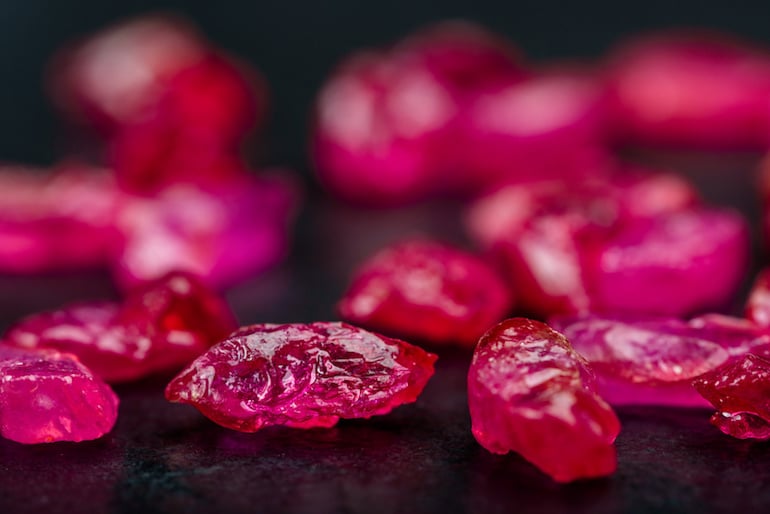
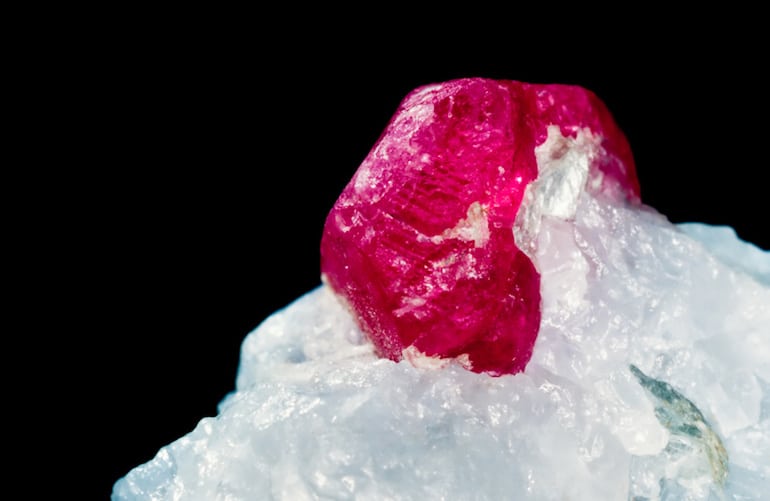
A variety of corundum in the oxide group, ruby is made of aluminum oxide and oxygen. It is transparent to translucent and forms pyramidal crystals. Insoluble in acids, it is the hardest mineral after diamond (along with sapphire, the other corundum).
It forms in igneous rocks or in metamorphic rocks such as mica schist or gneiss. In Asia, rubies appeared some 60 million years ago, when the Himalayas rose.
Ruby usually occurs as small crystals, because chromium hinders its growth, so a large dark red ruby is a rarity. Among precious stones, diamond comes first, but a fine ruby is considered rarer than a fine diamond.
Jewelry and objects made of ruby
-
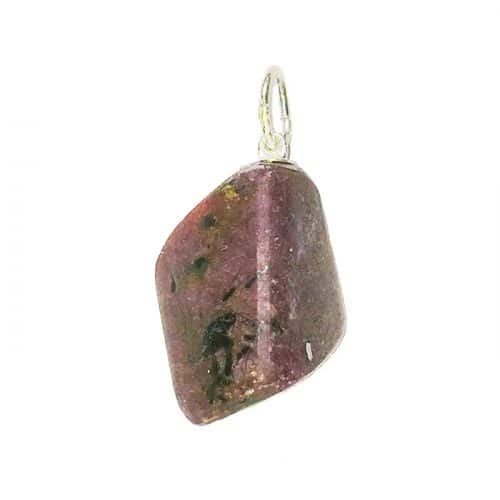
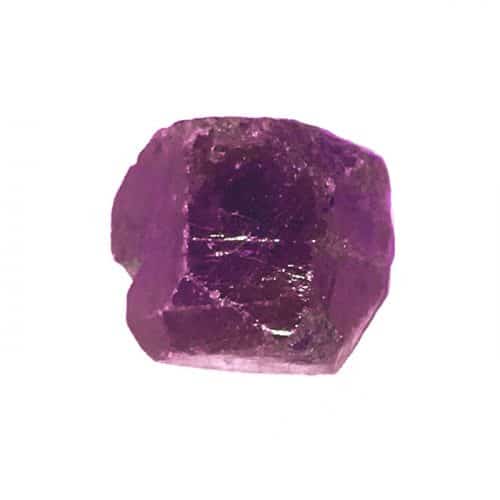 Select options This product has multiple variants. The options may be chosen on the product pageQuick ViewPierres Brutes, Rubis, Saphir
Saphir Rubis Bliss de Qualité Extra – Pierre Brute
Price range: 5,80€ through 23,00€ -


-
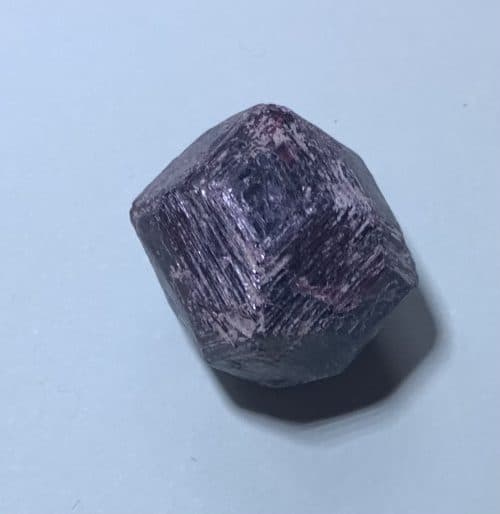 Select options This product has multiple variants. The options may be chosen on the product pageQuick View
 -
-
Colors
Colored corundums generally go by the name of sapphire. Besides blue sapphire, there are yellow, purple, green and pink sapphires. Only the red variety has a name of its own: ruby.
Its color comes from minute traces of chromium (about 1 part in 1,000) replacing aluminum in its structure. The chromium content sets the intensity of the red. Rubies with brownish tones also contain traces of iron.
The red comes in every shade. Rubies from the same deposit do not always show the same intensity, so color alone cannot pin down where a stone came from. Lighter rubies are less prized. In the old days, the Burmese set aside pale or pinkish stones because they did not find them “ripe” enough.
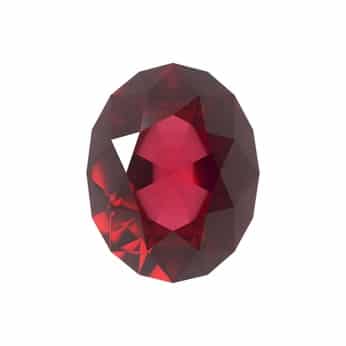
The most sought-after ruby shows a pure, deep red with a slight hint of blue to darken it. This perfect color is called “pigeon’s blood“. Others are cochineal red, poppy red, gillyflower, carnation or vermilion…
Various inclusions are common. They vouch for authenticity but are not always welcome. Heat treatments can soften or remove them.
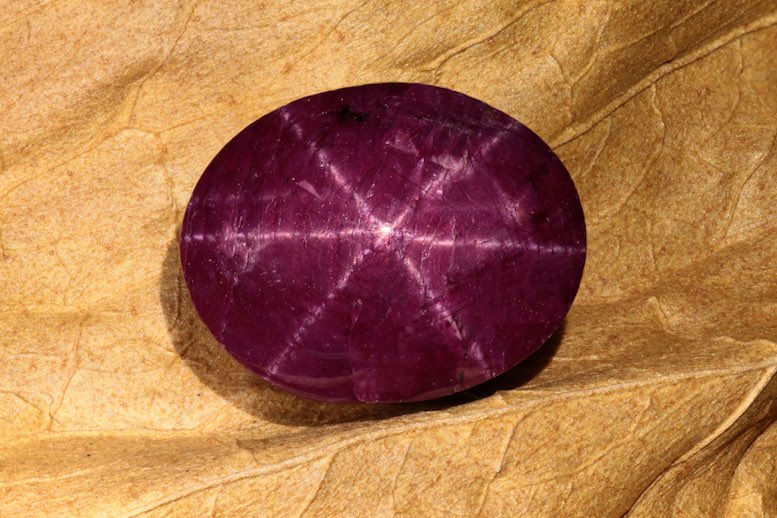
Some rubies display asterism, an effect brought out by cabochon cutting. Rutile inclusions form a perfect six-rayed star. One well-known example is the Edith Haggin DeLong star ruby. It weighs over 100 carats and comes from Burma, where it was mined in 1930. Donated to the American Museum of Natural History in New York, it was stolen in 1964 and returned after a ransom was paid. The Smithsonian Institution in Washington houses the famous Rosser Reeves star ruby, 138 carats, from Sri Lanka.
Possible confusion with other minerals
Ruby can be confused with the following stones:
- Red spinel, wrongly called “balas ruby“
- Tourmaline (rubellite), wrongly called “Siberian ruby“
- Pyrope or almandine garnet
- Hyacinth
- Fluorite
- Pinkish-orange topaz, sometimes called rubicelle
Mining
Rubies can be extracted from underground mines with explosives, but alluvial workings provide the bulk of production. The rocks surrounding the rubies break down, and the freed rubies settle in the valleys carved out by rivers.
In large operations, the earth brought up from the shafts is washed mechanically with high-pressure jets. Washing river gravel by hand with pans, the ancestral method, is still practiced. With a great deal of luck, you can pick up rubies along the paths, but that dream rarely comes true!
Where rubies come from

Burma (in particular the centuries-old workings of the Mogok region) accounts for nearly 90% of world production. Working conditions are very harsh and the trade is often opaque. Twice a year, most of the output is sold at auction in gigantic events held in Rangoon. But ruby is also found elsewhere in Asia:
- Sri Lanka (fine, very red rubies from Ratnapura)
- Afghanistan
- Cambodia
- India
- Nepal
- Pakistan
- Thailand (Chanthaburi region, very deep shafts)
- Vietnam (zoned coloring)
In Africa:
- Kenya
- Madagascar
- Malawi
- Mozambique
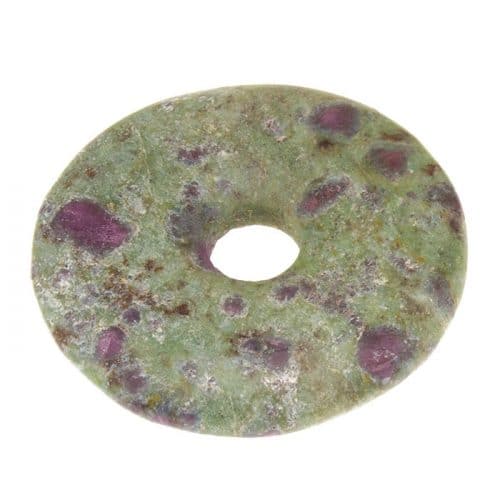
- Tanzania (a striking pairing: green zoisite with ruby inclusions)
- Zimbabwe
In the Americas:
- Brazil
- United States (North Carolina, Montana)
In Oceania:
- Australia
Etymology and meaning of the word “ruby”
Ruby comes from the Latin rubeus, meaning “red”. In medieval Latin it gave rubinus, a root you can still hear in words such as rubella or rubric. In Old French, the robin was a rubeline and the redstart a rubienne. In English, the same red survives in the name of the bird: robin.
The Rubiaceae plant family, for its part, owes its name to Rubia tinctorum, already described in Roman antiquity. This plant is madder, whose roots and rhizomes long supplied the red used to dye fabrics.
The French word rubis (first spelled rubiz) is simply the medieval plural of rubi or rubie. That form took over from the 16th century onward.
Finally, rubicelles were small light-colored rubies (a word still used for certain pink or orange minerals). In medieval inventories, one often comes across a “rubiet” or “rubinet”, other names for small rubies.
The history of ruby
In antiquity
The Romans called ruby and the other bright red stones Carbunculorum, meaning “little glowing coal” or “little lit coal”. “It throws out flashes of fire and reflects the rays of the sun and the moon,” wrote Pliny the Elder. According to him, there were four main kinds:
- The Indian (indicus), with a languid glow
- The Garamantic, from Carthage, smaller and darker (probably garnets)
- The Ethiopian
- The Alabandic, found near Orthosia and cut at Alabanda (ancient cities in what is now Turkey)
No doubt by analogy with the plumage of birds, all these ancient stones were sorted into males, bright and lively, and females, duller.
Treatments existed to give some sparkle to stones that lacked it. They could be left to soak for 14 days in vinegar to gain a shine that would last 14 months. And the finest of these rubies was therefore the “male carbunculorum indicus”. It is almost certainly the red corundum we know today. The other kinds were spinels or garnets.
Few ancient seals were engraved in genuine rubies. Their price, their hardness and the delicate polishing of the hollows discouraged such use. The result was disappointing, since the engraving, poorly smoothed, would catch the wax. Spinons (spinels) were better suited and cost less.
In antiquity, a genuine ruby fetched a high price. Theophrastus (3rd century BC) tells us he bought “a very small one […] for forty gold pieces“. It may have been a ruby from Miletus, described in his treatise on minerals: “Incombustible, angular and hexagonal in shape“. That stone seems to match a corundum. Miletus, a prosperous Greek city, was then a major trading port, and every precious stone passed through it along with other riches from the East…
In the Middle Ages
The Roman Carbunculorum turned into “carboncle” or “charboncle” and then, for the largest flame-red stones, into “escarboucle”, the Old French carbuncle. Medieval chronicles describing Charlemagne in a rage tell us: “his eyes shone like a carbuncle“. But, as we have seen, the carbuncle was not always a true ruby. It might be a red spinel, or a ruby known as balas, or other stones still.
Ruby, the most precious stone of the Middle Ages, had virtues like no other. According to Jean de Mandeville:
It surpasses all red stones in beauty, it brings peace and concord, calms anger, keeps its wearer from all perils and grants fine dreams. It also protects the fruit of the trees, the vines and the land from lightning and storms. The most precious come from the East…
Alas, carbuncles also had evil powers. To announce a misfortune, the stone would change color. Its light was said to be so extraordinary that nothing could stop it, not even clothing. The gravest reproach was that it lit the way for dragons and chimeras. These fantastic beasts were said to wear a ruby in the middle of their forehead or hold one between their teeth. That is what old dragons with tired eyes did to find their way through the countryside at night and reach streams and springs without mishap.
The gem of kings
These wild exaggerations did not put off the sovereigns of the Western kingdoms. Writings from the 13th century tell us that Saint Louis owned a ring “set with a large ruby shaped like a half bean“.
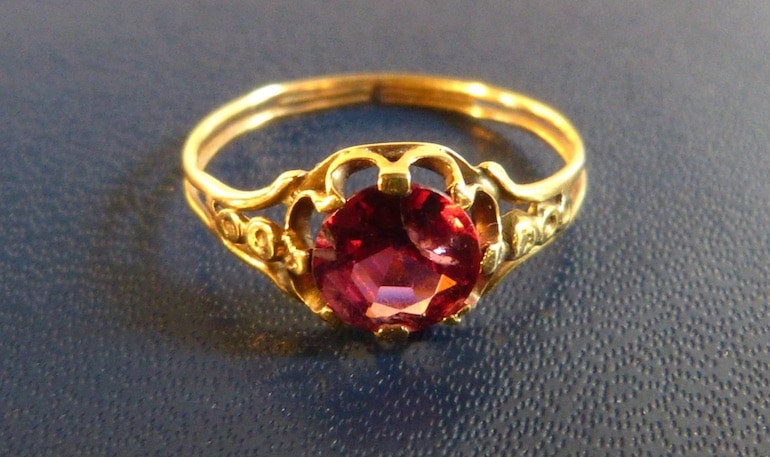
In the 14th century, Charles V, the Wise King, owned a very old engraved oriental ruby depicting a beardless king. He used it to seal the letters written in his own hand. It was known as the “signet of King Charles V“. His daughter-in-law, Isabeau of Bavaria, the most reviled queen of France, prepared herself mixtures of crushed rubies and pearls to stay slim.
In the early 15th century, the Duke of Berry counted among his treasures a ruby set on a gold ring called Cœur de France (Heart of France) and another called Bonhomme, both gifts from his wealthy and generous brother, the Duke of Burgundy. A little later, Charles the Bold, of the same rich House of Burgundy, wore on his hat a chaplet of rubies of inestimable value.
The Crown Jewels
The royal crown of the Capetians held a sacred thorn from the crown of Jesus Christ, set beneath a 278-carat carbuncle. The gem came from the dowry of Anne of Kiev, Queen of the Franks, in the 11th century. An emerald from that crown has come down to us, but not the ruby. Its true nature is still debated: corundum, spinel, garnet?
The question has been settled for the famous “Black Prince’s Ruby,” part of the English Crown Jewels since 1367. This gem, set in a Maltese cross on the front of the Imperial State Crown, is a magnificent spinel. You can admire it at the Tower of London. The same disappointment awaited the ruby of Anne of Brittany known as the “Côtes de Bretagne.” Later carved into the shape of a dragon, it turned out to be a spinel, now on display at the Louvre.
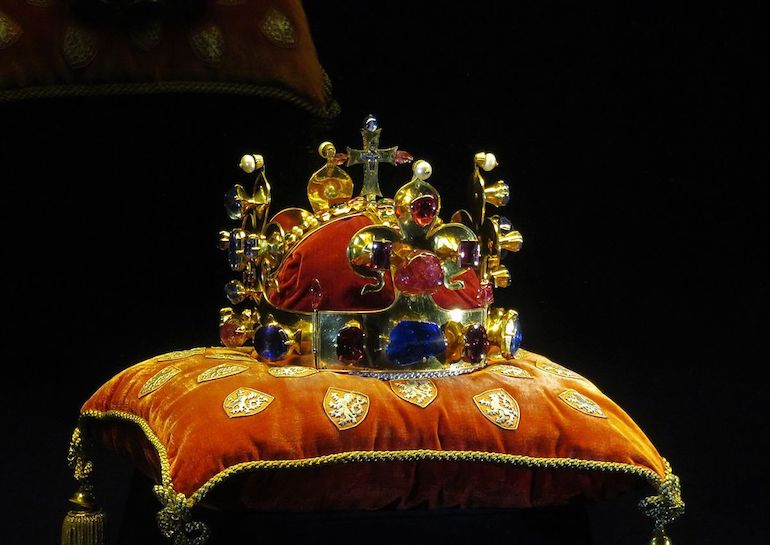
The Crown of Saint Wenceslas was made in 1347 for the coronation of Charles IV, King of Bohemia and Holy Roman Emperor. Raised in France, he wanted the same splendor for his own coronation. Sapphires, emeralds and pearls set in high-karat gold surround a dazzling 250-carat oriental ruby. Today the crown is kept out of sight in a chamber of St. Vitus Cathedral in Prague. To reach the treasure, the seven keys entrusted to seven high officials of the State and the Church must be brought together. It is easier to admire a copy at Prague Castle.
The kings of the East and their rubies
In the East, ruby became an important symbol of the Islamic religion. In the Quran, it is closely tied to the creation of man:
God sent down a house of ruby to Adam. It came to rest at the place called the Kaaba, within the Sacred Mosque of Mecca. A white, shining stone was set there so that this radiant house could be seen from everywhere. Adam visited it and found that every place where he set foot began to flourish and was covered with running water and greenery.
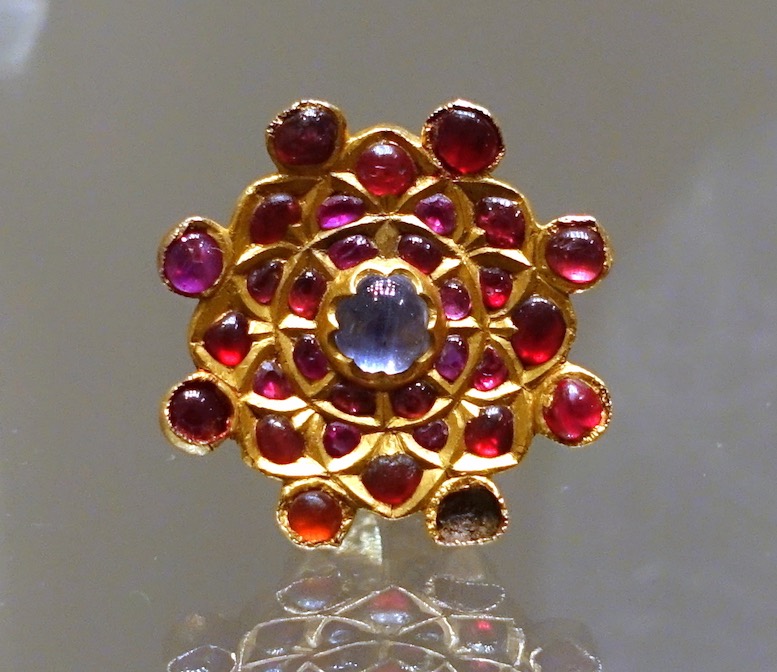
Eastern sovereigns were covered in rubies, symbols of power. Rubies adorned the turban aigrettes of the maharajas, the tops of Chinese mandarins’ caps, the clasps of sumptuous garments, jewelry, thrones and even horses’ harnesses.
Sendemain, the king of Ceylon, owned the finest and largest ruby of all. Marco Polo relates that this ruby was as long as a palm and as thick as a man’s arm. It was the most resplendent thing in the world, red as fire and without a single flaw. The Great Khan tried to buy it at any price, but the king refused: his ruby was not for sale, for it had come down from his ancestors. The king of Siam, for his part, was said to own a carbuncle that lit up the whole room he was in.
At about the same time, in 13th-century Baghdad, the caliph Mostanser Billah of the Abbasid dynasty was forced to hand over his treasures to the victorious Turks. The victors seized them greedily. Among other marvels were a golden peacock with plumage studded with precious stones and ruby eyes, a rooster with a ruby comb and ruby gaze, and a ruby egg of the finest water…
From the 16th century onward
Diamond would slowly push ruby off the top spot. The Florentine goldsmith and sculptor Benvenuto Cellini still reports that a perfect ruby sold for 800 gold scudi, while a diamond of the same size went for 100.
The fantastic powers attributed to ruby faded away. Ruby would remain one of the most precious stones, certainly, but stripped of its magic it lost some of its spellbinding charm. Anselmus de Boodt, a 16th-century lapidary and physician, explains that “nature cannot form stones that shine in the dark, as it has granted to rotten wood, glowworms, herring scales and the eyes of certain animals“.
Later, Jean-Baptiste Panthot wrote the Traité des Dragons et des Escarboucles (Treatise on Dragons and Carbuncles). He did not believe the tales of dragons lighting their way with rubies: “If dragons had such need to see at night, nature, which is wise, would have provided for it as she did for cats and owls…“
From the 17th century onward, Jean-Baptiste Tavernier and then the Chevalier Chardin, merchant travelers in the East, described admirable rubies. At the court of the Kingdom of Persia, Chardin gazed upon a ruby as big as half an egg, of the finest and deepest color. Cut as a cabochon, its tip was engraved with the name of an ancestor of Suleiman the Magnificent: Sheikh Safi.
Scientists such as Buffon ranked ruby among the stones of the first order. To be perfect, he specified, a ruby must be of a fine, even, velvety color, lively throughout, without any flaw or imperfection in its texture.
From the 19th century onward
Around 1800, ruby joined sapphire in the corundum family. The other companions of the ancient carbuncle (spinels and garnets) were classified elsewhere.
In 1852, the British annexed part of Burma, including the territory of Pegu. Long before it became part of Burma, the independent kingdom of Pegu had been known for its rubies. The West began dreaming of abundance, of gems that would be easy to trade. The illusion did not last: tigers, snakes and the other dangers of these hard-to-reach regions ruled out any intensive mining.
From 1886, two French chemists worked together to produce synthetic ruby. Edmond Frémy first managed to make a ruby usable in watchmaking. Auguste Verneuil then developed a method that melts powdered alumina in the flame of an oxyhydrogen torch. The red is obtained by adding chromium oxide. In 1904, the “Verneuil process” went into operation, followed later by other methods.
Virtues of ruby in crystal healing
Jean de Renou, physician to the kings Henri II, Henri III and Henri IV, practiced crystal healing. In his pharmaceutical work he notes that “ruby is greatly cordial (a tonic) and, what is more, resists powerfully all rot and venom“. Today, ruby elixirs are still credited with revitalizing and disinfecting virtues. A stone of life, it gives courage and loyalty. It symbolizes happiness and burning fire. It is associated first and foremost with the 4th chakra, the heart chakra.

Benefits of ruby for physical ailments
- Protects the heart and circulatory system
- Stimulates the kidneys and adrenal glands
- Guards against poisoning and contagion
- Helps lower cholesterol levels
- Restores tone and vitality
- Promotes longevity
- Sharpens eyesight
- Relieves tension, cramps and painful periods
- Treats fevers
- Boosts sexual activity
- Protects against seasickness
Benefits of ruby for the mind and relationships
- Restores joie de vivre and enthusiasm
- Builds self-confidence and perseverance
- Promotes prosperity
- Regulates hyperactivity
- Stimulates creativity
- Heightens every passion
- Guards against jealousy and encourages wisdom
- Strengthens willpower and courage
- Keeps nightmares away and encourages positive dreams
Cleansing and recharging
Salt water, distilled water or demineralized water suits it perfectly. You can also turn to gentler methods such as burying it in the earth or cleansing it with incense. To recharge your ruby, leave it in the sun for half a day or set it on a quartz or amethyst cluster.






Leave a Reply