 English
  Français
 Español

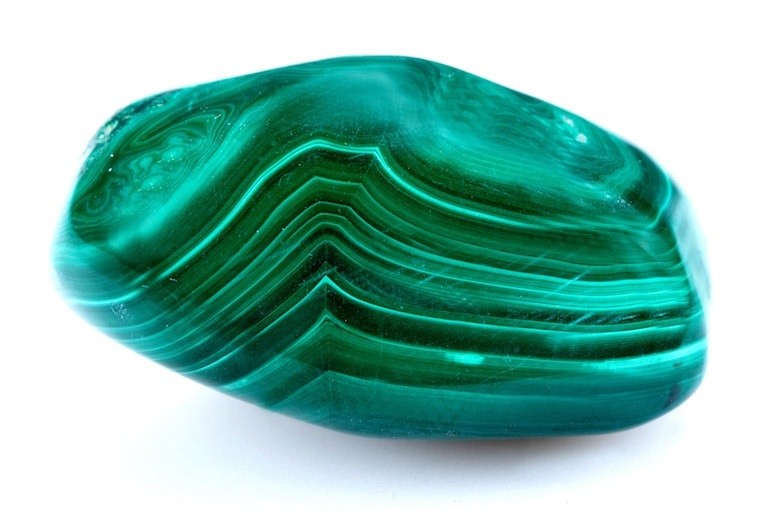
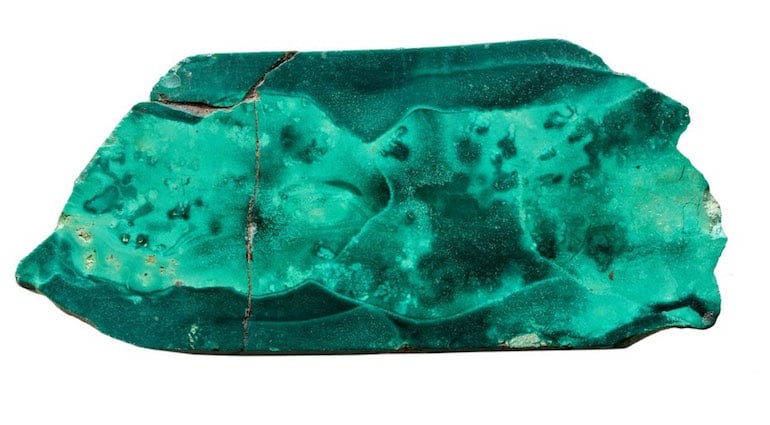
As early as 4000 BC, malachite was already being mined in the copper mines of the eastern deserts. A truly spectacular ore, malachite is found across all the civilisations of antiquity. In its raw state, it fascinates with its rugged relief and its colour reminiscent of the Amazon rainforest. Once polished, the concentric rings and the light or dark bands reveal all the mysterious beauty of the stone. Malachite’s green meanders have amazed us since the dawn of time.
Recently, in the Jordan Valley, a team of Israeli archaeologists discovered a copper awl about ten centimetres long. Placed in a woman’s tomb some 7,000 years ago, it is probably the oldest copper object ever found. Over thousands of years, oxidation covered the little tool in a thick green and turquoise layer, and this chemical reaction gives it the appearance of a precious jewel. It is the natural weathering of copper that produces these ores with their sumptuous colours: shades of blue for azurite, shades of green for malachite.
Malachite jewellery and objects



Mineralogical properties of malachite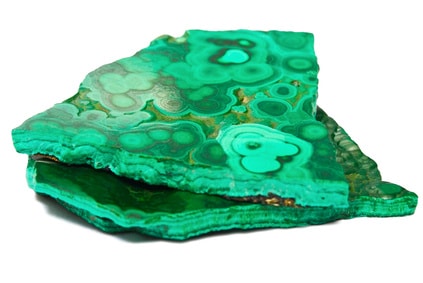
Malachite belongs to the large family of carbonates. More precisely, it is a hydrated copper carbonate. It is found in copper mines scattered all over the world: in Africa, in Australia, in Arizona in the USA, in the Urals in Russia, in Italy and even in France near Lyon at Chessy-Les-Mines and in the Var region at Cap Garonne.
Of very moderate hardness, especially in its massive forms, malachite scratches fairly easily (rated 3.5 to 4 on a scale of 10 established by the mineralogist Friedrich Mohs). It is highly soluble in acids.
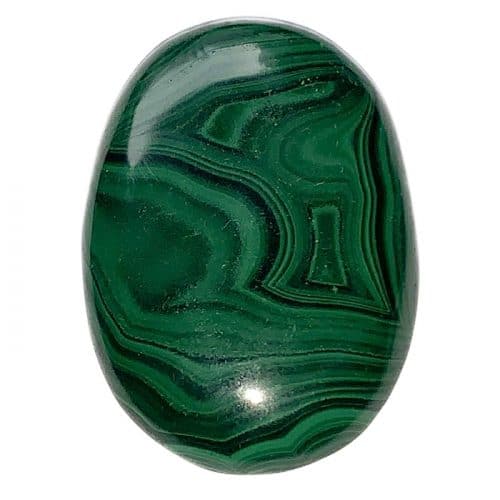
Translucent or opaque, it displays a beautiful lustre and a wide variety of appearances. Most often its concretionary texture gives it an irregular appearance; it can also form stalactites. Sometimes the radiating crystals spread out from the centre and form a very curious star-shaped cluster. On other specimens, the growth strata are clearly visible, tracing concentric circles similar to the rings of trees.
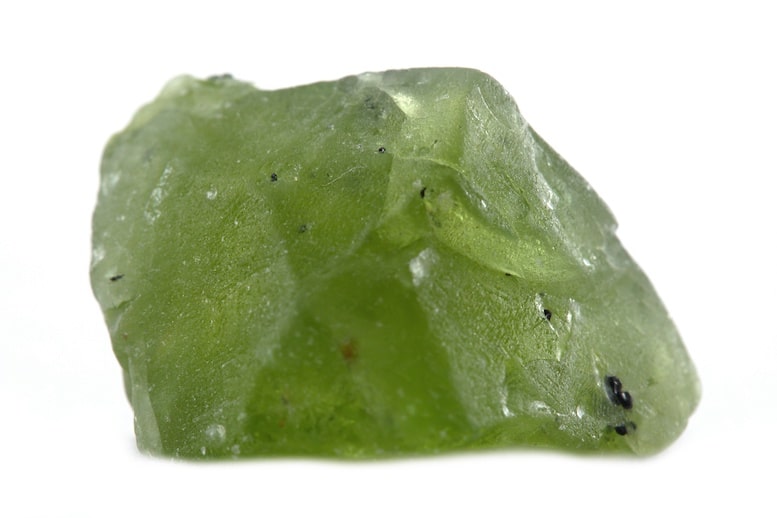
Malachite’s green hue is characterised by pronounced light, dark or even black veining that makes it very recognisable. Monochrome samples are rare; the smallest ones may be, and identification then becomes less straightforward because there are plenty of other minerals of this colour. Besides the precious emerald, one can mention jade, epidote, serpentine, aventurine, tree agate, verdelite (a variety of tourmaline), chrysocolla and peridot – these last two ores having often been confused with malachite in the past.
Azurite-malachite is a natural but very rare association of these two minerals, differently coloured yet from the same family and originating from the same mineral deposit.
Etymology and meaning of the word “malachite”
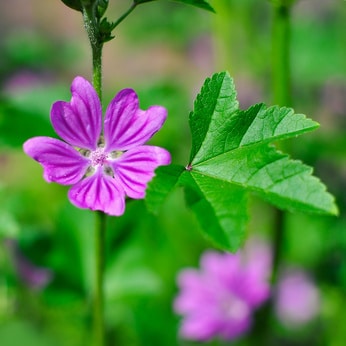 The word comes from the Latin malachites, itself derived from the Ancient Greek moloche. It is thought to be formed from the words malak (mallow) and lithos (stone), a surprising name for a green stone! The mallow in question is a plant abundant throughout the countryside (malva in Latin). It was only later that its name came to designate the colour of its flowers.
In fact, it would seem that the Greeks took inspiration from the underside of the leaves to name the mineral. Like the Romans, they consumed it regularly, so it is possible that they noticed a resemblance. Some etymologists cast doubt on this explanation. The leaves in question are indeed quite veined, but their colour is nothing remarkable in the plant world!
Another explanation has been put forward: malachite’s poor hardness is said to be the origin of its name, malakos (soft).
There may also be another quite simple interpretation stemming from the first two. The mallow owes its name to its “emollient” properties malakos: it soothes and softens. Its well-known anti-inflammatory effect calms various pains, toothaches for example. Malachite, rich in copper, possesses the same virtues. The Greeks used the mallow malak as well as the mineral with similar effects, which they would then have called the “emollient stone” from malakos and lithos.
Malachite throughout history
Malachite is present in all civilisations and in all beliefs. It has been used for millennia for medicinal, cosmetic and decorative purposes. Let us take a short detour through history before turning to the uses of malachite within modern lithotherapy.
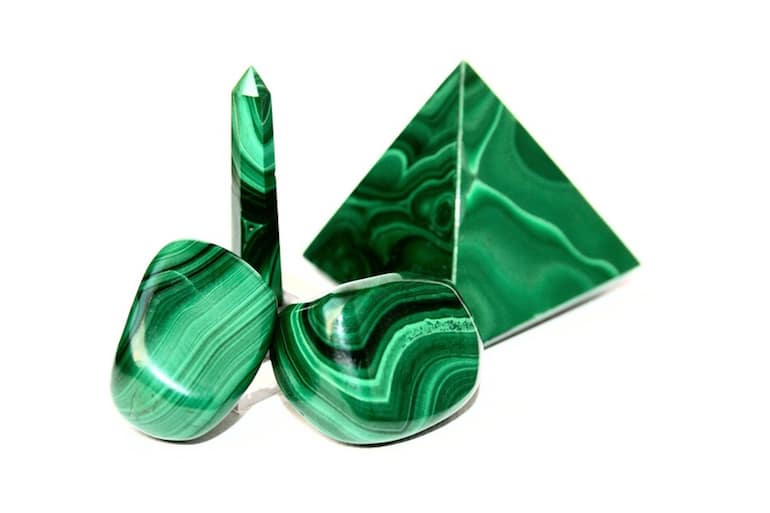
Malachite in ancient Egypt
For the Egyptians, death was akin to a new life, and the colour green, a beneficial one, symbolised youth, health and every form of rebirth. On the other bank, the “fields of reeds” or “fields of Ialu” designate that beyond also called “the domain of malachite“.
To guide the Egyptians towards this unknown realm, the Book of the Dead, a body of religious and funerary texts, delivers a wealth of advice. These magic formulas are often graceful and full of poetry: “Yes, I have appeared as this great golden falcon emerged from its egg, and I have taken flight, I have alighted as a golden falcon, four cubits tall, with wings of malachite …”.
Closely associated with malachite, Hathor, goddess of fertility, favours all forms of life: human, animal and plant. She also possesses other powers: she encourages musical gifts and protects the miners of Sinai. The temple of Serabit el-Khadim, a mining sanctuary, is dedicated to “Hathor, mistress of turquoise, of lapis lazuli and of malachite”.
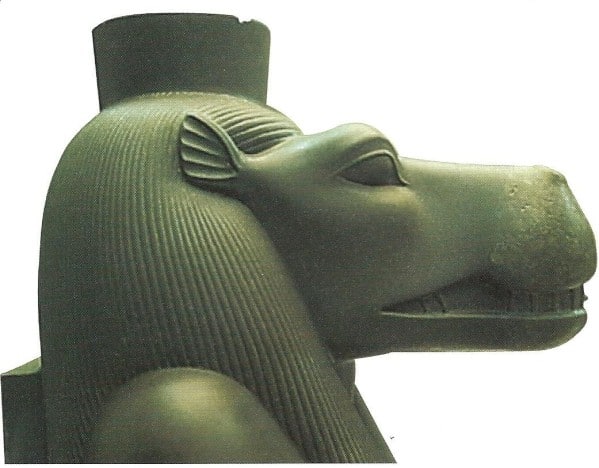 Malachite is also associated with Taweret, the hippopotamus goddess, protector of motherhood (pregnancy, childbirth and breastfeeding). She therefore protects vulnerable women and their young children. Taweret was very popular in Thebes, and women wore a malachite amulet bearing her likeness.
In everyday life, malachite is a precious eye make-up, for it also heals eye infections at the same time! Cosmetic palettes dating from the pre-dynastic period (approx. 4,000 years ago) have been found. These small trays made of volcanic greywacke stone were used to finely grind the malachite intended for make-up.
Malachite powder also pigments frescoes such as the beautiful scenes found in the tomb of the scribe Nakht in the Theban necropolis near Luxor.
Malachite in Greek and Roman antiquity
In Greek antiquity, malachite was frequently used for its well-known medicinal properties, and it enjoyed great popularity because it granted protection to the most vulnerable. Children wore amulets, warriors wore bracelets.
Malachite also held an important place in artistic activities. The Greeks excelled in the art of the cameo and made great use of it in this particular and delicate engraving technique.
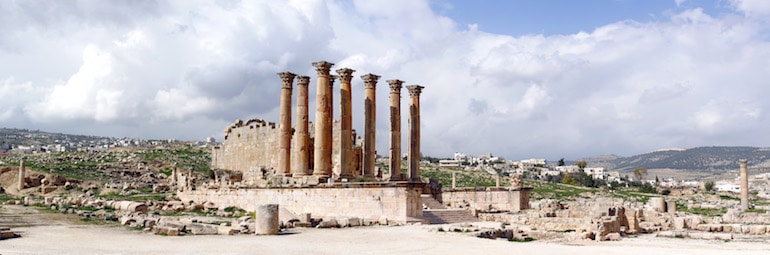
In architecture, malachite decorated the columns of one of the Seven Wonders of the World: the Temple of Artemis at Ephesus. It is hard to imagine today the splendour of this magnificently coloured edifice with its perfect proportions. The temple was destroyed and rebuilt several times until its final demolition in the fifth century of our era.
Chrysocolla often refers to malachite among the Romans. They commonly used both, and for lack of means of identification there was often confusion. Pliny the Elder, in the first century, nevertheless gives a fairly precise description of it in his encyclopaedia of natural history and informs us about its uses:
“Malachite is not transparent; it is of a darker and more matte green than emerald. It is good for making seals, and it is endowed with a medicinal virtue that makes it suitable for protecting children from the dangers that threaten them…”
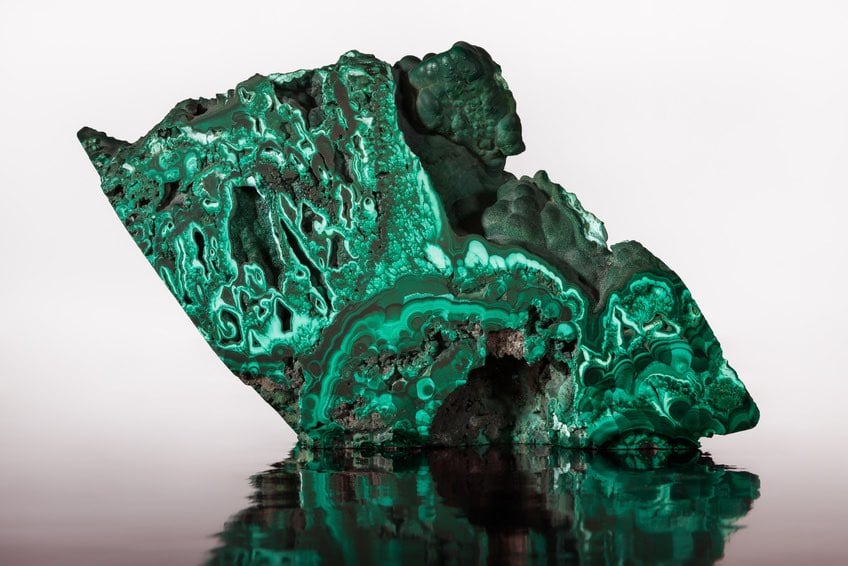
The goddess of fertility in Roman mythology is Juno. The queen of the Pantheon, wife of Jupiter, placed the hundred eyes of Argus on the feathers of a beautiful bird that would become a peacock. She is always depicted accompanied by her favourite great birds, and quite naturally it is the rare malachite – peacock eye that came to be associated with her and protected her from the evil eye.
Malachite in the Middle Ages and the modern era
In the Middle Ages, malachite was credited with an astonishing power: it was said to allow one to understand the language of animals, exactly like Saint Francis of Assisi!
John of Mandeville, author of a lapidary in the fourteenth century, does not mention this strange property. In this work we find the traditional virtues of malachite, designated under the name of clochite:
“It makes children well rested and keeps them from wrath and from the evil eye and from enemies and from other ills that come to children, and it keeps the one who wears it from enemies and from harmful causes; it is found in Arabia and elsewhere…”
Ground malachite imported from the Near East was called “mountain green”; it tinted frescoes, icons and above all illuminations with green. The precious books of hours of the fifteenth century offer a magnificent glimpse of this medieval art. “The Very Rich Hours of the Duke of Berry” and “The Great Hours of Anne of Brittany” are brimming with delicate details and vibrant colours. Malachite enhanced the depiction of nature and medieval fabrics.
In the nineteenth century, enormous blocks of malachite weighing more than twenty tonnes came out of the mines of the Urals. These gigantic deposits made the fortune of the tsars. Russian malachite then abundantly adorned palaces and cathedrals. Most of the decorative malachite objects we so often admire in our châteaux and museums come from the Russian quarries.
Virtues of malachite in lithotherapy
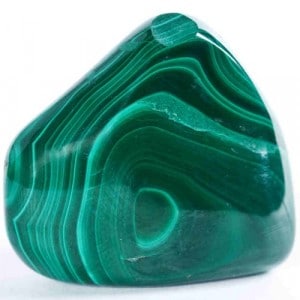 Since the most distant times, malachite has been used within healing practices, and notably in the relief of pain. It is one of the most popular stones in modern lithotherapy.
A product of the weathering of copper, a metal essential to life, it possesses the same healing virtues: anti-inflammatory properties and antibacterial properties. These two very important qualities explain the great diversity of its indications.
Beneficial for everyone, malachite is particularly suited to women and children. Tradition dedicates malachite to those reputed to be the most vulnerable, a constant found across all civilisations.
Virtues of malachite against physical ailments
Anti-inflammatory and antispasmodic properties:
- Toothaches
- Sore throats
- Asthma
- Kidney pain
- Haemorrhoids
- Arthritis
- Osteoarthritis
- Rheumatism
- Sprains
- Fractures
- Colic
- Cramps
Antibacterial and antiseptic properties:
- Eye infections
- Ear infections
- Bacterial throat infections
- Tonsillitis
Revitalising properties:
- Increases endurance
- Promotes cellular detoxification
- Strengthens the immune system
- Accelerates tissue regeneration
Calming and soothing properties for the nervous system:
Properties acting on the circulatory system:
- Protects the heart
- Purifies the blood
- Haemostatic effect
Virtues of malachite on the psyche and relationships
- Promotes meditation
- Facilitates the understanding of dreams
- Helps to overcome depression
- Improves self-confidence
- Strengthens the capacity for expression and persuasion
- Frees from inhibitions
Indications for women
- Protects pregnancies
- Eases childbirth
- Normalises painful and/or irregular periods
Indications for children
- Sleep disorders
- Nightmares
- Convulsions
- Weaning
 To benefit from the virtues of malachite, you can wear it on you: as a piece of jewellery, a pendant, or quite simply by keeping a tumbled stone in your pocket.
To treat painful areas, apply the malachite for as long as possible. You can place it, as a pebble or a tumbled stone, against the affected part and hold it in place with a bandage.
For a beneficial effect on the whole body, lie down calmly, accompanied if you wish by some ambient music, and place a malachite on the heart chakra.
Warning: do not prepare an elixir with malachite; the copper it contains makes it unfit for consumption and even toxic.
Cleansing and recharging malachite
Malachite has the particularity of being very absorbent; it becomes saturated quickly and you will need to cleanse your stones after each use. Pure water is the easiest and most effective method. You can use tap water or, better still, demineralised water. Do not let it soak for too long and, above all, do not add salt.
The other recommended method is smudging: pass the stone through the smoke of incense, sandalwood or sage wood. You can alternate this very gentle method with water cleansing.
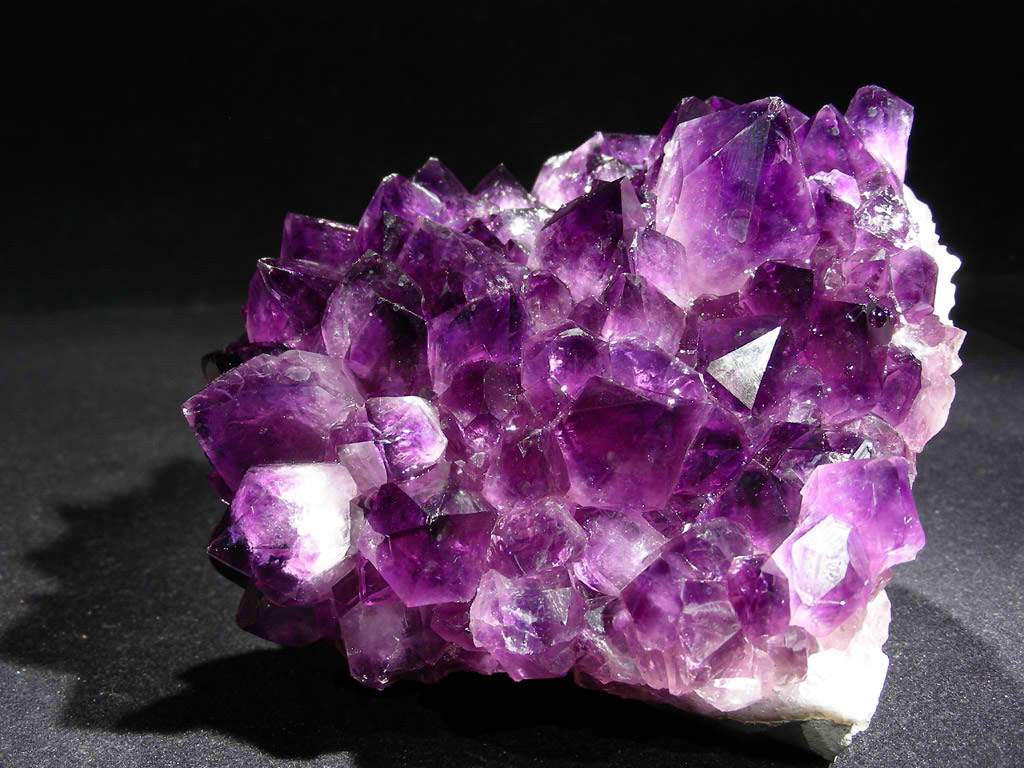
You will recharge it inside an amethyst geode or, more simply, in the morning sun, since malachite is sensitive to intense heat.
Do you have a malachite that you use in a way not covered in this article? Do you love this mineral and simply wish to share your experience? Feel free to leave a comment: your stories are always appreciated!




Leave a Reply