 English
  Français
 Español

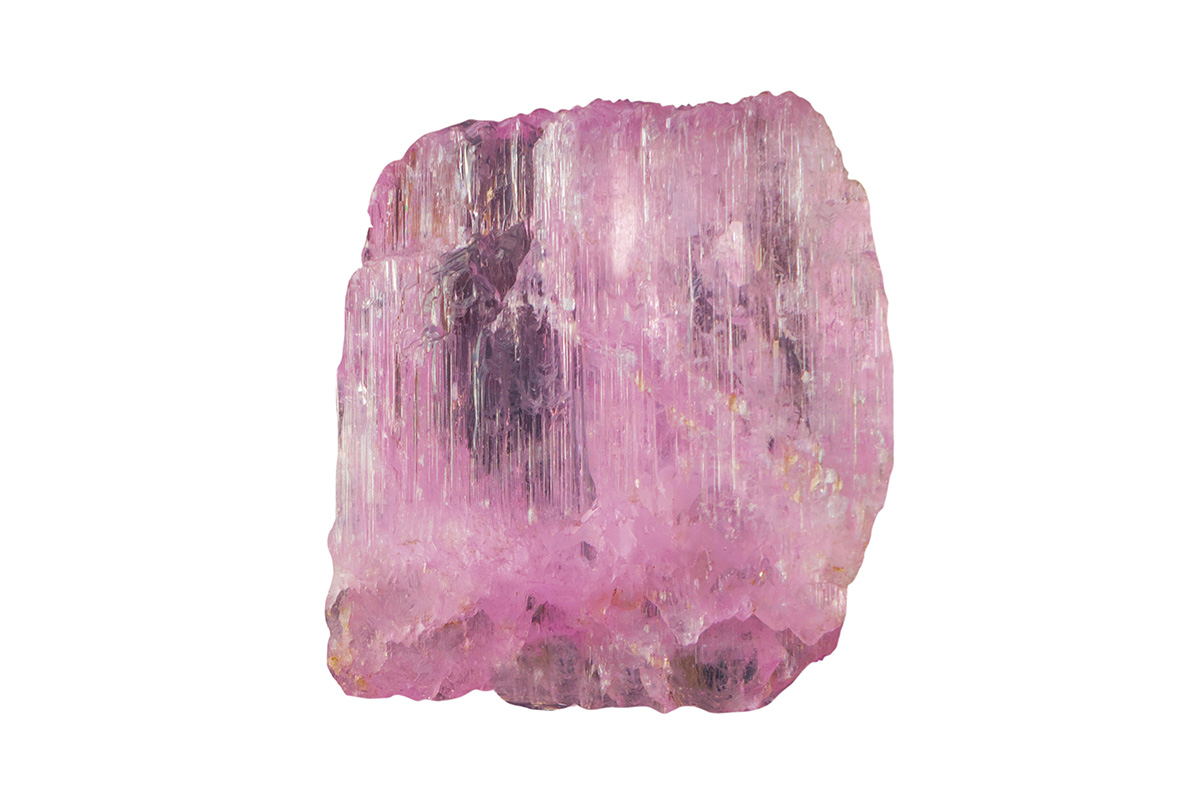
Kunzite, also known as California iris, is a gemstone of harmony and gentleness renowned for easing heartaches. Highly prized by 20th-century jewellers for its beauty and dazzling reflections, its popularity later spread throughout the Western world. This extremely rare and delicate gem was first valued for its ornamental qualities. It quickly captivated the interest of crystal healing practitioners for its soothing virtues on children. Over time, many other physical and emotional benefits were discovered in lithotherapy.
Mineralogical properties of kunzite
The kunzite stone was named upon its discovery in 1902 by the mineralogist of the same name: George Frederick Kunz. Its etymology therefore refers directly to its discoverer, kunzite being the “stone of Kunz”. Here, gathered in a summary table, are its main mineralogical characteristics:
| Group | Spodumene, pyroxene group, inosilicate family |
| Crystal system |
monoclinic |
| Composition |
aluminium and lithium silicate |
| Colours |
pale pink, pink, deep pink, pinkish-violet, violet, purplish red |
| Density |
between 3.03 and 3.23 |
| Hardness |
between 6 and 7 on the Mohs scale |
| Transparency |
depending on the light |
| Lustre |
variable depending on the light |
| Forms |
rough, polished, regular or not |
| Deposits |
deposits in Afghanistan, Burma, Brazil, Madagascar, Pakistan, California |
The varieties of kunzite in lithotherapy
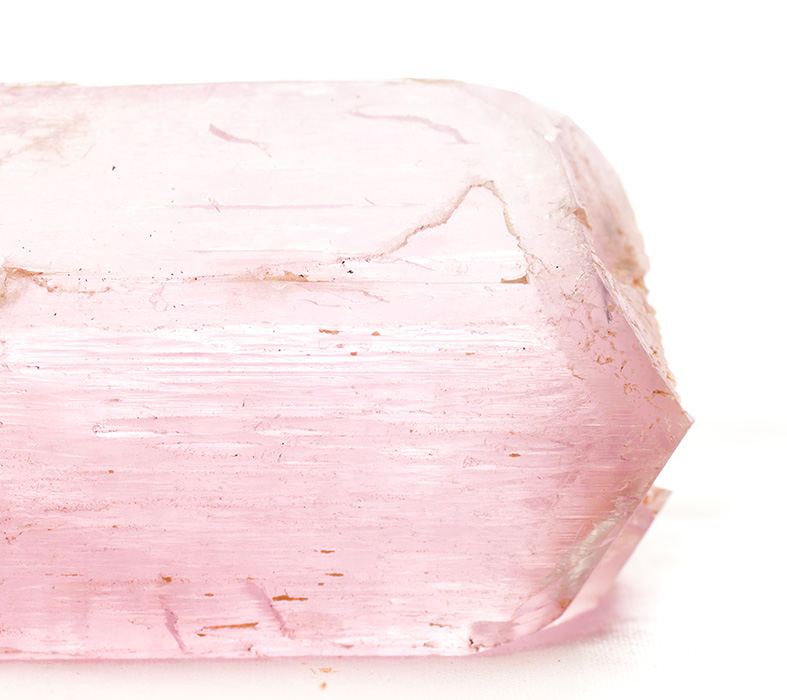
This mineral comes in three varieties of stones of different colours :
- Kunzite with a bright hue, also called Patroke stone, whose colour is close to that of lilac.
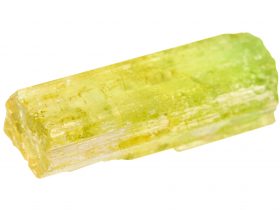
- Champagne kunzite, pinkish and yellow in colour.
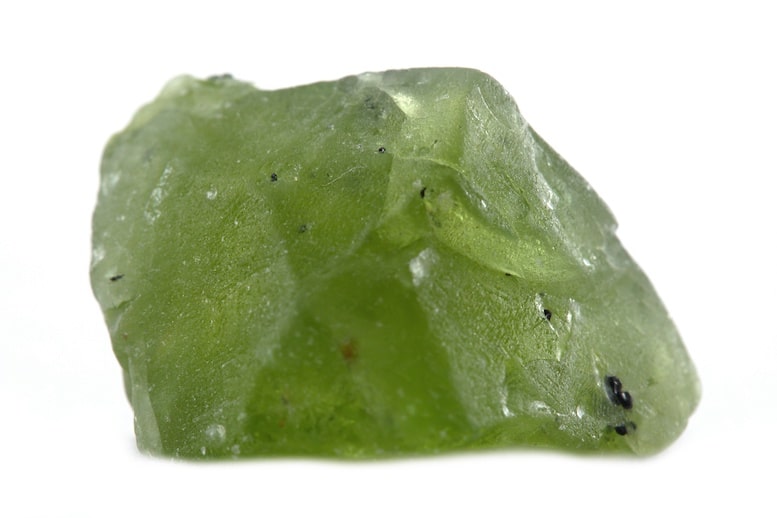
- Green kunzite, or “mint” kunzite, featuring green hues.
- White kunzite, closer to a very pale pink.
Meaning and characteristics of the kunzite stone
A feminine symbolism
Unlike other natural stones, there is no true myth known to be associated with kunzite. We know that it is a precious and rare gemstone, extremely well known and appreciated for its strong symbolism linked to love and femininity.
Its hues range from pale pink to much darker reddish-violet tones, while always giving off an extreme gentleness. It is this delicacy that characterises kunzite: it is akin to romanticism, to the balance between feminine strength and tenderness. It represents the purity of feelings and empathy, the soothing and harmonising of body and mind.
Distinctive features of kunzite
What makes this gem an exceptional mineral is first of all its incredible colour and its astonishing ability to change hue. It should be noted that the latter varies according to the manganese content of the stone. The higher its concentration, the more the stone’s light increases.
This mineral is also very sensitive to heat and sunlight. Its colour becomes more vivid when exposed to a high temperature. However, it also loses some of its colouring in the sun; this is what is known as pleochroism. The darker its colour, the more valuable a kunzite stone is. Another astonishing feature: kunzite is phosphorescent in the dark.
Psychic and psychological benefits
Eases heartaches
A precious ally in the event of a break-up, the kunzite stone moderates painful feelings such as sadness, anger, or guilt. It gives off a comforting wave of gentleness that soothes the soul and the heart.
A stone of love and empathy
Kunzite soothes the relationship one has with oneself, strengthens self-love and, by a mirror effect, the love and good feelings felt towards others. In love, it can help to better understand one’s partner, facilitate communication and strengthen romantic bonds.
Reduces stress and anxiety
These natural stones act on nervousness and the various fears linked to everyday life. Their calming vibrations neutralise the effects of these emotions and bring an intense feeling of relaxation and soothing. They thus generate greater harmony and inner peace, both mentally and physically.
Effective against chronic sadness
Kunzite can also be used against depressive states. Its soothing virtues make it easier to distance oneself from events and lessen the weight of negative feelings. These energies make it possible to regulate emotions in order to avoid excesses of any kind.
Promotes concentration
By softening negative emotions, this remarkable stone allows a lightness of mind conducive to lucidity and the improvement of intellectual abilities. This makes it, for example, a remarkable ally for going through interviews or exams.
Conducive to meditation and creativity
All these virtues linked to soothing make kunzite an ideal stone for the practice of meditation. It promotes a return to mental calm as well as the opening of the heart and of the energy centre of intuition. The latter corresponds to the development of intuition and creativity.
Helps you sleep better
The kunzite stone promotes better sleep. Its calming effect on the mind prevents bad dreams and helps to offer a restful and regenerating night. Keeping a stone near you while you sleep helps you to wake up refreshed and in a good mood.
Virtues and properties on the physical level

Acts on the heart and lungs
The kunzite stone has a beneficial influence on the heart and on the vascular system in general. It promotes the proper functioning of this organ, as well as good blood circulation. It also allows the regulation of blood pressure and contributes to the regeneration of the lungs, thereby promoting better breathing.
Soothes certain pains
By acting on the heart, kunzite promotes better blood supply to the various parts of the body. This can help to relieve certain headaches, as well as neck, joint, sciatic, or dental pain.
Beneficial for hormones
A stone strongly imbued with feminine energies, the kunzite stone has a powerful influence on women’s hormonal system. Favourable to the development of sexuality, it also has the power to lessen menstrual pain. It also improves the appearance and quality of the skin.
Balances the digestive system
Kunzite is a stone that acts on the consequences of excessively high acidity in the body. It promotes digestive comfort by soothing heartburn, ulcers, or gastric and oesophageal reflux.
Restores strength and vigour
This gemstone offers benefits against the consequences of overwork and more or less chronic fatigue. It restores strength and tone, both physically and mentally.
Useful in cases of addiction
The kunzite stone can prove beneficial in weaning off addictive substances such as tobacco or alcohol. Its specific action on the heart, and the influence it exerts on the rest of the body and mind, can help people suffering from addiction to find the impetus to overcome their dependence.
Promotes the circulation of energies
Kunzite helps the body’s energies to harmonise and flow more smoothly. This concerns in particular bodily fluids such as blood or lymph. This helps to dissolve the blockages and knots present in the body, which positively affects the immune system. The onset of certain conditions can thus be avoided, or their recovery made easier.
How to use kunzite in lithotherapy?
This mineral can provide its benefits in several ways, whether on an adult or a child:
- you can wear it as jewellery (necklaces, bracelets, pendants, etc.);
- it can be kept on you in a wallet, a clothing pocket, or another bag carried close to the body;
- placed on a bedside table in a bedroom, this stone is conducive to sleep;
- placed in another room, it harmonises the energies of the space;
- in the car, the kunzite stone can help you stay focused;
- used in a treatment, it will be placed on the areas of the body to be treated (head, heart, throat).
Which chakra for kunzite?
The properties of this gemstone act particularly on:
- The heart chakra: connected to the cardiovascular system, it is the energy centre of love towards oneself and others, of soulful beauty, empathy and forgiveness.
- The throat chakra: corresponding to the organs located in this area and involved in the act of communication. It promotes clear dialogues, in the authenticity of feelings, fosters relevance and improves listening skills.
- The third eye chakra: concerns perceptions, clarity of mind, imagination and intuition. It relates to inspiration and the expression of creativity.
Maintaining and cleansing your kunzite stone
Roughly every two weeks, it is advisable to carry out the cleansing and energetic recharging of the mineral.
To cleanse the stone of its accumulated energies, you can:
- Bathe the stone for a few hours in salted demineralised water or, failing that, under a stream of tap water.
- Bury it under the earth so that it absorbs its energies.
- Purify the gem with incense or sage.
- Use the vibrations of a Tibetan singing bowl.
To recharge kunzite, be aware that this is a delicate stone extremely sensitive to variations in light. Overly bright or prolonged exposure to sunlight may damage it.
It is therefore advisable to recharge it in the light of the full moon for a whole night. To increase its power, you can place it on a cluster, a quartz crystal or an amethyst geode.

Kunzite jewellery and objects
Which stone to pair with kunzite?
It is preferable to pair this stone with minerals of the same colour or acting on the same chakras:
- For an action on the heart chakra: you can use rhodochrosite, green apatite or amazonite.
- To stimulate the third eye chakra: kunzite can be paired with amethyst, lapis lazuli, or fluorite.
- Pairing it with chrysocolla, agate or chalcedony can be very beneficial as regards the throat chakra.
- Finally, rock crystal has the ability to intensify the vibrations emitted by stones. It can therefore easily be used with a kunzite.
Which astrological signs does kunzite correspond to?
The kunzite stone is particularly favourable to people born under the signs of Gemini, Aquarius, Scorpio, Libra and Taurus.




Leave a Reply