 English
  Français
 Español

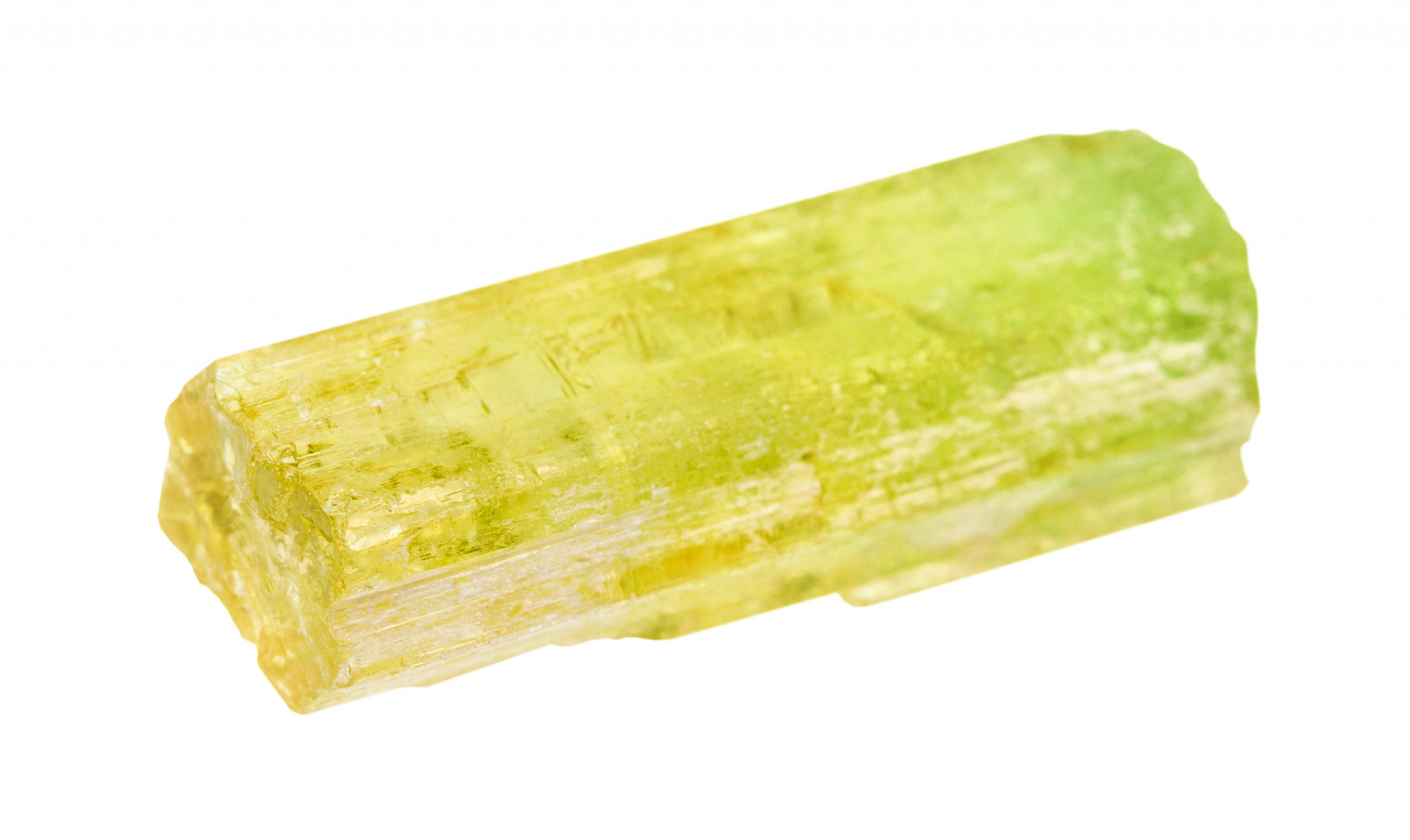
Heliodor is a beryl variety displaying a range of colors from yellow-green to golden honey. A stone of prosperity and joy, it offers many other qualities in lithotherapy.
Characteristics
Mineralogical properties
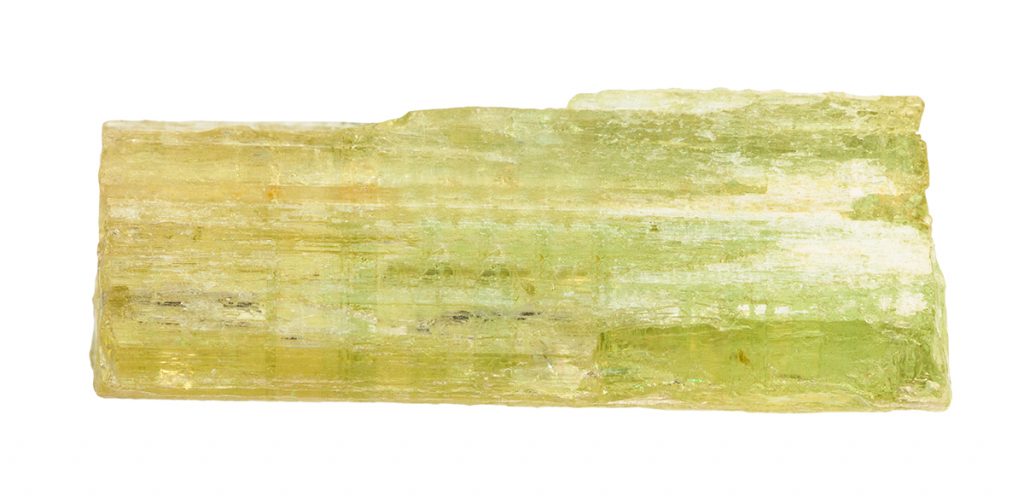
Heliodor stands out from other beryls thanks to its honey-yellow or yellow-green color. This variation in hue is caused by a uranium oxide with very low radioactivity. This stone is often found on the periphery of hexagonal or icosahedral formations of quartz or citrine, alongside other heliodors or other types of beryls.
| Group | Beryl variety, cyclosilicate family |
| Crystal system | Hexagonal |
| Chemical composition | Aluminum and beryllium silicate, chemical formula: Be3Al2Si6O18 |
| Colors | Yellow, yellow-green, golden |
| Density | 2.63 to 2.80 |
| Hardness | 7.5 to 8 |
| Transparency | Transparent to translucent |
| Luster | Vitreous, matte |
| Raw form | Crystals, granular aggregates, compact and radiated formations, pebbles, prisms, tabular crystals |
| Deposits | Namibia (Otavi and Rossing regions), Minas Gerais in Brazil, Russia (Ural region), Pakistan, Madagascar |
Where does the name “heliodor” come from?
Etymologically, the heliodor stone takes its name from Greek, specifically from the words doron (= gift) and helios (= sun). The Greek origin of its name therefore means “gift of the sun.”
A popular masculine first name during Antiquity, it is becoming fashionable again today and is celebrated on November 21st. Among the famous Heliodores of the era, there was notably a renowned mathematician, priests and bishops who were also authors, and well-known craftsmen. Saint Heliodorus, a close associate of Saint Jerome (translator of the Bible, Father and Doctor of the Latin Church), was also known for his strictness. But the most illustrious Heliodorus is undoubtedly the one depicted in the fresco “The Expulsion of Heliodorus,” created by the Italian painter Raphael. This work depicts a biblical scene in which Heliodorus, a commander serving under the Syrian king Seleucus, is killed by angels as he attempts to seize the Treasure of the Temple of Jerusalem. After his resurrection, Heliodorus becomes a preacher of the word of God.
History and origins
In 1910, the first heliodor stones were discovered in Namibia, within pegmatite rocks similar to those containing aquamarines. Gradually, other deposits were found, particularly in Russia and Ukraine, where larger crystals occur (some reaching up to 15 centimeters). Yet heliodor remains a rare and highly valuable stone. The Smithsonian Institution (Washington’s scientific research center) holds exceptional specimens of this mineral, including a faceted heliodor weighing 2,054 carats.
The yellow color variations offered by this precious stone have led to its association with numerous traditions relating to notions of solarity and divinity. For Christians, heliodor embodies the resurrection of Christ and divine intelligence; in Greece, it evokes the rising light symbolizing renewal; in India, heliodor represents solar energy. In other countries such as Japan, it is considered a stone of courage, and in Vietnam, a protective stone that wards off harmful nocturnal influences. All these myths are far from trivial, since symbolically, heliodor represents the position of the sun at its zenith. This evokes the notions of centering (on oneself), radiance, and balance.
Properties and virtues in lithotherapy
Physical virtues and benefits
Heliodor is conducive to physical vitality and dynamism. This type of stone is also highly beneficial for the environment of a room: it contributes to the good health of its inhabitants, whether human or animal, as well as that of flowers and indoor plants. In short, heliodor promotes the health of every living organism.
Heliodor acts on the entire body and proves very useful in preventing certain ailments. These relate more specifically to the cardiac and pulmonary systems: issues related to blood circulation, breathing, digestive organs, and all organs and mechanisms connected to these parts of the body (pancreas, liver, intestines, etc.). This gemstone also promotes the elimination of toxins and the regeneration of damaged cells. Overall, heliodor is highly useful for strengthening the immune system.
This stone also has the ability to promote body warmth. As such, it helps alleviate certain types of pain, particularly back pain. Furthermore, it facilitates and accelerates healing processes and can have a preventive effect on certain illnesses.
Psychological, cognitive, and emotional virtues
Heliodor is a solar stone that symbolically reveals the “light” within us. It is a warm stone that fosters a similar atmosphere in the spaces where it is placed, as well as feelings of love and confidence both toward oneself and others. Like citrine, but in a far more amplified way, heliodor is also a stone of abundance that attracts prosperity and success.
It is also a stone that combines energies of enthusiasm and shared joy. Much like the sun radiating light through its rays, heliodor makes the person wearing it “shine.” It promotes positivity, self-confidence, and motivation. It is therefore very helpful for reserved or introverted individuals, in that it encourages human connections. More extroverted people will find themselves in perfect harmony with the energies of these gemstones.
On an intellectual level, heliodor supports organized thinking. It allows for better mobilization of knowledge and skills, as well as the connection between different areas of the brain that enable creativity across many fields (artistic, but also technological, industrial, whether involving material or immaterial creations). It also acts on memory. All of this contributes to self-expression and the realization of one’s full potential.
From a more spiritual perspective, heliodor is believed to stimulate prophetic gifts. Similarly, and depending on the individual, it also supports the development of intuition and extrasensory abilities (clairvoyance, clairaudience, mediumship, etc.).
How to use heliodor in lithotherapy?
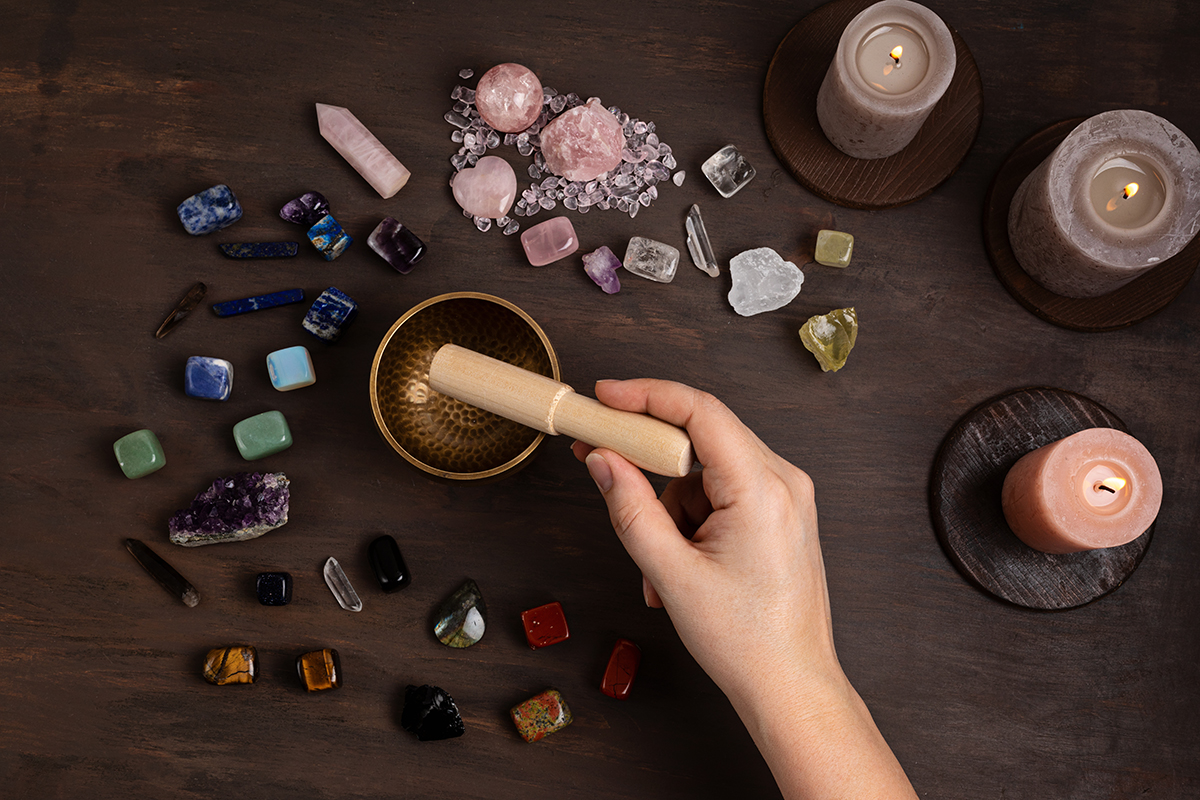
Heliodor is an energizing stone. Jewelry enthusiasts greatly appreciate it for its sunny color, making it a highly desirable gemstone worn as jewelry. Golden yellow heliodor rings are often worn on the ring finger or middle finger, while heliodor necklaces are typically crafted with yellow-green gemstones.
Beyond their aesthetic qualities that make them superb ornamental stones, these crystals are recognized for promoting the health of living beings. As such, larger beryls can be placed near an indoor plant or simply set in a room.
Tumbled stones and polished heliodor stones are most often compact formats that can be carried and used at any time. Heliodor can thus be worn on the body during the day or used during energy healing sessions.
Finally, it is also possible to prepare stone elixirs with heliodor. As we shall see, it can be combined with many other minerals.
Chakras, stones, and associated signs
Which chakras does heliodor correspond to?
Heliodor primarily corresponds to the solar plexus chakra, creating a link between it and the heart chakra. It is this particular connection between these two energy centers that enables optimal action throughout the entire body.
This stone also acts primarily on the third eye chakra, which explains its effects on cognitive faculties, extrasensory abilities, and creative development.
Which stones can be combined with heliodor?
Whether for preparing elixirs, occasional use, or therapeutic treatments, heliodor can be combined with many other stones.
It can, for example, be used with similar minerals such as apatite, topaz, tourmaline, or other beryls like emerald, aquamarine, morganite, goshenite, or bixbite.
Crystals of the same color can also be paired with heliodor: yellow amber, citrine, calcite, epidote, as well as symbolically related stones such as sunstone.
Likewise, stones corresponding to the same chakras as heliodor can be combined with it. These include, in addition to yellow stones linked to the solar plexus, pink or green stones (for the heart chakra), and purple stones (for the third eye chakra). However, most blue stones are also compatible with it, as is quartz (or rock crystal). As you can see, heliodor can be paired with virtually any other stone in lithotherapy.
Which astrological signs correspond to heliodor?
The signs of Leo, Virgo, and Pisces are particularly compatible with the energies of heliodor, although its action is beneficial for everyone.
On a professional level, this gemstone is especially suited to people engaged in cerebral activities requiring analytical, synthesizing, memorization, and organizational skills, or those drawing on extensive knowledge.
Cleansing and recharging heliodor
This stone has the remarkable ability to resist negative energies, which limits its need for cleansing. However, heliodor can be cleansed with salted distilled water.
Strongly connected to solar energies, these crystals need light and warmth. They can easily be energetically recharged by being exposed to the rays of the rising sun. The stone will capture energy and light to redistribute them to the living beings around it. Heliodor can also be placed on a cluster of quartz.







Leave a Reply