 English
  Français
 Español

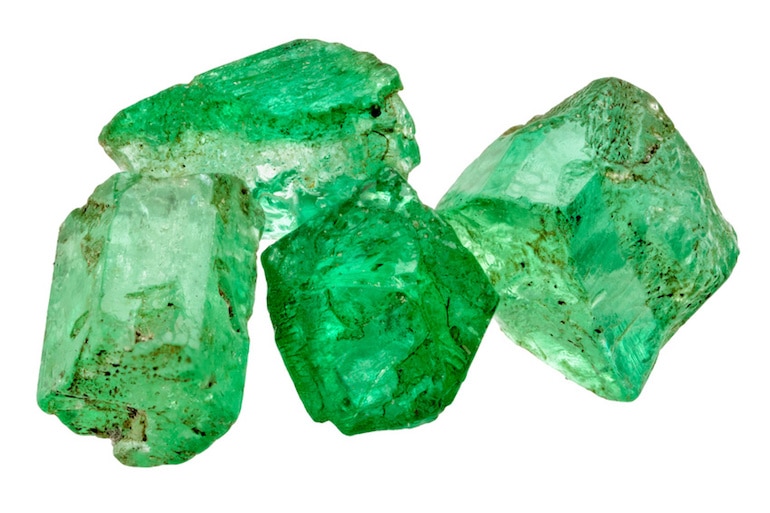
In Cyprus, on the tomb of King Hermias, a marble lion with emerald eyes kept watch over the waves. The green glare of its gaze reached so deep into the sea that the startled tuna fled for open water. Puzzled and uneasy, the fishermen pried the emeralds out of the lion and gave it other eyes.
Some two thousand years ago, Pliny the Elder recorded this story and closed it with these words: “the light the emerald casts, in rays as lively as they are gentle, seems to make the very air around it sparkle. In sunlight or in shade, lit by candles at night, it is always beautiful, always brilliant.“
Emerald has fascinated people for as long as anyone can remember. What buyers look for is a velvety glow with clear “water,” free of specks and spots, without “clouds” or “ice.” The hunt for natural perfection almost always comes up empty. The most dazzling emeralds show faint shadows, a subtle haze or tiny sparkling bubbles. Far from spoiling their beauty, these little quirks vouch for their authenticity.
Mineralogical characteristics of emerald
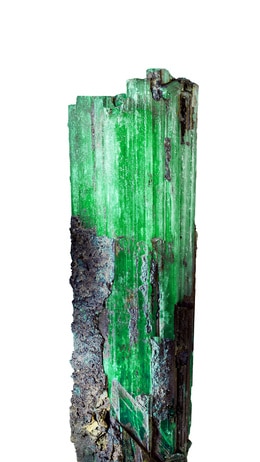
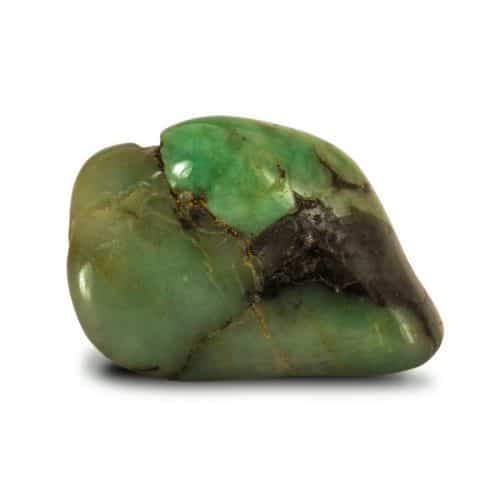
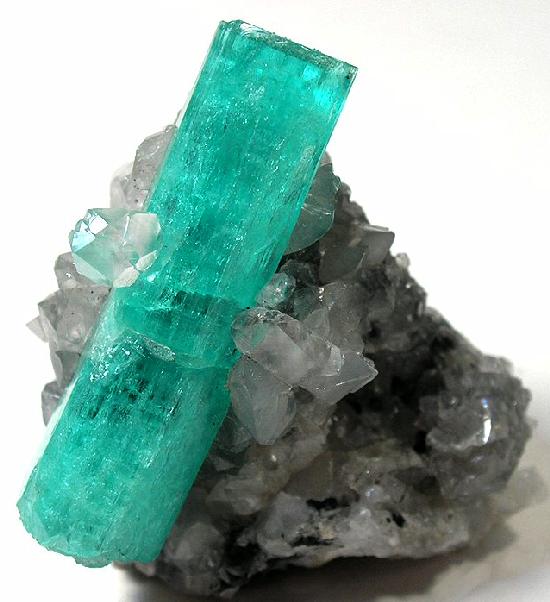
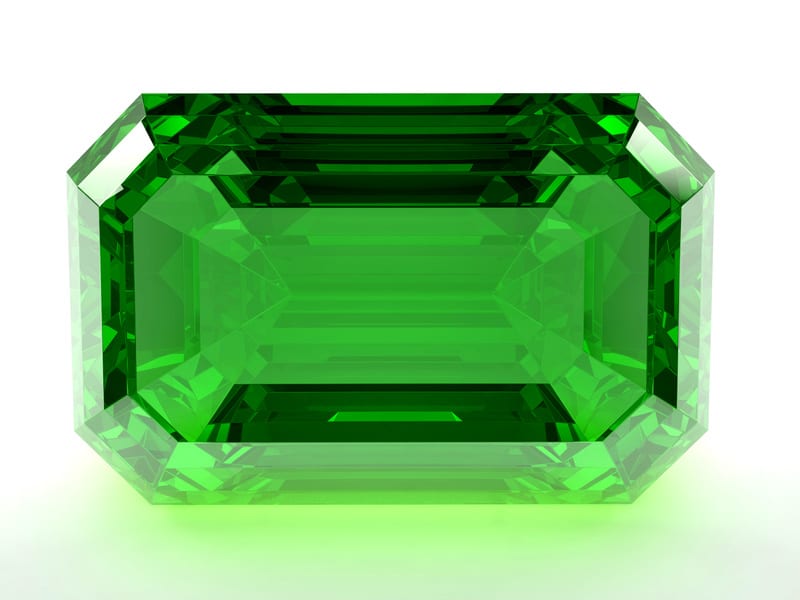
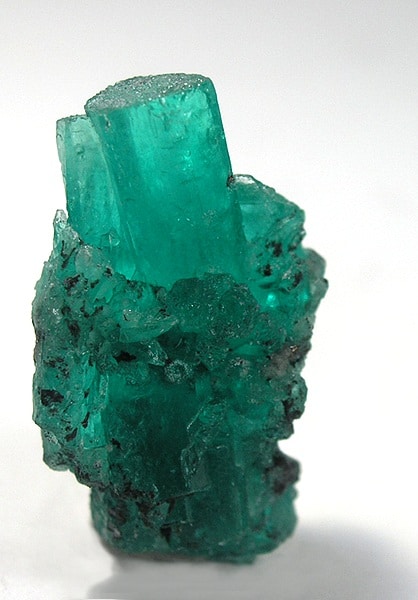
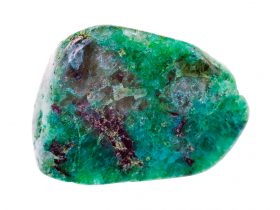
A mineral of the silicate group, cyclosilicate subgroup, emerald is the most prestigious member of the beryl family. Its famous green, very stable in light, ranges from pale green to deep green. Most often it comes from the chromium in its composition, occasionally from vanadium (these are the rare vanadium-bearing emeralds).
Its hardness is 7.5 to 8 on a scale of 10. Transparent to translucent, emerald frequently contains crystal inclusions, sometimes carbon that traces a star pattern (asterism). Liquid or gas can cloud it to varying degrees. This hazy look is called frost, and the full set of an emerald’s particular features goes by a pretty name that hints at its greenery: the garden.
Emeralds are born when magmatic or hydrothermal veins act on metamorphic rock (rock altered by pressure or rising temperature). They turn up in various guises in quartz, mica schists and pegmatites. In the deposits, emeralds often keep company with albite, apatite, aragonite, barite, calcite, dolomite, fluorite and pyrite.
Emerald can be confused with other stones of the same color, a confusion encouraged by misleading trade names that are now banned:
- Green fluorite (sold as “African emerald“)
- Dioptase (sold as “copper emerald“)
- Hiddenite (sold as “lithia emerald“)
- Green tourmaline (sold as “Siberian emerald” or “Brazilian emerald“)
- Demantoid (sold as “Ural emerald“)
- Green sapphire (sold as “Oriental emerald“)
- Tsavorite grossular
- Aventurine
- Peridot
Emerald remains one of the four stones known as “precious,” along with diamond, ruby and sapphire, even though the label has had no official standing since 2002. It’s usually cut as a rectangle with beveled corners, and this traditional faceted shape came to be known as the “emerald cut.”
Jewelry and objects made of emerald
-
-
-
 Select options This product has multiple variants. The options may be chosen on the product pageQuick View
Main mining locations
Colombia is currently the leading source, in both volume and quality. It’s home to the rare emeralds called “trapiches” (a visible pattern of concentrated chromium). The country has very old deposits, notably Muzo and Chivor (bluish-green emeralds) and Coscuez (yellow-green stones), as well as recent ones such as Pita (grass-green crystal).
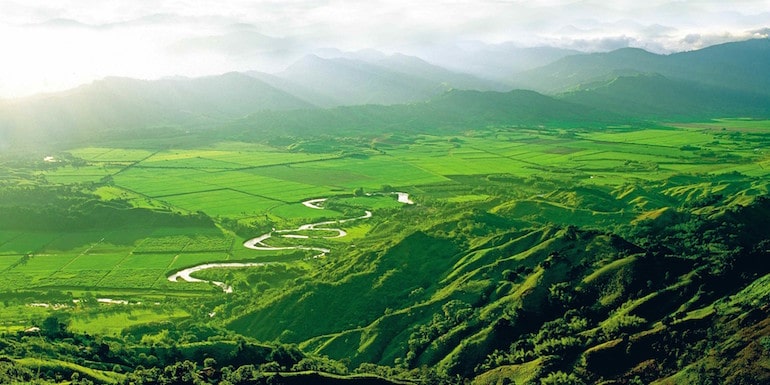
Working conditions in the underground galleries are terrifying: the poorly ventilated mines run 300 meters deep, at 40 to 45°C, with the endless racket of jackhammers. They never stop, and the tiniest green crumbs are picked out of the waste by a toiling crowd of adults of all ages and children, some of them very young.
For the record, the largest emerald collection is housed at the Banco de la República museum in Bogotá. One specimen there weighs 1,795 carats.
Among the other mining locations, you’ll find Brazil (with emeralds of excellent color), the United States, South Africa (often too pale or cloudy), Ghana, Madagascar, Malawi, Mozambique, Namibia, Nigeria, Tanzania, Zambia (abundant open-pit mining but middling quality), Zimbabwe (since 1955, green shaded with yellow), Afghanistan, India, Pakistan, Australia and Russia (in the Urals, with sporadic production since 1830).
For the history books and for collectors, there are also the historic mines of Austria (Salzburg), Egypt (Aswan) and Norway (Oslo).
Etymology and meaning of the word “emerald”
The word emerald traces back either to the Sanskrit açmagarbha or to the Persian zamarut. Both mean “heart of stone.” The Greek word derived from them, smaragdos, means “green gem.” It gave smaragdus in Latin, which in turn evolved into esmeraldus and esmeralda in Vulgar Latin.
These words gave the stone its name in French (and, by way of Old French, in English). Around 1100, the scholarly monk Philippe de Thaon wrote esmaragde in his lapidary. A few years later, the poet Chrétien de Troyes used esmeraude, the old form of today’s French word.
The Latin smaragdus also gave us the adjective “smaragdine,” which describes the color emerald green. Smaragdite, for its part, is a green stone of the amphibole group. The words smaragdos, smaragdus and the various esmeraudes of the Middle Ages were applied to a great many green stones.
As a side note, the Spanish word for emerald is esmeralda. But the beautiful Esmeralda of The Hunchback of Notre-Dame doesn’t owe her name to the color of her eyes: Victor Hugo tells us that “her great black eyes flashed like lightning at you”!
The history of emerald
Not every emerald mentioned in antiquity and the Middle Ages was a true emerald. In the 18th century, historians and some mineralogists even claimed the stone was unknown before the Conquistadors brought it back from the New World.
In 1816, the French explorer Frédéric Cailliaud rediscovered the Zabarah mines in Upper Egypt, known as “Cleopatra’s mines” or “Solomon’s mines.” Located near Aswan, they were worked from 1500 BC onward. Clearly, every ancient civilization knew this stone.
The emerald in antiquity
In ancient Egypt, mafek and chesbet referred to green stones in general, all of them symbols of rebirth and fertility. The Greeks and Romans did the same with smaragdos and smaragdus. Despite the ambiguity, the true emerald was recognized and highly prized in antiquity. It was the stone of love and knowledge, often linked to the goddesses Venus and Vesta.
Ancient texts are full of descriptions of sumptuous buildings made of “emerald.” Theophrastus, and later Pliny, knew perfectly well that these tall tales of gigantic emeralds didn’t hold up. Emerald is rare and always comes in small volumes, so there’s no way to carve statues, temple pillars or obelisks out of it!
Emerald is brittle, but that didn’t stop the Egyptians and Greeks from engraving it, hard as it was. They favored intaglio, perhaps for convenience. The Romans flatly refused, which spared the stone any clumsy cutting or engraving. A stone this beautiful deserves respect. When needed, they settled for giving it a concave shape so that “the light could gather its rays there.”
Seneca tells us that Democritus, a philosopher who dabbled in everything, took an interest in alchemy and happily manufactured emeralds: “He managed to give the fire and color of emerald to any old pebble.”
Pliny notes that flat emeralds reflect images the way mirrors do. According to him, Nero watched the gladiator fights through an emerald. He gives no further detail, and the claim has been discussed and disputed many times since. There must be some truth to the anecdote, but finding common sense in it is a stretch given the man in question! An unhinged emperor’s whim, or simply a way to shield his eyes from the sun’s glare?
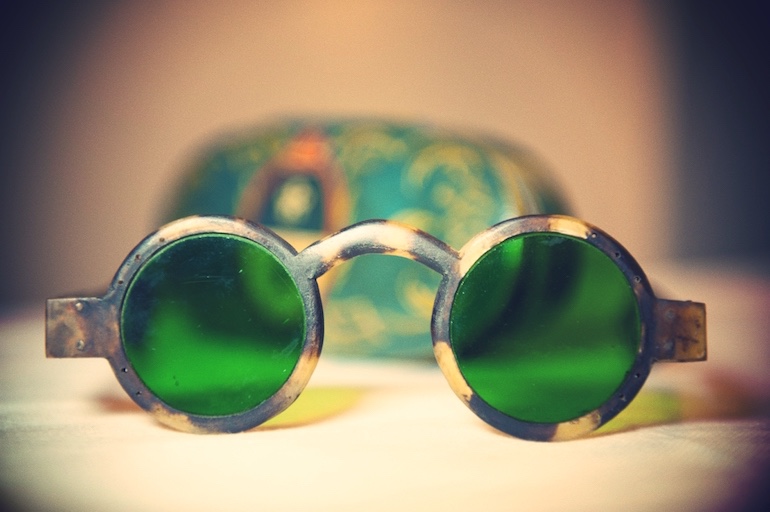
In antiquity, emerald was good for the eyesight and was credited with other crystal healing virtues as well: it warded off epileptic fits, protected women in childbirth and kept evil spirits at bay.
Emeralds didn’t come only from Egypt. The mines at Habachtal, near Salzburg in Austria, were already being worked. The Romans, the Celts and, later, every European civilization drew their supply there. That’s how the emerald in the 13th-century crown of France, known as the Saint Louis emerald, came from Austria.
The fine colored emeralds of Scythia and the smaller ones of Bactria that Pliny praised were not pure invention. Those ancient territories covered roughly today’s Afghanistan, Iran and Pakistan. The region still holds magnificent emerald mines, such as the Panjshir Valley site. These mines may well have been worked as far back as antiquity. Thanks to the conquests of Alexander the Great (around 325 BC), trade between East and West took off considerably, making these faraway emeralds easier to acquire.
The emerald in the Middle Ages
Even so, emerald remained extremely rare before the 16th century. In France, ruby was the favorite. Emerald’s reputation was somewhat less flattering than in the East or under the Roman Empire. It helped with divination, but the devil, never far away in those days, was often associated with it. The “quadran,” a machine built around a sort of wooden wheel, made it possible to cut emeralds with fair skill.
As for the virtues attributed to it in crystal healing, Marbode, bishop of Rennes, wrote in his 12th-century lapidary that “the emerald restrains the pretty stirrings of lust and gives a man speech that cannot deceive.” Later, in the 14th century, Sir Jehan Mandevylle (John Mandeville), explorer and scholar, wrote about emerald:
“It gives wealth, dignity, honesty and makes one speak wisely. It cures fevers and the illness called epilience (epilepsy). Worn at the neck, it greatly strengthens the sight and cures every disease of the eyes” (snakes excepted: show a serpent a true emerald and it will lose its sight).
“Man and woman, when they lie together in the flesh, must not have it upon them, for the stone clouds over, breaks and worsens.”
Finally, he doesn’t forget the care instructions:
“If this stone loses its clarity, soak it in wine and rub it well with a cloth soaked in olive oil, and it will regain its color and clarity.”
The Renaissance and the discovery of the New World
In the 16th century, Colombian and Peruvian emeralds loaded onto the ships of the Spanish Conquistadors were sold all over Europe, in the Middle East and even in India, where the Mughals were very fond of them.
Pre-Columbian civilizations had worked the Muzo, Coscuez and Chivor mines long before the Europeans arrived. Emeralds served as ornaments, offerings to the gods and currency. The Aztecs called them quetzalitztli, after the sacred bird with the long green plumage, the quetzal.
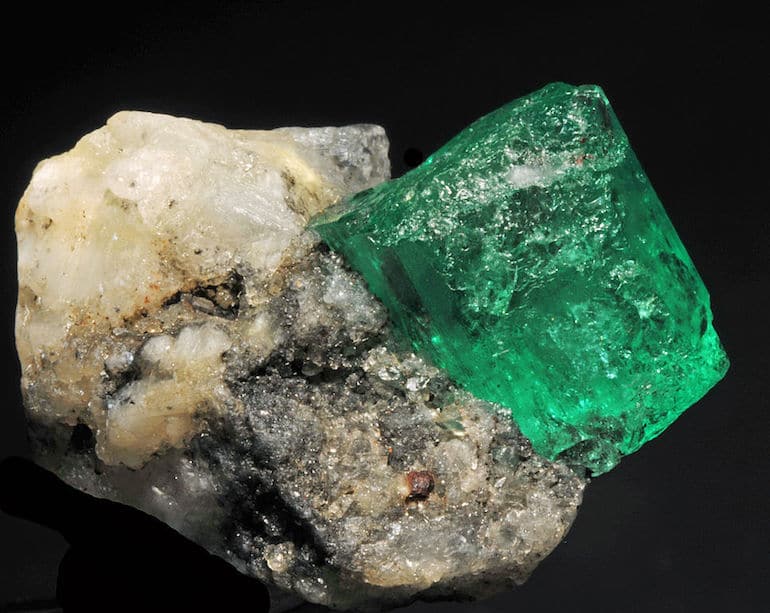
The people of the Manta valley in Peru worshipped an emerald goddess the size of an ostrich egg. She was brought out for festive and religious processions, and offering her small emeralds was strongly encouraged. The Spaniards, so the story goes, found the small stones, but the plump goddess was so well hidden that no one ever saw her again.
Not every treasure loaded onto the Spanish galleons reached its destination: the sea routes were perilous and shipwrecks frequent. Some twenty years ago, a magnificent oblong emerald of 964 carats was raised from a wreck sunk off the coast of Florida. The piece, long believed lost forever, bears the name “Queen Isabella.” The famous conquistador Hernán Cortés is said to have named it himself in honor of Isabella of Castile, who died in 1504 as he was leaving Spain for his first voyage to the New World.
The early modern period and the present day
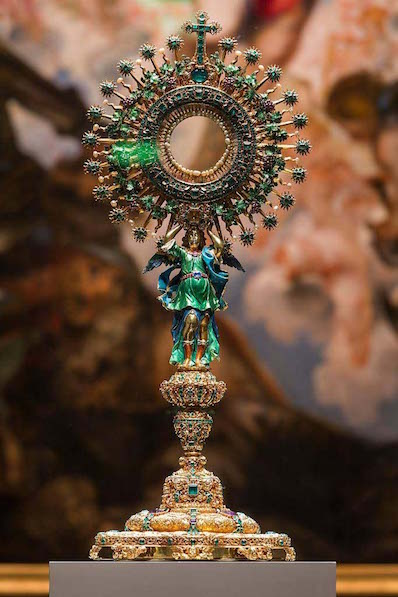
In 1700, the goldsmith José de Galaz created a baroque religious jewel in 18-karat gold set with a sapphire, 13 rubies, 28 diamonds, 62 baroque pearls, 168 amethysts and 1,485 emeralds. After seven years of work, he delivered his creation to the church of San Ignacio in Bogotá, in a Colombia then called New Granada, fully colonized and Christianized. The dominant green glints of this monstrance earned it the nickname Lechuga (lettuce). The Lechuga left its native soil for the first time a few years ago, for a temporary exhibition at the Prado Museum in Madrid.
Thanks to the Spanish conquerors, emerald became more plentiful and better known in the Old World. Its beauty was admired, and it was no longer mistaken for other stones.
In Paris, the Cabinet des Médailles of the Bibliothèque Nationale holds engraved seals and emerald jewelry, some of it ancient, made with Old World emeralds, though plenty of American emeralds are on display too. These little marvels bear witness to the craze for emerald from the Renaissance onward. There are cameos and intaglios bearing the likenesses of kings Henry IV, Louis XIV and Louis XV, a pendant that belonged to Catherine de’ Medici, and bracelet clasps from Madame de Pompadour.
Green was Napoleon I’s favorite color, and he gave many emerald-studded jewels to the empresses Joséphine and Marie-Louise. Napoleon also picked out a famous emerald as a gift for Pope Pius VII, who had come to Paris for his coronation in 1804. This diplomatic present was in fact the return of a gem of more than 440 carats that the French had seized in 1798 under the terms of the Treaty of Tolentino. A fine dark green, the emerald had adorned the tiara of Pope Gregory XIII, elected in 1572. Once kept at the natural history museum in Paris, it is back in Rome, in the Sistine Chapel.
Another emperor, another famous gift: in 1831, Pedro I of Brazil gave a rough emerald of 1,383 carats to his English friend the Duke of Devonshire. This emerald, probably the heaviest known, can be seen today at the British Museum in London. It came out of the Muzo mines in Colombia. Its color and transparency are exceptional.
Virtues and properties of emerald in crystal healing
Like all green stones, emerald carries hope. It’s the stone of love and wisdom. According to the naturalist Buffon, the ancients believed its cheerful color chased away sadness and dispelled the “melancholy phantoms” (what we’d call dark thoughts today). Emerald is linked to several chakras: the heart chakra, the third eye chakra and the crown chakra.
 Benefits for physical ailments
On the physical level, emerald has a reputation as an excellent stone of regeneration and strengthening, especially for the digestive system. In crystal healing it’s used for a whole range of ailments:
- Relieves eye strain and eye diseases (cataracts)
- Helps fight sore throats, flu, ear infections, sinusitis and head colds
- Strengthens the immune system
- Supports the cardiovascular system
- Soothes joint pain (arthritis, rheumatism)
- Detoxifies the liver and pancreas
- Strengthens the kidneys and helps in the fight against diabetes
- Stimulates digestion and calms the intestines
- Protects the spine
- Relieves migraines
- Eases the symptoms of multiple sclerosis
- Reduces the manifestations of epilepsy
- Speeds up recovery after an illness
We recommend emerald elixirs to sharpen eyesight, cleanse the body and firm up its defenses.
Benefits for the mind and relationships
A stone of love, knowledge and harmony, emerald is useful to anyone seeking balance and hoping to create favorable conditions, on the road and in everyday life alike. In crystal healing, emerald is known for a range of virtues:
- Soothes emotional troubles
- Stimulates memory
- Balances romantic feelings
- Eases family relationships and the bond between parents and children
- Stimulates knowledge and learning
- Encourages loyalty
- Nurtures friendship
- Brings understanding and discernment, broadens one’s outlook
- Helps restore inner peace, calms the emotions
- Encourages tolerance and moderation
- Stimulates group cooperation
- Clears grievances carried since childhood
- Helps fight claustrophobia
Cleansing and recharging emerald
Leave your emeralds for a few hours in water, preferably distilled or demineralized. Avoid salt. Don’t clean polished stones with ultrasonic devices. Recharge them in sunlight (moderate heat) or on a cluster of quartz.





Leave a Reply