 English
  Français
 Español

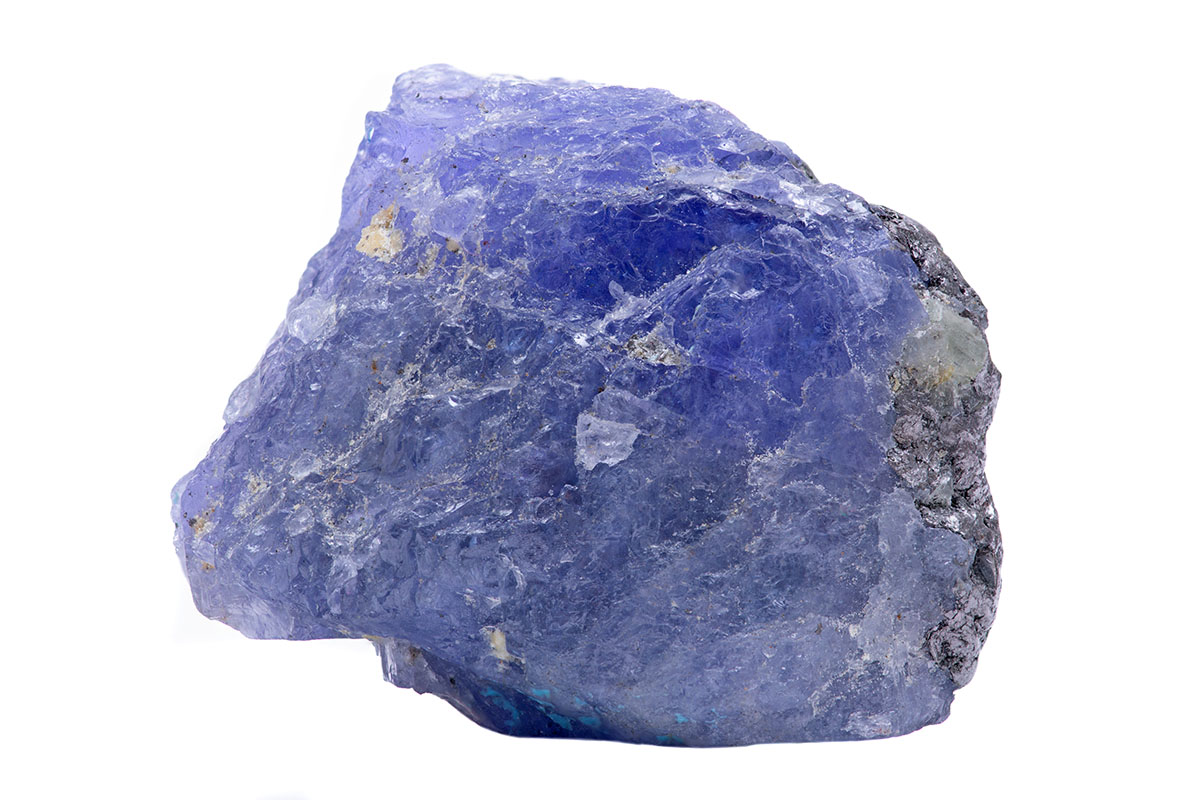
Also known as blue zoisite, tanzanite is a stone of the mind and of soul elevation. Both gentle and powerful, sublime in its more or less violet-tinged blue color, tanzanite is highly prized in jewelry. This precious gemstone from Tanzania is rarer than diamond and of great value. Here are its many properties and virtues in lithotherapy.
Characteristics of Tanzanite
Mineralogical Properties of Tanzanite
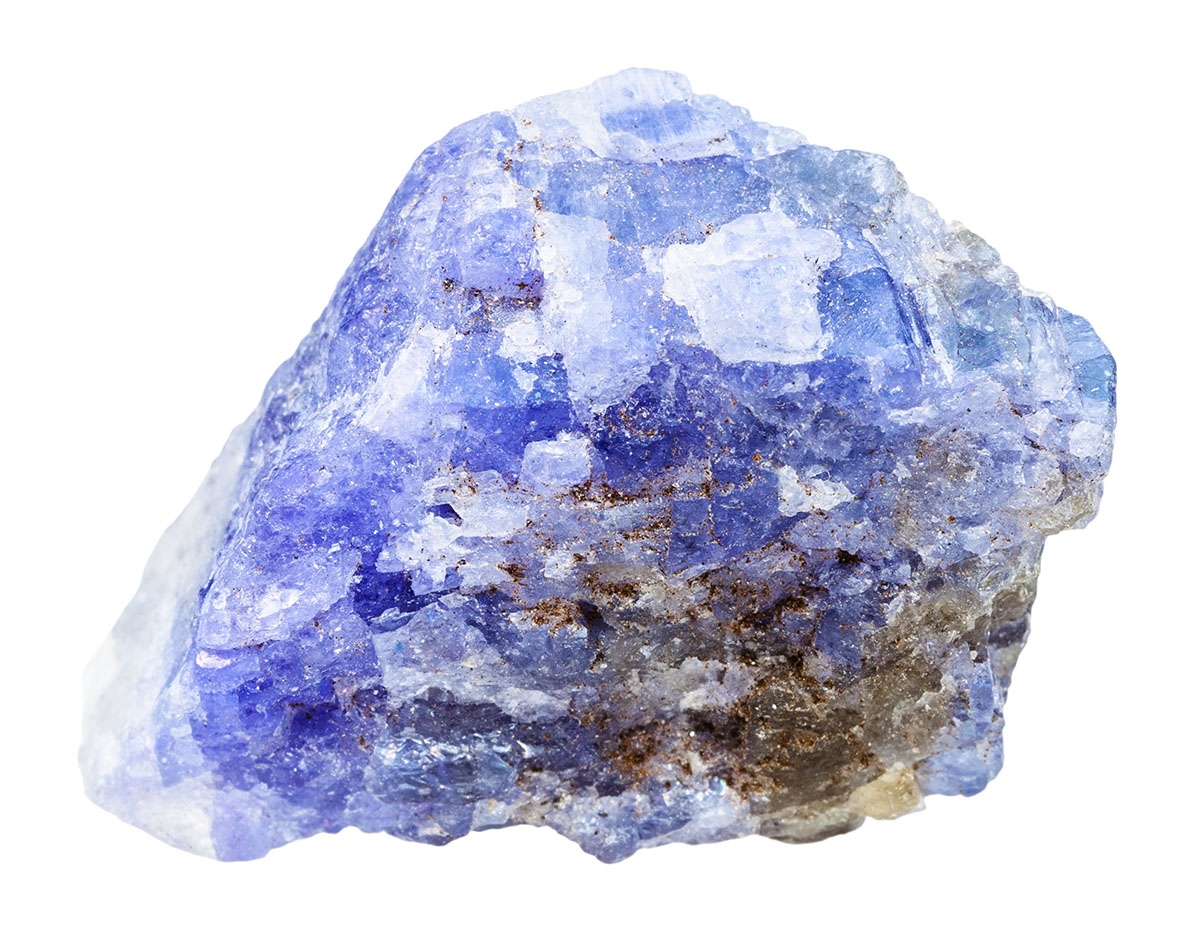
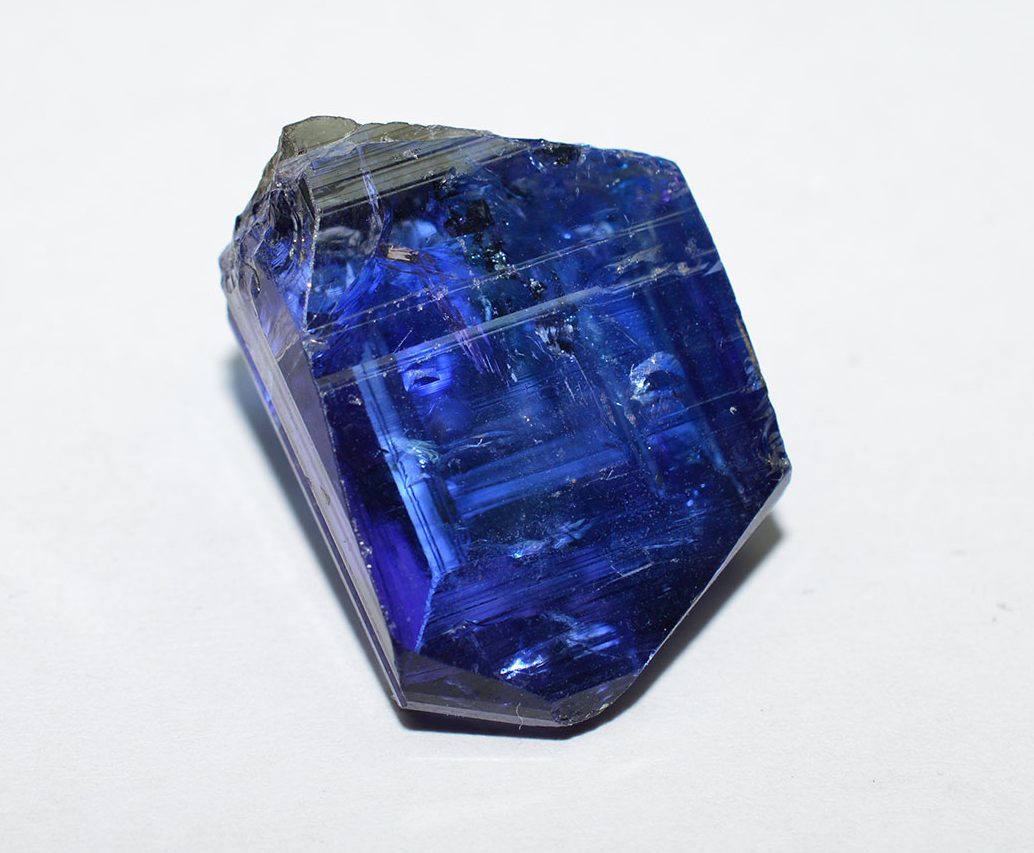
The physical and chemical properties of this blue stone are identical to those of zoisite. Raw tanzanite originates from metamorphism or pegmatites dating back millions of years. In its natural state, it appears with facets in the form of striated prisms, within gneiss veins. At this stage, it is gray-brown in color; it is only once heated to 500°C and above that it displays its magnificent bluish tones.
| Group | Silicates |
| Crystal System | Orthorhombic |
| Composition | Calcium aluminum silicate |
| Colors | Violetish blue, bluish violet |
| Density | Between 3.2 and 3.4 |
| Hardness | Between 6.5 and 7 |
| Transparency | Transparent to translucent |
| Luster | Vitreous, pearly |
| Crystal Habit | Crystals, radiating and compact aggregates |
| Deposits | Primarily in Tanzania, more rarely in Austria, Switzerland, Italy, United States |
Where Does the Name Tanzanite Come From?
The name tanzanite originates from its discovery in Tanzania, in the region of the volcanic Mount Kilimanjaro. To this day, it remains one of the few places where it is found, more precisely in the Arusha area. Its first geological designation was zoisite, dating back to 1805. This name was given by gemologist Abraham Gottlob Werner in honor of Sigmund Zois, a scientist and patron of the arts.
In 1967, its highly distinctive mineralogical characteristics earned it the new name blue zoisite. It was only later that certain tanzanite stones were presented and analyzed at the Gemological Institute of America (GIA) in New York, which acknowledged that this type of precious stone was a previously unknown variety of zoisite. It was ultimately the great-grandson of Louis Comfort Tiffany, from the famous Tiffany & Co jewelry firm, who named the stone tanzanite.
History and Origins of Tanzanite
Stone of the horseman, tanzanites are associated with horse-riding civilizations that lived between Tanzania and Kenya. These men were known for their rigor and pride, standing above ordinary people and seeing beyond physical appearances. In those times, tanzanite represented a certain worldview — one that was higher and more far-reaching, both literally and figuratively. As such, the meaning of this mineral is strongly imbued with a dimension linked to spiritual elevation, moral stature, and the pursuit of perfection.
Another legend suggests that raw tanzanite appeared following violent storms over the Merelani hills, not far from Mount Kilimanjaro. These originally gray-brown pebbles were reportedly discovered by shepherds upon returning to the devastated lands. They later found that tanzanites changed color when exposed to bush fires: they then shift toward the magnificent blue that makes them so distinctive, sometimes approaching the hue of an emerald.
Within the Maasai tribes, the color blue held sacred symbolism of happiness and prosperity. Beads and garments of this color were commonly given to mothers who had just given birth. This semi-precious stone also became a medium of exchange for these peoples, as most of its trade stemmed from mining on their lands. However, this fine stone extracted from deep within the earth remains even rarer than diamond, and its deposits are few. This is why the price of tanzanite remains quite high to this day.
One of the distinctive features of this gem is its birefringence — meaning the ray of light entering it splits into two separate rays. The passage of a light ray through the stone is thus amplified and produces a remarkable brilliance. Trichroic, its color changes depending on the angle of light.
Virtues and Properties of Tanzanite in Lithotherapy
Physical Properties and Benefits
Tanzanite acts primarily on the cerebral and cognitive sphere: it promotes blood flow to the brain as well as the stimulation of chemical and electrical exchanges within it. This contributes to the development and maintenance of intellectual faculties, and to the proper functioning of neurological abilities as a whole.
Connected to the upper organs of the body, this stone offers benefits for eyesight, hearing, and the ENT (ear, nose, and throat) area. Vision, hearing, speech, and thyroid function can all be improved through contact with this precious stone.
Furthermore, tanzanite also provides benefits for the stomach. It can notably soothe certain stomach pains. Finally, it promotes overall body regeneration and improves cellular connections between the various organs.
Tanzanite can also prove highly beneficial against certain dermatological issues such as eczema, psoriasis, and more. Overall, it enhances the appearance of the skin by firming the epidermis and can brighten the complexion.
Psychological Properties and Benefits
Tanzanite stimulates everything related to the development of creativity: imagination, artistic creation abilities — particularly musical composition and literary aptitudes. It also promotes access to higher planes through sleep and dreams, as well as intuitive faculties. Moreover, it ensures higher-quality sleep, restorative and peaceful.
A stone of spirituality, tanzanite is a subtle stone that encourages the elevation of the mind toward celestial spheres. It pushes back primal instincts to open the soul to the divine and universal knowledge. In this regard, it proves particularly conducive to the practice of meditation. Cat’s eye tanzanite especially brings intuition and clairvoyance.
In terms of personality, tanzanite is also a stone linked to self-fulfillment. It encourages taking action by overcoming procrastination and other avoidance strategies. This stone can also foster personality expression through speech, a sense of humor, and listening skills.
Tanzanite is also particularly conducive to mental sharpness and the development of deeper thinking. It fosters a desire to learn and expand knowledge in all areas. It sharpens intellectual curiosity and strengthens memory. At the same time, it provides the drive and intellectual means to work toward peace.
How to Use Tanzanite in Lithotherapy?
Faceted and polished tanzanite stones are very useful in lithotherapy treatments. Depending on the desired effect, simply place them for a period of time (according to your own feeling) on the corresponding chakra, carry them on your person, or hold them in your hand for a few moments.
Massage stones or tanzanite palm stones are also very effective therapeutically. They are designed to allow soothing massage movements that are all the more beneficial on both the physical and psychological levels.
Tanzanite is also highly valued for the possibilities it offers in fine jewelry. The largest gems can be set in rings or pendants, while smaller ones are used for earrings, bracelets, and more. Many jewelry pieces made with natural, semi-precious tanzanite stones exist. They are often given as gifts for special occasions, such as a wedding anniversary.
Finally, stone elixirs made with tanzanite are also very effective on both the physical and psychological levels. Once prepared, they deliver all their virtues when ingested or applied directly to the skin.
Chakras, Stones, and Astrological Signs Associated with Tanzanite
Which Chakras Does Tanzanite Correspond To?
Tanzanite is beneficial for the entire body and all energy centers. However, it corresponds more closely to the upper chakras: the throat chakra, the third eye chakra, and the crown chakra.
Which Stones Can Be Combined with Tanzanite?
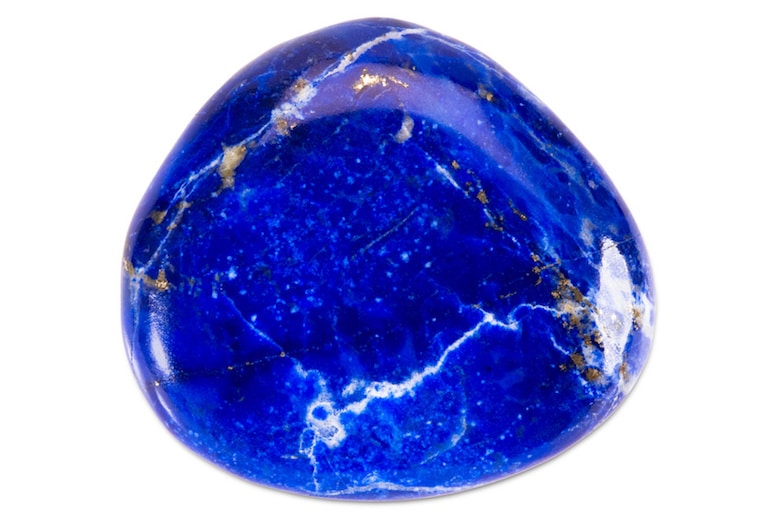
You can combine tanzanite with stones of a similar color such as sapphire, topaz, or alexandrite. Their vibrations are complementary and can offer numerous therapeutic benefits. This precious stone can also be used with stones that correspond to the throat chakra such as jasper, sodalite, lapis lazuli, or chalcedony. These stones act on personality expression, listening skills, and communication abilities. Finally, stones linked to the crown chakra also pair very well with tanzanite. Together, they contribute to energy harmonization and the development of intuition and creativity. These may include amethyst, hawk’s eye, charoite, howlite, or labradorite.
Which Astrological Signs Does Tanzanite Correspond To?
Tanzanite is a December birthstone. Its vibrations are particularly in tune with those of people born under the sign of Sagittarius, Aquarius, Gemini, Pisces, Aries, and Capricorn. Naturally, it will also provide beneficial effects to people born under other signs.
How to Cleanse and Recharge Tanzanite?
In its natural environment, tanzanite self-regenerates through contact with spring water, earth, sunlight, or moonlight. When used in lithotherapy, however, it requires certain care to release its negative energies. You can cleanse a stone of tanzanite with water or diluted acids, or even under a little warm soapy water. Native American incense is equally effective for energetically cleansing the gem.
To be recharged, tanzanite appreciates warmth (since its deposits are found in volcanic regions, it is naturally accustomed to high temperatures). It can therefore be recharged in sunlight or moonlight, though the latter is gentler. Finally, it is also possible to recharge stones of tanzanite by placing them for several hours on a cluster of quartz or amethyst. This recharging method takes much longer but is very effective when using a geode that has itself been previously recharged.





Leave a Reply