 English
  Français
 Español

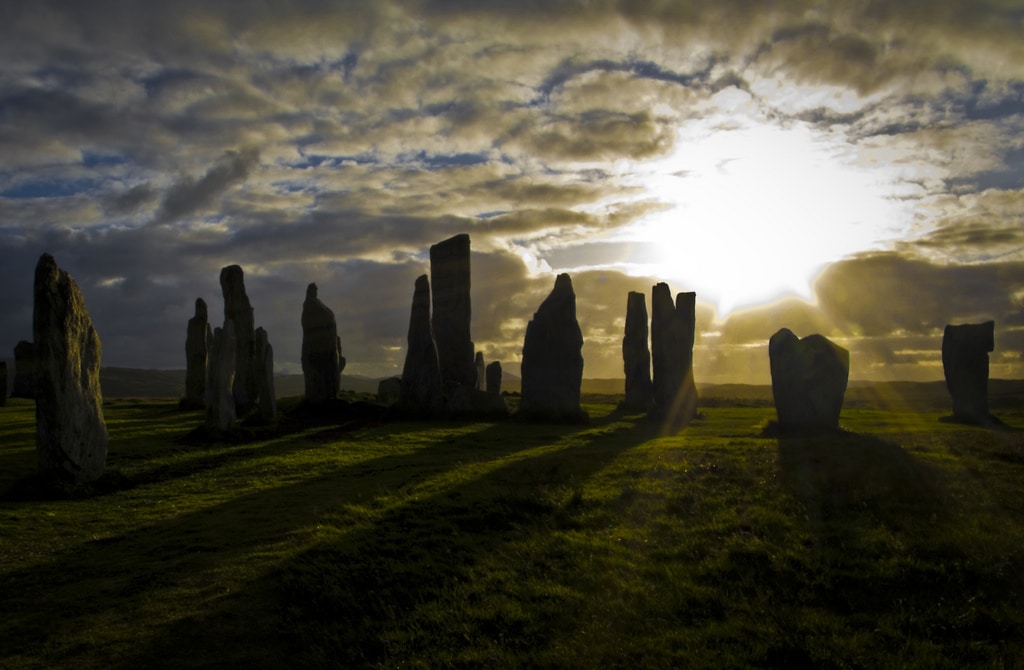
The word lithotherapy comes from the Greek “lithos” (stone) and “therapeia” (cure). It names the art of healing with stones, better known in English as crystal healing. The etymology is easy enough to trace; the historical origins of the art are another matter, since its roots run back further than any record. Stones and crystals have been with humanity since the first tool ever shaped by hand, and they are still at work in the most recent technologies…
The prehistoric origins of crystal healing
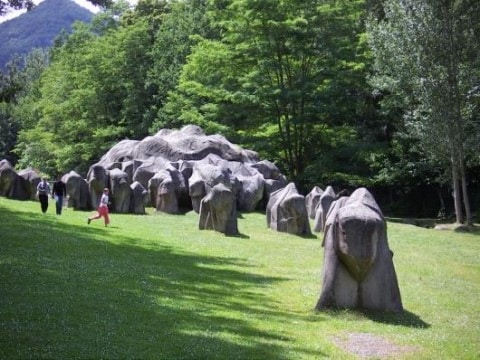 Humans and their ancestors have been using stone for at least three million years. Artefacts found on archaeological sites establish beyond doubt that our distant australopithecine ancestors worked stone into tools. Closer to us, prehistoric people lived in caves and so spent their days under the protection of the mineral kingdom.
The history of stones used as instruments of healing is too old to be traced with any certainty. We do know that between 15000 and 5000 BC, cave dwellers handled stone in every act of daily life. Stone was “worn as an amulet, carved into a statuette, raised into megalithic temples: menhirs, dolmens, cromlechs… People called on it for strength and fertility… Lithotherapy had already been born. (Le guide des pierres de soins, by Reynald Boschiero)”
Two thousand years of healing with stones
In antiquity the Aztecs, the Maya and the Inca carved stone into statues, statuettes and jewellery. In Egypt the symbolism of stone colours took shape, along with the art of placing them on the body. In China, India, Greece, ancient Rome and the Ottoman empire, among the Hebrews and the Etruscans, temples and statues went up, jewellery was set with gems, and stones were used for their physical and psychological virtues.
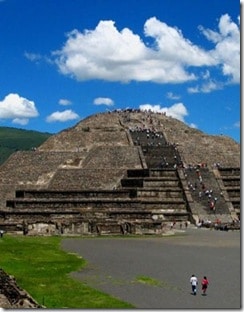 Through the first millennium the symbolism of stones grew a great deal richer. In the West, in China, India, Japan, the Americas, Africa and Australia alike, stone lore and the art of healing with stones developed. Alchemists searched for the philosopher’s stone, the Chinese used the properties of jade in medicine, Indian scholars codified the properties of gems and young brahmins were initiated into mineral symbolism. Among the nomadic tribes of several continents, stones served as the link between people and the divine.
Over the second millennium the knowledge grew more precise. In the 18th century the Abbé Haüy identified the seven crystal systems. Stones were used in medicine, mainly as powders and elixirs. Healing with stones, still without a name of its own, joined the medical sciences. Then, as science advanced, people turned away from the power of stones. Not until the second half of the twentieth century did interest in stones and their properties revive.
Modern crystal healing
The term “lithotherapy” appeared in the second half of the twentieth century. The psychic Edgar Cayce was the first to draw attention to the curative properties of minerals, speaking of the healing power of crystals (crystal healing). Then, carried by the currents of thought born in the 1960s and 1970s, the New Age in particular, the practice won back the favour of a wide public.
Today more and more people take a keen interest in what stones can do for them and are building up this gentle medicine as an alternative and a complement to modern medicine. Some set out to explore every therapeutic capacity of stones and mean to win crystal healing its proper standing, convinced that it can relieve us and heal us.
 Stones and crystals are also part of our daily life as homo technologicus. Metals and chemical elements are extracted from minerals every day. Quartz sits in our watches and our computers, rubies generate lasers… And we wear them, diamond, emerald, peridot, garnet, as jewellery… Perhaps one day that same technology will give us the means to make a science of crystal healing. We would then be able to observe how stones act mechanically on our body, our mind and our energy balance.
Until then, everyone is free to make up their own mind by using stones from day to day. More important still: everyone is free to find in them the benefits that experience going back millennia has brought to light.
Sources:
Le guide des pierres de soins, by Reynald Boschiero





Leave a Reply