 English
  Français
 Español

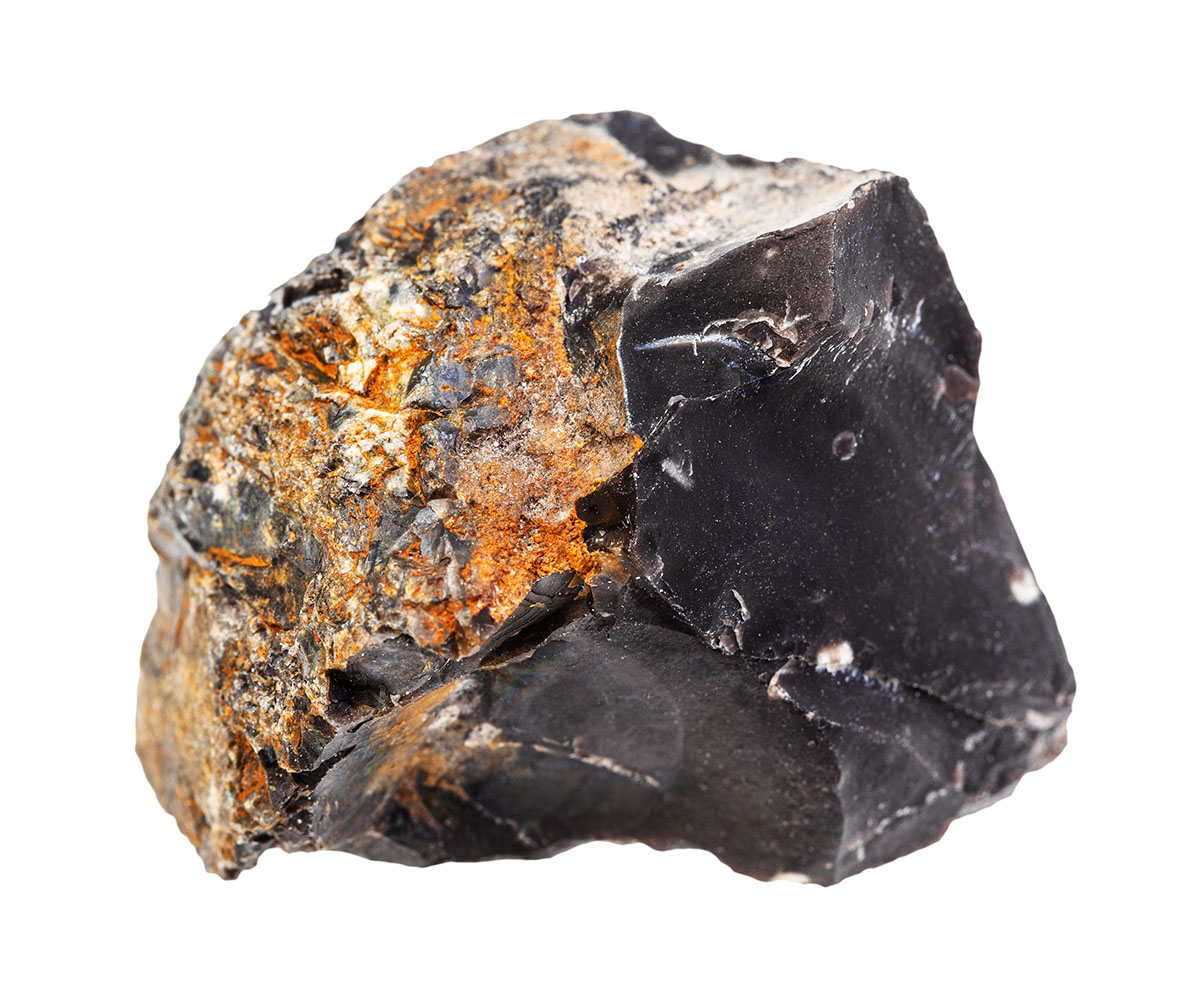
A siliceous rock formed from water saturated with silica, flint is a symbol of bravery, robustness and motivation. Known since prehistoric times, it lies at the origin of the discovery of fire and of the making of the first weapons and the first tools, but it is also a powerful stone of physical and energetic protection. Discover right now the properties and virtues of flint in lithotherapy.
Characteristics of flint
Mineralogical properties
Flint is a mineral rich in silica and takes forms that are identical to it. It can therefore be fibrous (in which case it is called chalcedony), granular (like quartz), or even crystallised (when it is hydrated, it is opal). As a result, the properties and virtues of a flint vary according to its content of one or another of these minerals, but also according to its colour.
| Group | Quartz |
| Crystal system | Rhombohedral |
| Composition | Silica |
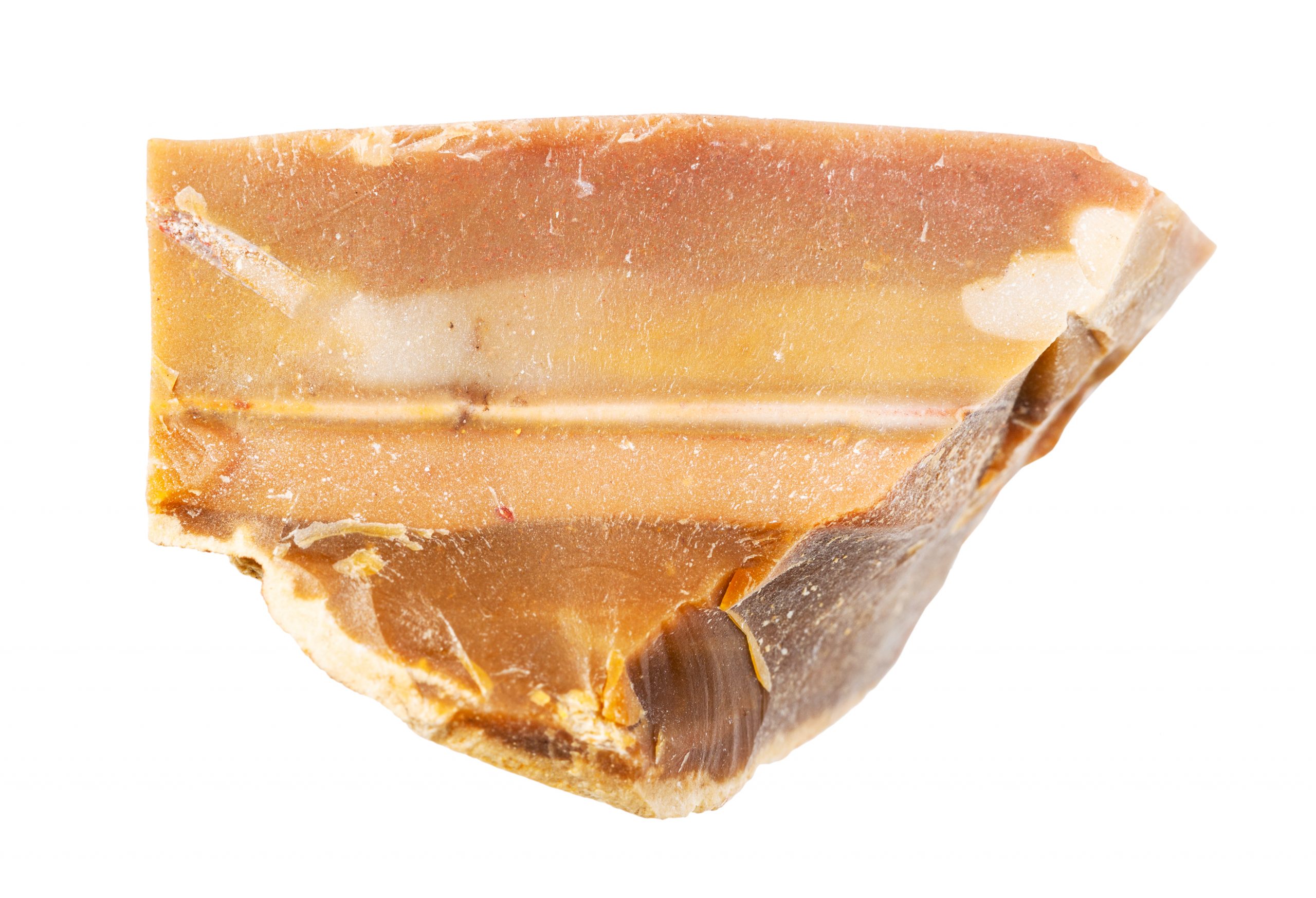
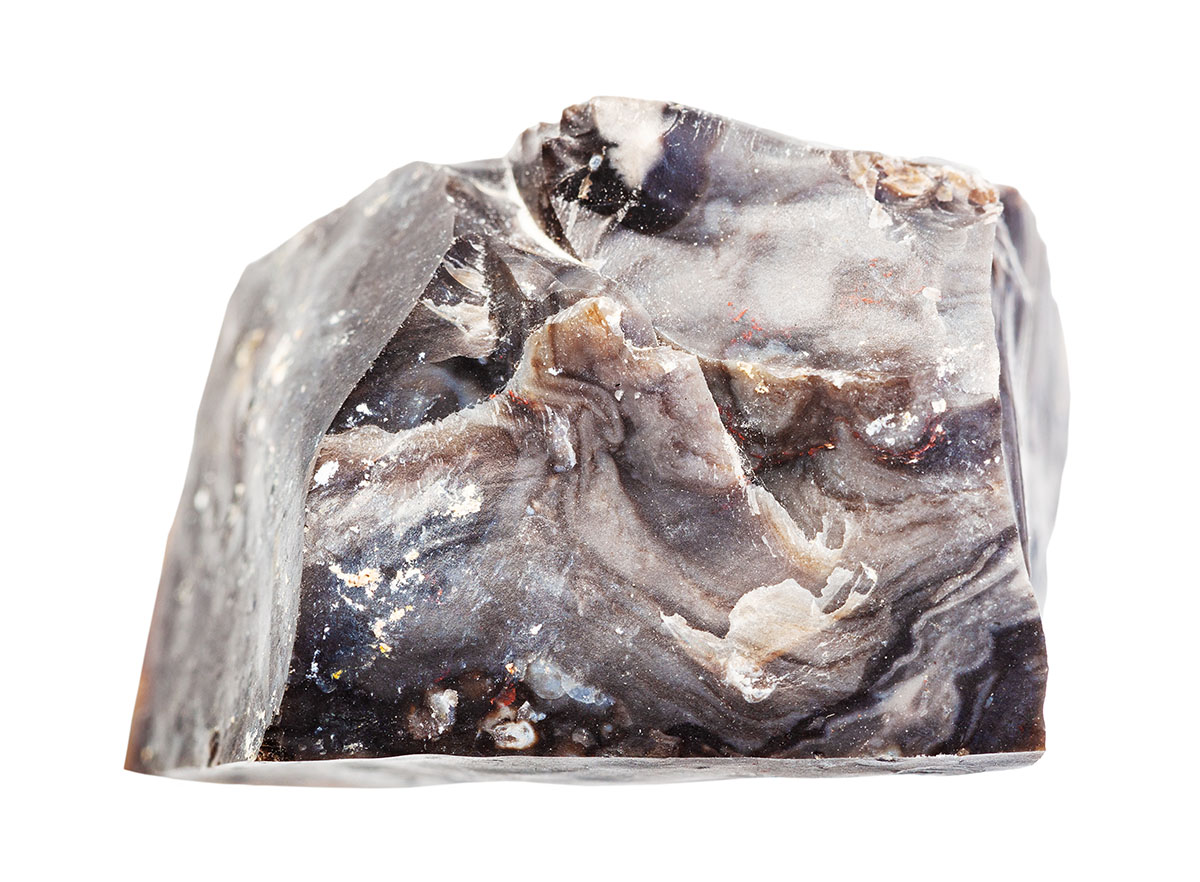
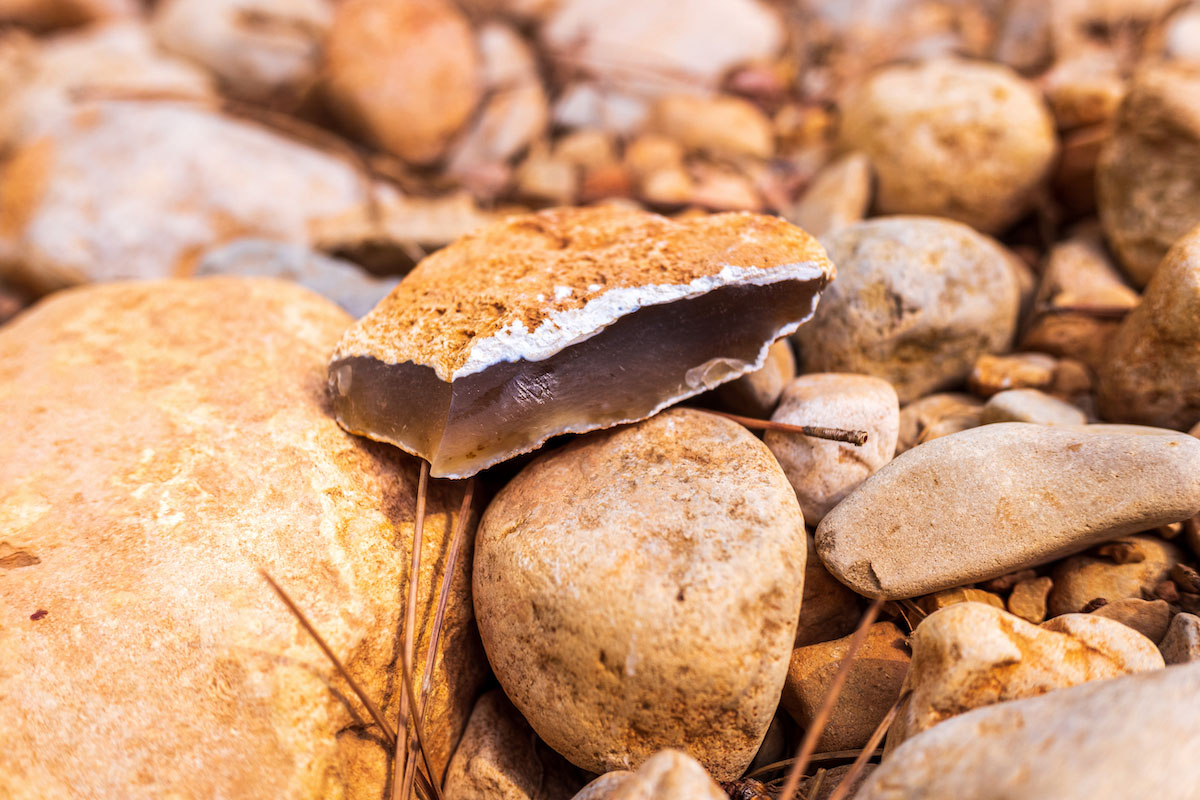
| Colours | Milky white, black, grey, yellow, brown (dark core, light cortex) |
| Density | Between 2.56 and 2.60 |
| Hardness | Between 6.5 and 7 |
| Transparency | Possible |
| Lustre | Metallic |
| Form | Nodule, pebble, plate or thick slab of varying size |
| Deposits | Found throughout the world |
Where does the name “flint” come from?
Owing to the pronounced presence of silica in its composition, flint takes its name from the English word “silicon”, coined by Humphry Davy in 1808. This designation is itself drawn from the Latin “silicis”. This particular relationship to silica, and the influence it has on its name, comes from the fact that flint gives rise to the formation of siliceous nodules in chalk, limestone or clay soils.
History and origins
These rocks are first and foremost famous for the use that prehistoric humans made of them. It was indeed thanks to flint that prehistoric humans discovered fire, were able to make weapons, tools and objects, but also to hunt and butcher game. However, and against all expectations, the widespread notion that early humans struck two pieces of flint together to produce a spark turns out to be mistaken: this famous stone is not, in reality, enough to achieve it. To do so, it must be brought into contact with a material made of iron, or one that contains enough of it.
Later on, flint became recognised for its protective virtues. Our ancestors then wore it as an amulet to guard against all forms of danger, against death, evil spirits and bad weather, but also to have the courage to face the enemy. In addition to its protective virtues, flint is associated with honour and with the greatness of warrior men. It is also used to calm the impetuosity of anger, in order to fight with strength and honour.
Virtues and properties of flint in lithotherapy
Physical properties and benefits
While most minerals act more specifically on certain areas of the body, flint acts on the body as a whole. A remarkable stone of protection, it allows the body to heal more easily after an injury, and it regenerates the tissues following an ailment or any trauma of physical origin (shock, dislocation, bruising, skin problems, etc.).
At the level of the organs, this stone is beneficial against kidney problems; it promotes purification and a better circulation of the blood. Flint also has virtues at the level of the liver, absorbs the calcium deposits located in the arteries, and positively influences the functioning of the pulmonary sphere. It is a mineral that, moreover, promotes better digestion. Lastly, since its action takes effect at the level of the root chakra, flint is also favourable to the hormonal system, in men as well as in women.
Psychological properties and benefits
Flint gives off a particularly strong energy, favourable to the development of self-confidence and to the courage to take action. It confers a warrior’s mindset and helps one feel stronger and more enterprising in one’s projects. This is also made possible by the development of the senses and of reflection. As a result, these qualities make flint a particularly beneficial stone for introverted people.
Just like the spark it produces to make fire, flint rekindles the inner flame that is unique to each person. It fosters the expression of the soul in all its forms. It thus makes it possible to communicate better, to develop good feelings and one’s listening abilities.
More broadly, this raw mineral bestows calm and inner soothing, and it eases fears. It promotes mental balance and also makes it possible to protect oneself from potentially toxic relationships.
Flint also acts on the subtle planes by protecting against bad dreams and harmful entities. It also contributes to the development of extrasensory perceptions and makes it possible to gain a deeper reading of the body’s language.
How to use flint in lithotherapy?
Flint tumbled stones can be used permanently and carried everywhere. The simple fact of having them on you (in a pocket, a bag, a vehicle, or elsewhere) allows you to benefit from the virtues of their therapeutic and protective vibrations. In the event of anxiety or anger, you can take one in your hand and concentrate on its energies.
To protect your home, you can place a rough flint in a room (a bedroom, a living room, next to a front door, etc.). It thus guards the home against negative energies and also protects it from lightning.
Flint is, moreover, a powerful healing stone in lithotherapy, one that can help harmonise the energies of the physical and energetic body. Tumbled stones, pebbles, or flint massage stones can be used for this purpose.
Nowadays, polished flint stones are common and often used to make jewellery. Whatever its form (bracelet, pendant, ring, etc.), a flint worn as jewellery radiates good energies.
Chakras, stones and astrological signs associated with flint
The flint stone is active on all the chakras, with a slightly dominant symbolism connected to that of the heart. Its action starts from the root chakra and flows smoothly towards the body’s other energy centres.
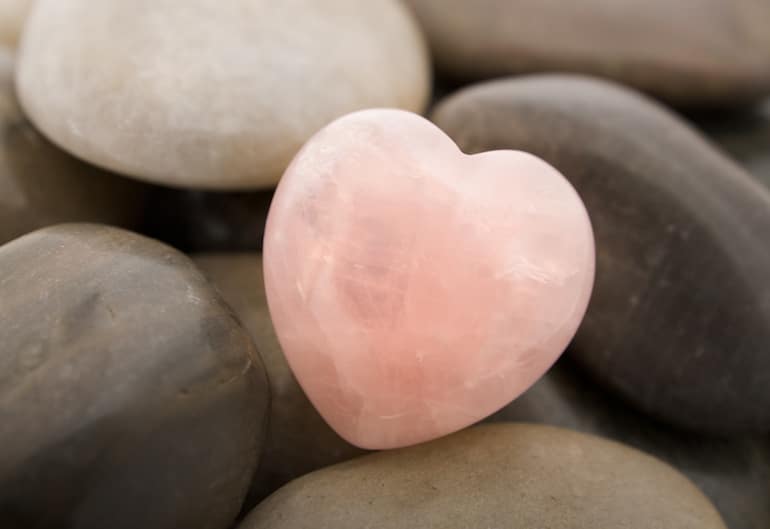
Its raw character makes it a stone that can be paired with any other mineral. It can thus be combined with stones of the same family (chalcedony, rose quartz, etc.), or with others.
The signs of Virgo, Taurus, Sagittarius, Scorpio and Capricorn seem to be more receptive to the vibrations of flint. Only Pisces might have a lessened sensitivity towards this mineral.
How to cleanse and recharge flint?
After use, several options are available to you for the upkeep of a flint. You can cleanse the stone in a bath of distilled water for a few hours. In keeping with the myth surrounding it, this mineral can also be cleansed over a lively flame.
You can then recharge the stone with energy by exposing it to the bright light of the sun. As flint is a dark stone, it tolerates UV rays very well. It can also be recharged in its natural state, in other words by burying it underground.





Leave a Reply