 English
  Français
 Español

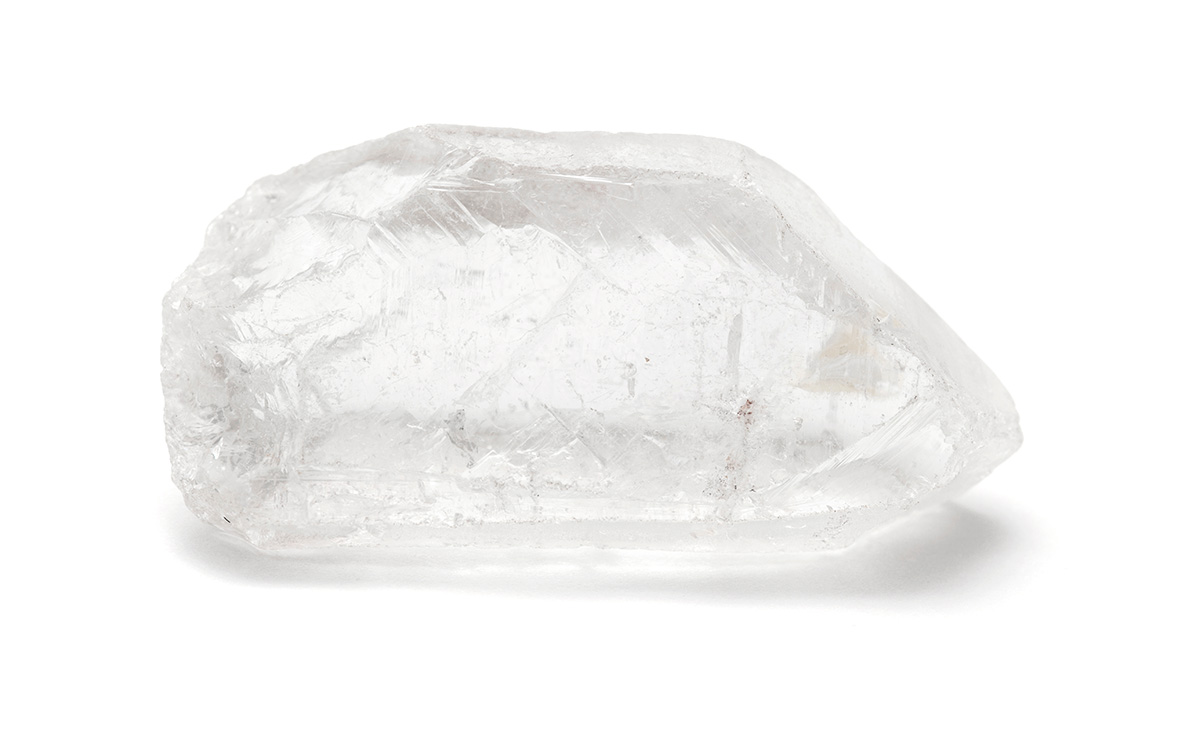
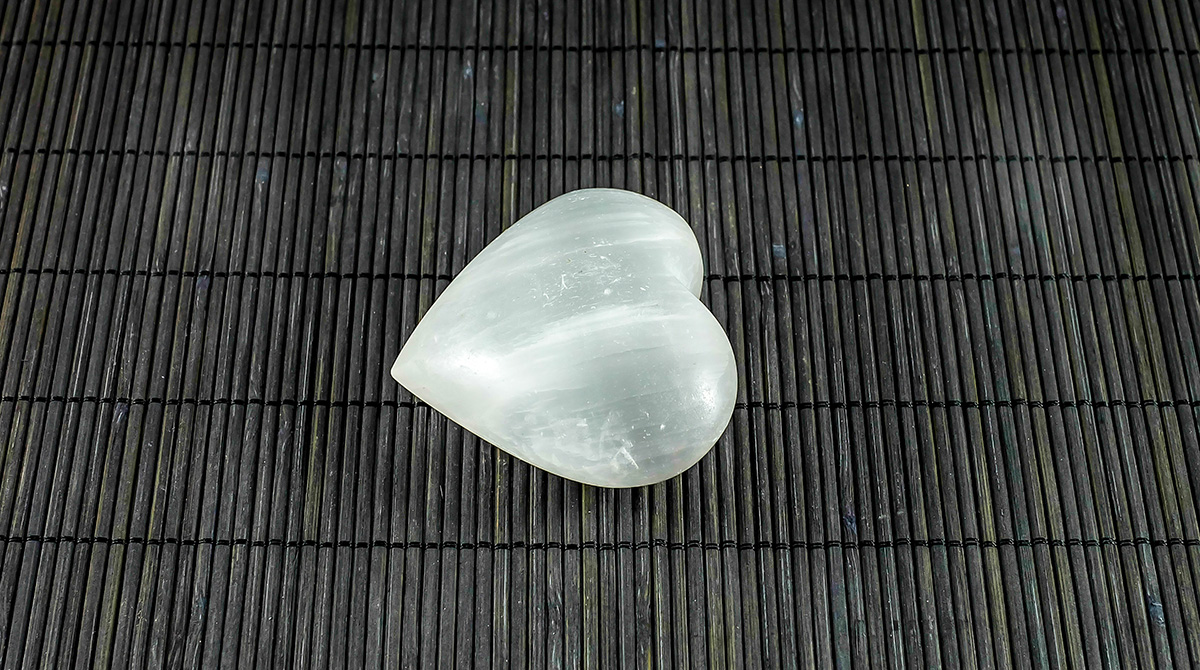
Selenite is a stone of peace and harmony, also a symbol of femininity. The Moon inspired its name among the Greeks of Antiquity, who were charmed by its soft, luminous hues. Prized in the fields of jewellery and decoration, it is recommended in lithotherapy for its soothing and spiritual virtues.
The mineral properties of selenite
The selenite stone is a variety of gypsum with pale, sometimes colourless hues. Translucent, it is composed essentially of calcium. Here are its main mineralogical characteristics:
| Group | Fibrous gypsums |
| Crystal system | Monoclinic |
| Composition | Calcium hydrous sulfate |
| Colours | Colourless, pinkish, reddish |
| Density | 2.3 |
| Hardness | 2.5 to 4 |
| Transparency | Translucent to transparent |
| Lustre | Fibrous, vitreous |
| Forms | Cruciform star |
| Deposits | Italy, Germany, Morocco, Spain, Canada, Brazil, United States, Mexico |

The main varieties of selenite
Selenite is itself a variety of gypsum. These are evaporites, meaning sedimentary rocks composed of mineral salts. Very widespread natural stones, they come in many varieties, including selenite, which is one of the best known.
Selenite jewellery and objects
Etymology
The name of this beautiful, almost transparent stone comes from the Greek word “selene“, which means “moon” and referred to the goddess of the same name in Greek and Hellenic mythology. It later gave rise to the Latin term “selenitis“, which can be translated as “moonstone“. Considering both the paleness and the glow of the selenite stone, its name refers to the lunar reflection.
The history of selenite stone
The earliest uses of selenite
According to the writings of Pliny the Elder, this translucent stone was cut for making window panes in Antiquity, when the making of glass had not yet been mastered. Tablets made of selenite also served as a base for inscribing prayers. It was likewise used in Germany, during the Middle Ages, as a protective pane for religious icons.
Selenite in Bologna
There are numerous selenite mines in the surroundings of the city of Bologna, located in northern Italy. The abundance of this stone inspired the city’s builders to use it to construct the foundations as well as the bases of the towers of Bologna. In the city’s public park, called the “Giardini Margherita”, there is an artificial lake surrounded by rocks carved from selenite.
The current use of selenite
Selenite was used for many centuries to make decorative objects and items of everyday use. Among the other varieties of gypsum, it is also exploited for industrial purposes. The stone is ground to serve as an additive in cement compositions. It also serves as a raw material in the field of chemistry. It is found, naturally, in jewellery, where its soft colours are appreciated, as well as in lithotherapy on account of its many benefits.
The properties of selenite stone in lithotherapy

Selenite is deeply connected to the notion of peace and inner serenity. Its soft, pale hues steer its therapeutic uses towards tranquillity and harmony. Lithotherapy also associates it with femininity, faithfully to the Moon that inspired its name, and with fertility.
This stone reaches the peak of its potential in contact with the third eye and crown chakras. At the top of the head, the crown chakra opens us to spirituality and connects us to the energy of the universe. The third eye chakra, located in the middle of the forehead, represents the link between the concrete and the invisible. The vibrations that connect these chakras to selenite perfectly symbolise its spiritual virtues.
Taurus is the zodiac sign for which selenite reveals its full power. Solid, stable and stubborn, Taurus benefits from the impact of the stone, which soothes and softens the sign and strengthens its grounding.
Benefits of selenite against ailments of physical origin
Femininity and fertility
In lithotherapy, the selenite stone is closely connected to femininity and to themes surrounding fertility. Antispasmodic, it calms pain related to menstruation. It is recommended for women suffering from endometriosis and is said to play a positive role in situations of infertility.
This stone, focused on gentleness, is also the go-to choice to accompany pregnancy. It prepares the body for motherhood and supports it through this period of great upheaval.
Elixir of youth
The powers of selenite also act against premature ageing of the body. By activating cellular regeneration, the impact of using the stone helps to preserve good health and energy.
Aphrodisiac
Alongside its action on fertility, this mineral is also recommended to stimulate and balance the libido. Problems of impotence could likewise find a remedy in selenite.
Restorative sleep
A stone of calm and appeasement, this mineral with lunar hues is also the companion of peaceful, restorative sleep. It helps to slow down the metabolism and to activate the production of melanin to offer deep, quality sleep.
Physiological relaxation
Still within the scope of its main action, selenite is the stone to use to help achieve deep bodily relaxation. It makes it possible to slow down breathing and heart rate, thereby creating a state of profound relaxation conducive to recovery and rest.
Virtues against ailments of psychic and psychological origin
Inner peace
The essential virtue of selenite revolves around the notion of inner peace. In contact with the stone, the user finds a deep grounding connected to their own roots. By focusing on what really matters, they rid themselves of the nuisances that clutter them. In parallel, this mineral helps the metabolism to come to rest, thereby offering a feeling of absolute inner calm, both psychic and physiological.
Emotional stability
Selenite acts as a regulator from an emotional standpoint. It helps to step back from overwhelming feelings and to put the seriousness of events into perspective. It moderates emotions to encourage psychic stability, kindness and self-confidence.
A springboard towards new beginnings
Lithotherapists recommend using this stone at the major turning points of life. Faced with changes and important decisions, the support of selenite encourages positive dispositions. Energy, openness and optimism then help in making new beginnings.
Connection to spirituality
In keeping with its soothing virtues, selenite makes it possible to free the mind from its shackles. It encourages the elimination of negative waves, creating space to open the soul to spiritual inspirations. These effects have a powerful impact in the practice of meditation.
Fighting anxiety
Selenite is above all a source of calm and tranquillity, an ideal option for people suffering from anxiety. It is of great help in accompanying post-traumatic stress and helps to prevent panic attacks.
A source of healing
A source of stability and spirituality, selenite is inevitably a stone to use when seeking resilience and healing. Its soft, positive vibrations help to bring comfort and repair.
Which stones to combine with selenite?

Combinations of natural stones must be carried out with care and nuance so that they deliver all their benefits. Always ensure harmony of colours and virtues in order to obtain an optimal result.
To promote restorative sleep, selenite enjoys the company of celestite or white howlite. Black tourmaline and labradorite are ideal, in contact with selenite, for an effect of protection and comfort.
How to cleanse and recharge selenite stone?
In order to make the most of its therapeutic virtues, selenite must be cleansed and recharged frequently. Purified and full of energy, it will then offer you all its potential to fight your physical and psychic ailments.
This mineral is very sensitive to water, which can damage it. Exceptionally, you should therefore not cleanse your stone in a water bath. To carry out its cleansing, instead use pure salt, incense or Palo Santo, which will be just as effective and risk-free.
This white or transparent stone particularly enjoys the rays of the sun, from which it draws its energy. Expose it for several hours on a cluster of amethyst. Occasionally, you can also recharge it under the full moon, the celestial body from which it takes its so lovely name.




Leave a Reply