 English
  Français
 Español

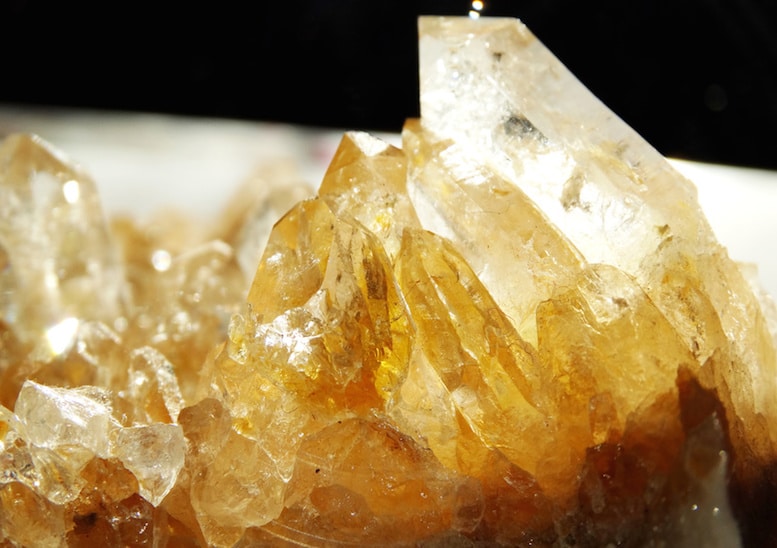
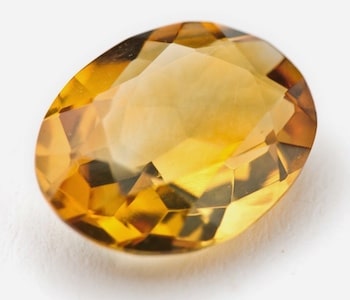
Its pretty name, at once sparkling and gentle, is a perfect fit for this crystal that carries light and calm. The yellow of natural citrine comes in every shade: pale, orange-tinged, or even ochre-brown like the Madeira-coloured citrine so highly prized in the past.
Some practices try to give this appearance to other, more commonly found crystals such as smoky quartz or amethyst. Once heated, these crystals take on a characteristic yellowish-brown tint, yet without the clarity of true citrines. To avoid such nasty surprises, or simply as a matter of taste, pale citrines are the preferred choice today.
Citrine is sometimes saddled with nicknames suggesting it is close to topaz: “false topaz, topaz quartz, occidental topaz…” Topaz is a corundum and has nothing in common with citrine apart from its colour. Citrine, in fact, belongs to the great family of crystalline quartz. This very rare stone is a source of light and peaceful happiness.
Citrine jewellery and objects
-

 Select options This product has multiple variants. The options may be chosen on the product pageQuick View
 -
Out of stock
 Select options This product has multiple variants. The options may be chosen on the product pageQuick View
 -
Out of stock

 Select options This product has multiple variants. The options may be chosen on the product pageQuick ViewCitrine, Pierres Polies
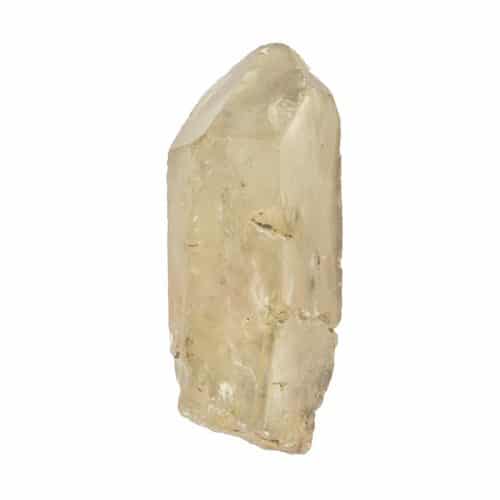
Citrine du Congo – Pointe Monoterminée Polie à la Main (Qualité Extra)
Price range: 27,50€ through 41,50€ -
Select options This product has multiple variants. The options may be chosen on the product pageQuick View

Etymology and meaning of the word “Citrine”
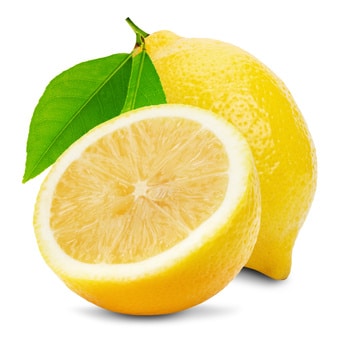 Its name comes from the Latin “citrus”, which refers not exactly to the lemon, another derivative, but to the citron tree, which likewise produces yellow citrus fruits. The term is thought to come from the Greek kédros, “cedar”, and also referred to the wood of the thuja (itself sometimes called “cedar”, in Canada notably).
Today the Latin root citrus still appears in words such as citron, citronnier, citronella, but also in citrouille (pumpkin) and citraire (an old French name for lemon balm, which yields a yellow infusion).
Before it was the name of a specific mineral, citrine and citrin were adjectives of colour. In old medical works, for instance, one finds prescriptions for “citrine pomade” or “citrine ointment”.
In ancient times, our citrine was simply designated as a “citrine stone” among other yellow-coloured minerals. This vagueness is a source of confusion and makes it a hazardous business to identify the citrines whose many traces we find throughout history. In any case, the rare yellow quartz known today as citrine has been used since the dawn of time for its beauty and its properties.
Mineralogical characteristics of citrine
Here are the main criteria of citrine as defined by crystallography:
- Group: Silicate (the most widely represented chemical group)
- Subgroup: Tectosilicate (tetrahedral structure with shared corners)
- Crystal system: Hexagonal / triclinic
- Composition: SiO2
- Habit: Prismatic
- Fracture: Conchoidal
- Lustre: Vitreous
- Streak: Colourless
- Density: 2.7
- Hardness: 7/10 on the F. Mohs scale
- Transparency: Translucent to nearly opaque
- Refraction: 1.54 – 1.55
Also found within the same tectosilicate subgroup are, among others: rock crystal, amethyst, chalcedony, aventurine, carnelian, onyx, sard, agate, jasper and opal.
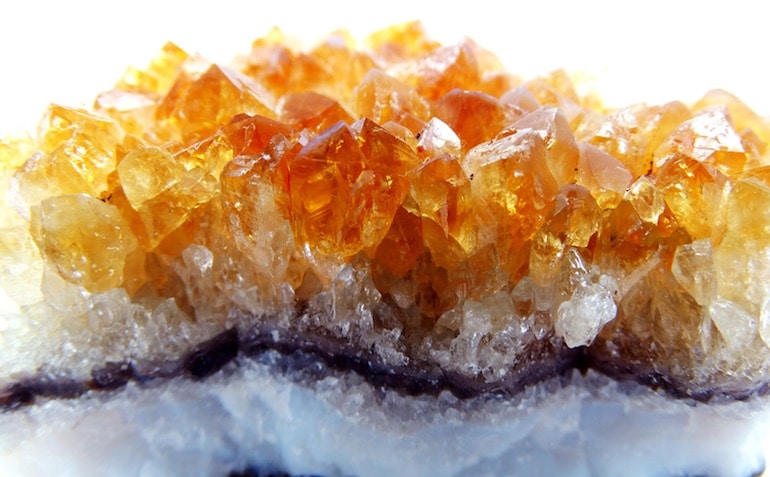
Citrine is composed of silicon dioxide and small quantities of hydrated iron oxide, which give it its yellow colour. It is often found in the same deposits as its close relative amethyst, but in far smaller quantities. Today, citrine comes mainly from Brazil, but it is also found in Africa (Madagascar, Namibia), in the Americas (Argentina, USA), in Asia (Burma, India, Russia) and in Europe (Scotland, Spain, France).
Citrine in ancient history
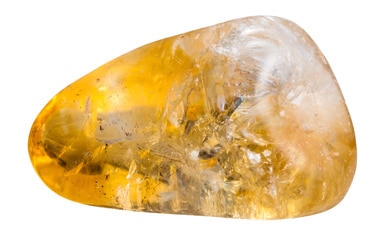 Citrine has been present in human history for thousands of years. Yet its identification in the texts is sometimes open to doubt.
In the Old Testament, for example, one text describes in detail the gemstones of Aaron’s breastplate (book 10 of Exodus). There are twelve of them, like the twelve tribes of Israel, but interpretations and translations differ regarding the stone of the fourth row of the collar: it is sometimes called beryl, sometimes citrine!
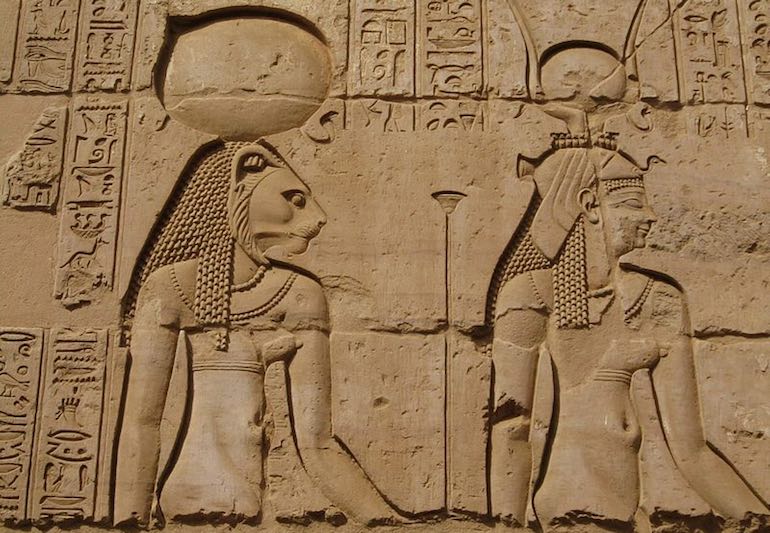
In ancient Egypt, the high priests and priestesses did indeed practise lithotherapy. The colours of stones carried strong symbolic power and determined their therapeutic uses. The yellow colour of the engravings was obtained with iron oxide from the mountains; citrines are found there too, near Aswan and Abu Simbel. Citrine and agate were commonly used against snake venom. Citrines were credited with soothing virtues, and the Egyptian priestesses wore them to ward off jealousy.
These magnificent golden quartzes also brought calm to the lion-headed goddess Sekhmet, the formidable daughter of Ra, the Sun god. An aggressive and wrathful goddess, she had the power to unleash diseases, and citrines brought her peace and the gift of healing. Sekhmet the wicked would then transform into the cat-headed Bastet, the gentle protector of happy homes.
In Greece, Aristotle taught the first foundations of scientific mineralogy. In the field of arts and crafts, the Greeks favoured coloured stones and crystals, preferring those they could engrave and carve. Citrine is therefore frequently encountered in this civilisation.
Greek mythology is peopled with gods and various creatures, more or less agreeable, and this time citrine was associated with a hero endowed with every quality: Chiron, son of the god Chronos. This good centaur was a physician and an excellent tutor; among his pupils were Achilles and Asclepius, the future Greco-Roman god of medicine.
 Chiron knew all the secrets of nature, of animals, of plants and certainly of the mineral world. Through him, all the powers of citrine come together: healing, well-being, and the faculty of learning, teaching and memorising. The centaur symbolising the astrological sign of Sagittarius is generally associated with Chiron.
The Romans knew and used citrine as well. Like the Greeks, jewellers and artists greatly appreciated it for its generous colour and its capacity to be cut. It is associated with the god Apollo, god of light, harmony, medicine and music. The same virtues and the same attributes ascribed to citrine are thus found across the various civilisations of antiquity.
Citrine in modern history
In the 16th century, Georg Bauer, known as Agricola, a German scholar, catalogued and deepened the mineralogical and gemmological knowledge of his time. It may well have been he who finally fixed the name “citrine” on the stone we are concerned with. Before him, confusion still reigned; in the inventory of the possessions of the Duke of Berry in 1416, for instance, one finds “a square citrine sapphire” and also “a citrine sapphire in the shape of an eye”, acquired from a jeweller for 23 gold écus. Yellow sapphires or citrines? No one knows.
In 1536, another inventory concerns the possessions of the most powerful figure of the Renaissance: Charles V. The emperor owned (among many other things!) “a flat gold cross in the shape of a ring set with five large citrine stones“. Closer to our own time, citrines, symbols of joie de vivre and dynamism, became very fashionable during the reign of Charles X. This craze brought an invigorating note to the gloomy mood of the moment, for that king was neither very cheerful nor very active.

Another famous crowned head, Queen Victoria, loved citrines with a passion. The deposits on the Isle of Arran in Scotland produced the magnificent citrines emblematic of Scottish dress. They were worn in every possible way, often set in dirks or, most often, mounted on silver brooches. These “Kilt Pins” traditionally consist of a large citrine surrounded by small matte, coloured stones.
Grand Scottish balls were held at Balmoral whenever Victoria stayed there. Guests would don the tartan of their clan and pin it at the shoulder with this brooch. The queen was delighted to gaze upon the beautiful yellow crystals blazing with light!
René Lalique, the famous master glassmaker and jeweller, may perhaps have thought of those beautiful Scottish evenings when, in 1910, in the Art Deco style, he created a famous square brooch adorned with square citrines. The dazzling citrine, a messenger of happiness and prosperity, still lights up the finery and crowns of royal houses, notably those of Luxembourg and Thailand.
Virtues of citrine in lithotherapy
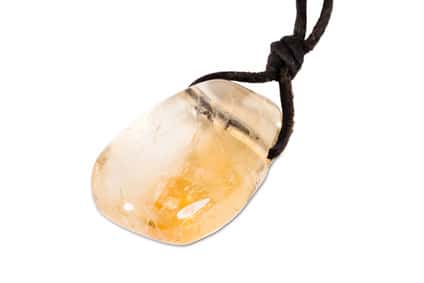 Citrine charms us first of all by its cheerful, invigorating colour. It immediately brings the well-being of bright sunny days. Yellow represents light and life; this colour attracts us unconsciously. It is a phenomenon observed, notably, by marketing departments: an advertising offer printed on yellow paper will generate higher returns than any other colour. And yet, few people, when asked their favourite colour, will spontaneously answer “yellow”.
There are various ways of working with citrine. You can place it near you to contemplate it in the silence of meditation, hold it in your hands, wear it on you or hold it to your ear to “listen” to it as one does with a seashell. What matters is establishing the kind of contact that gives you pleasure. Are your citrines mounted in jewellery? Then wear them! If you work with your chakras, you will place the citrine on the point of the solar plexus, at the bottom of the sternum.
The physical benefits of citrine
Citrine is beneficial to the entire digestive system. It has a positive action on all sorts of ailments: nausea, vomiting, heartburn, food poisoning, diabetes, jaundice and liver disorders.
Its beneficial action also extends to the heart, blood circulation, the thyroid gland, the pancreas, the intestine and the kidneys. It strengthens the metabolism and confers energy and vigour on the body. Citrine is also renowned for its ability to regenerate tissue. It accelerates the body’s natural processes of self-healing (even if it means temporarily increasing the symptoms).

The emotional benefits of citrine
Citrine is a solar stone, luminous and warm, extremely positive and energising. It increases self-confidence and self-esteem, promotes well-being and reduces stress. It is renowned for its ability to balance the energies and to fight depression and sadness, anxieties and worries.
Citrine brings clarity to those who lack it. It has a calming effect capable of soothing anger and disagreements. Lastly, it fosters attentiveness, openness and serenity in relations with others.
The benefits of citrine in everyday life
Citrine stimulates creativity and brings inspiration. It reinforces concentration and makes an excellent stone for the creative person. It fosters understanding, study and memory, and eases the transmission of knowledge.

Citrine reinforces drive and motivation. It helps with decision-making and initiative. It strengthens individuality, dulls sensitivity to negative criticism, and helps develop optimism and a positive vision of the future.
Nicknamed the “Money Stone”, citrine helps attract wealth, success and prosperity. It speeds up the conclusion of financial dealings. It encourages generosity and sharing, while also helping one to preserve one’s fortune.
Cleansing and recharging citrine
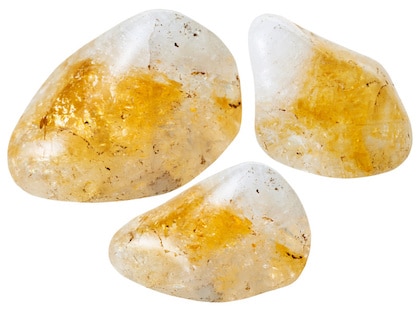 Your crystals must be cleaned regularly. If you notice that your citrine is losing its sparkle, the time has come to cleanse it and to remove the excess stored energy. Without this, it would lose its effectiveness.
The simplest method is to dust it gently with a soft cloth and place it in a small container, preferably of glass or earthenware, filled with tap water or spring water. You can leave the citrine to soak overnight or hold it under a trickle of running water for 10 to 15 minutes. If you have several crystals to cleanse, set out individual containers and never reuse the same water.
To recharge it, let the citrine dry naturally; you may place it in the sun, but only briefly, since UV rays fade the colours. For risk-free recharging, expose it to the rays of the moon or to the gentle morning sun.
There are other methods, longer and less easy to carry out, such as burying it in the earth for several weeks. If you choose this means, take care to mark the exact spot clearly and make sure you have another citrine on hand!








Leave a Reply