 English
  Français
 Español

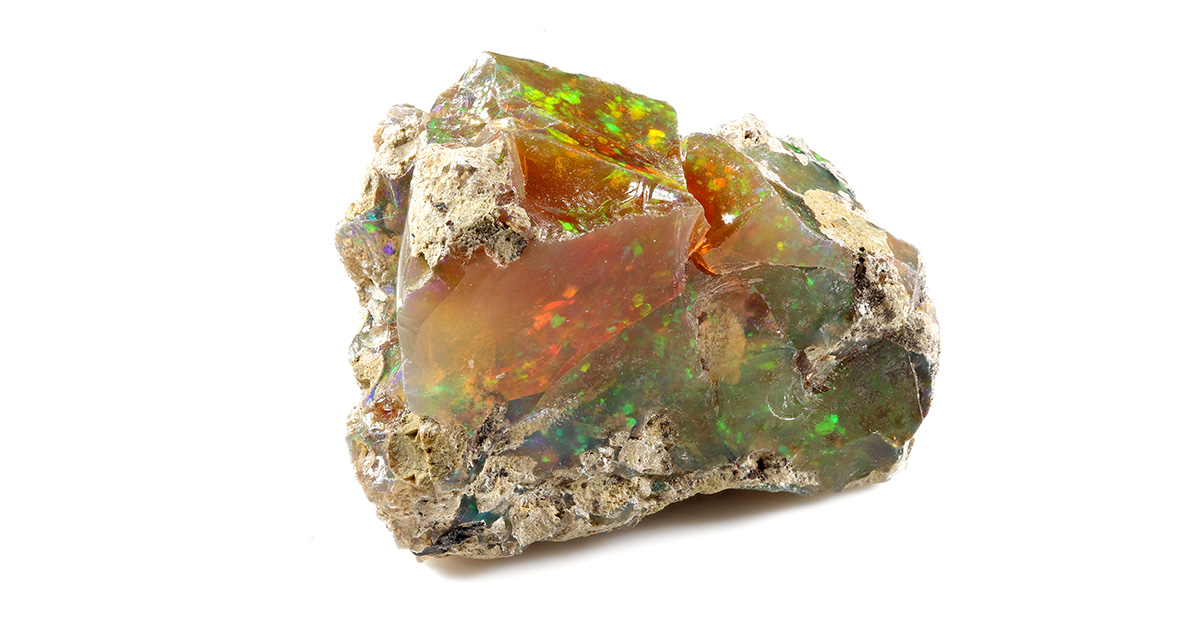
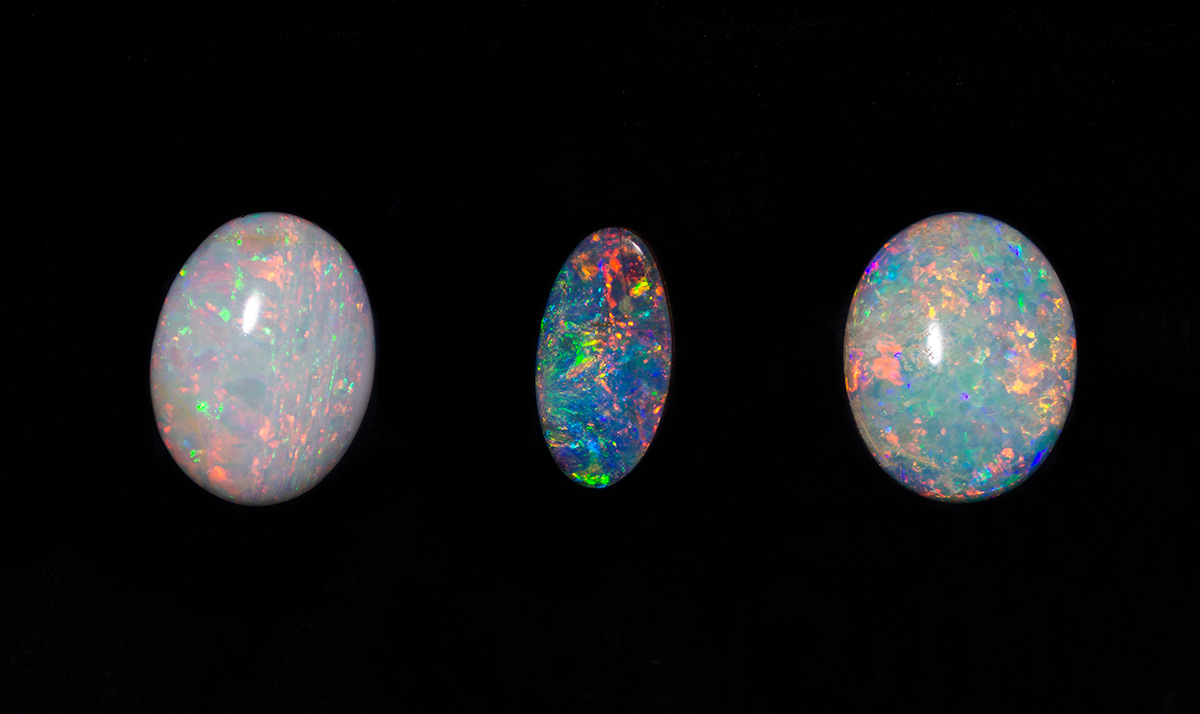
Thanks to a subtle alchemy between water and mineral, opal is both a source and a symbol of light. Its pearly sheen and iridescent reflections explain its exceptional renown. This category of stones brings together a rich variety of gems in many different hues. In lithotherapy, opal is famed for numerous virtues such as hydrating the body and lending clairvoyance to the mind.
The Mineral Properties of Opal
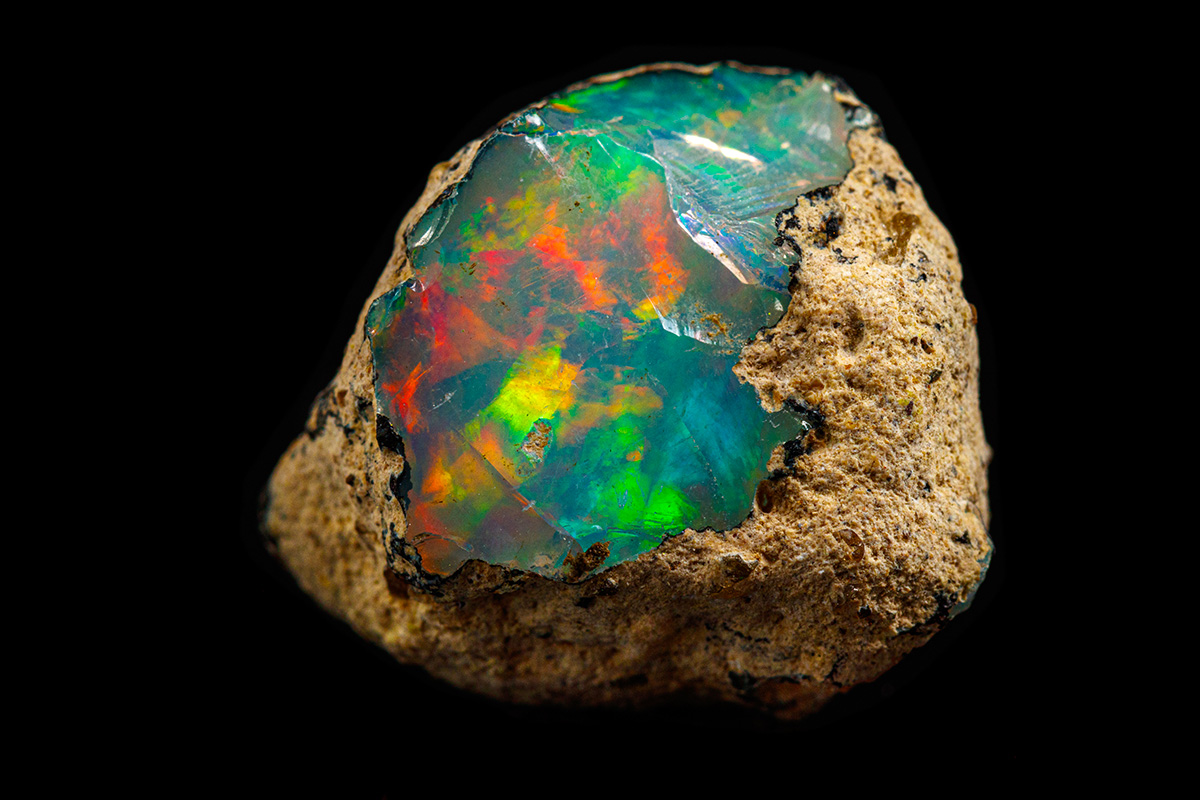
Opal, or solid silica hydrogel, is composed of water and silica. Under the effect of heat, it transforms into quartz. It is found in sedimentary rocks or in igneous rocks.
| Group | Quartz |
| Crystal system | Amorphous, cluster aggregates |
| Composition | Hydrous silicon dioxide |
| Colors | Varied hues |
| Density | 1.9 to 2.5 |
| Hardness | 5.5 to 6.5 |
| Transparency | Transparent to translucent |
| Luster | Vitreous |
| Forms | Reniform masses, pseudomorphs and fossil material |
| Deposits | Australia, North America, Central America and South America, Japan |

The Main Varieties of Opal
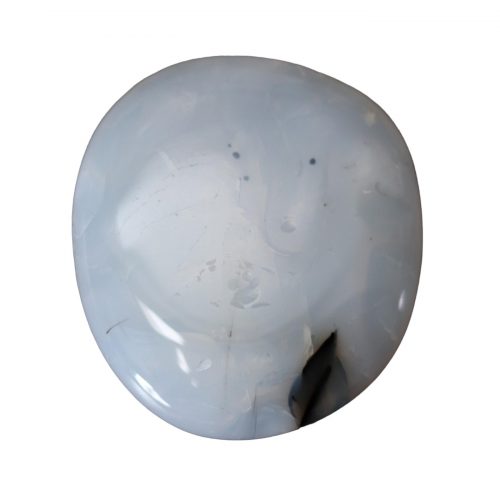
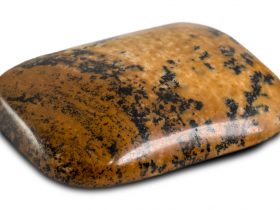
Common opal, the most widespread in this category of minerals, is a variety with milky hues that are sometimes tinged with pale colors such as gray, yellow or pink. There are also sub-varieties such as Andean opal or purple opal.
Hydrophane opal, white and opaque in color, has a singular peculiarity. It becomes transparent when immersed in water.
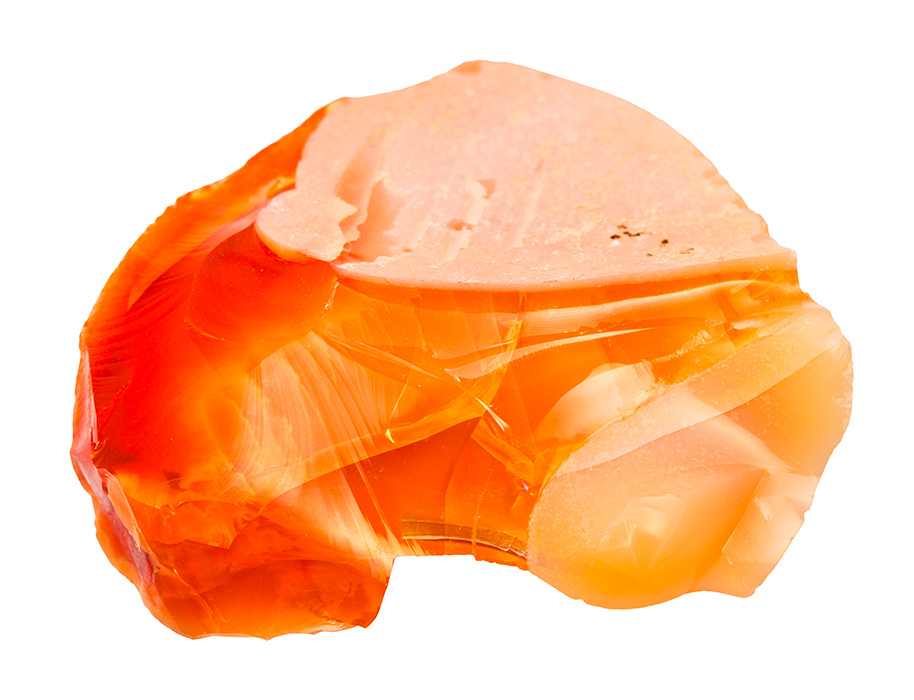
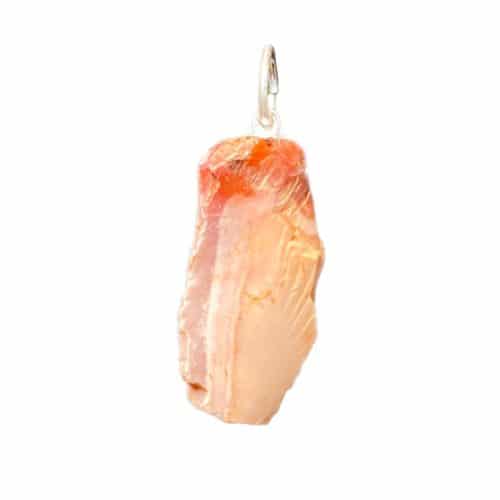
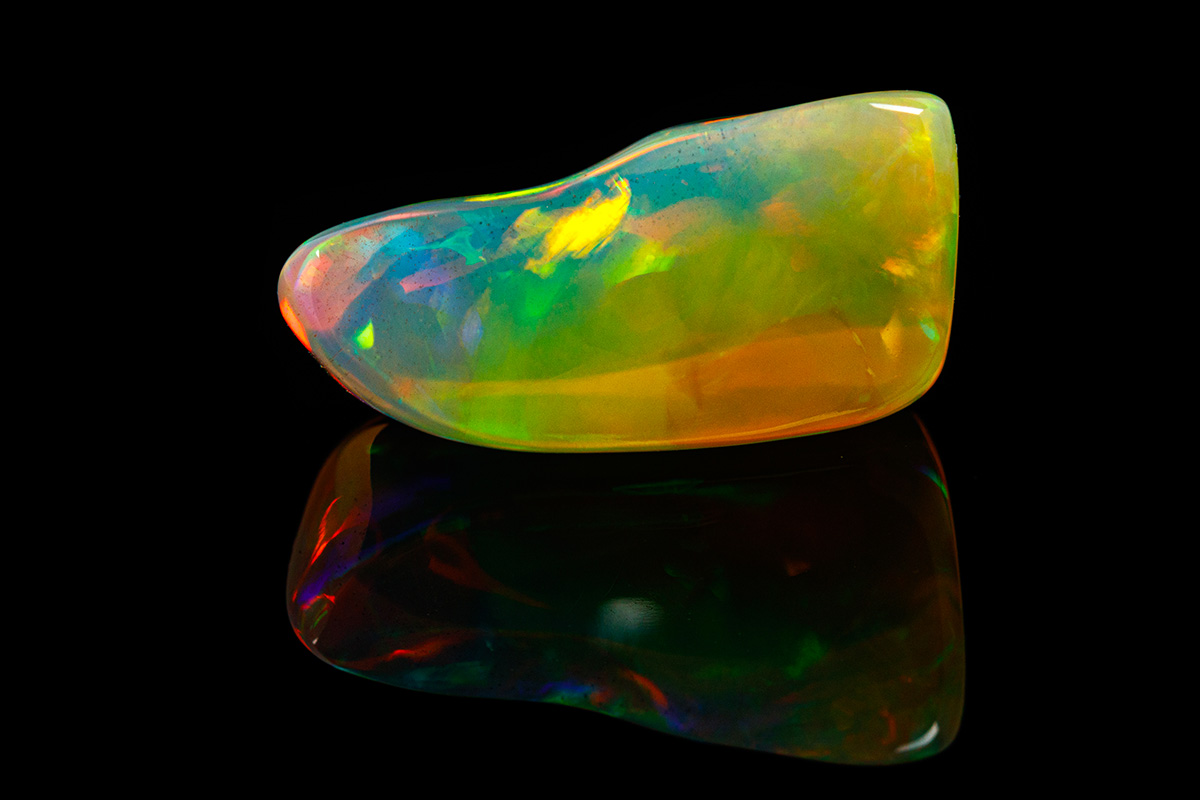
Fire opal is a variety whose spectrum of colors ranges from orange-yellow to glowing red.
Precious opals are white or black and display iridescent flashes of vivid colors.
Opal Jewelry and Objects
-
 Select options This product has multiple variants. The options may be chosen on the product pageQuick View
 -
-



Opal and Light
Among all stones, opal is the one that symbolizes light. Its mineralogical properties give it a luminosity, a pearly sheen and iridescent reflections that produce a striking aesthetic effect.
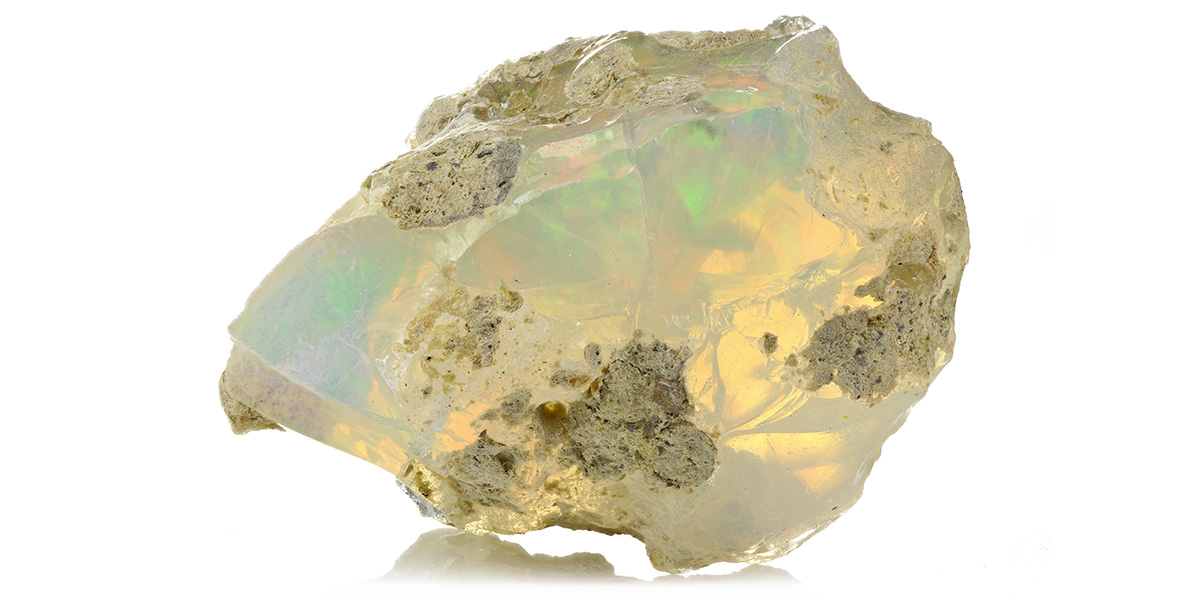
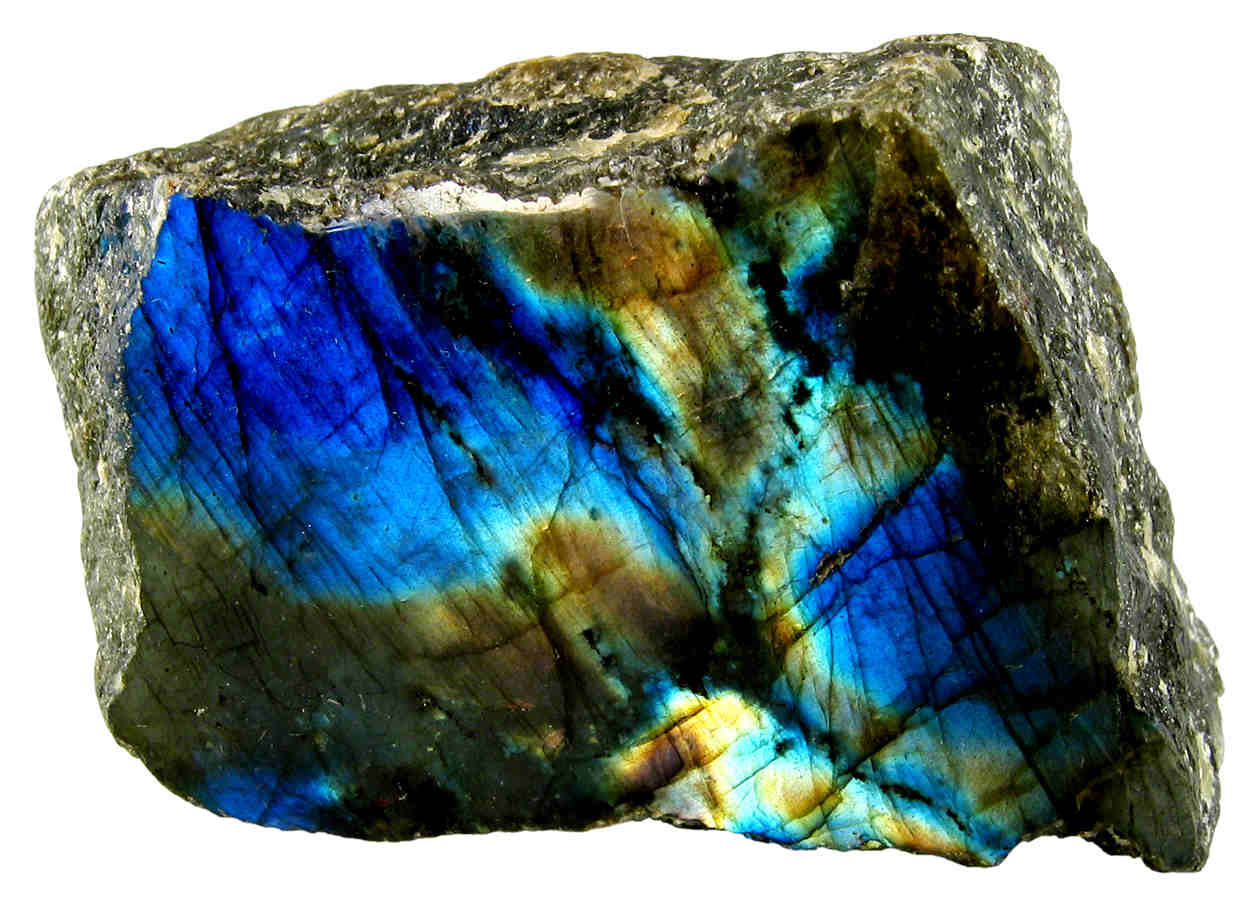
The layered structure of opals is responsible for a phenomenon called iridescence. This produces a remarkable visual impression whereby an object appears to change color depending on the viewing angle. The name of this stone is even the origin of a specific property: opalescence. This term describes a translucent material of milky hue with iridescent reflections.
Etymology of the Word “Opal”
This luminous stone takes the origin of its name from the Sanskrit term – a classical Indo-European language – upala, which means “precious stone”. Upala later inspired the terms opallion and opalus, used in Greek and Latin respectively.
Today, the word opal has also become a popular feminine first name. Opaline refers to a translucent, milky-colored material used to make glassware and decorative objects.
The History of Opals
The Queen of Precious Stones
According to archaeological discoveries, opal was already being worked in Ethiopia 4,000 years before Christ. Pliny the Elder described it as the ultimate precious stone, the one that gathers the most remarkable properties of the other minerals. In his words, this queen among her kind borrows the sparkle of amethyst, the fire of garnet and the depth of emerald.
Among the Greeks, many virtues were attributed to opals. In the eyes of the Ancients, they fostered clairvoyance, hope and purity. Legends still reach us from Indian and Arab civilizations, each highlighting the aesthetic and esoteric properties of opal.
A Remedy in the Medieval Era
In the Middle Ages, this stone was credited with health-giving virtues. It was thus used to preserve the health of the eyes and the color of the hair. It also remained prized for its visual qualities and its luminosity.
A Stone of Beauty
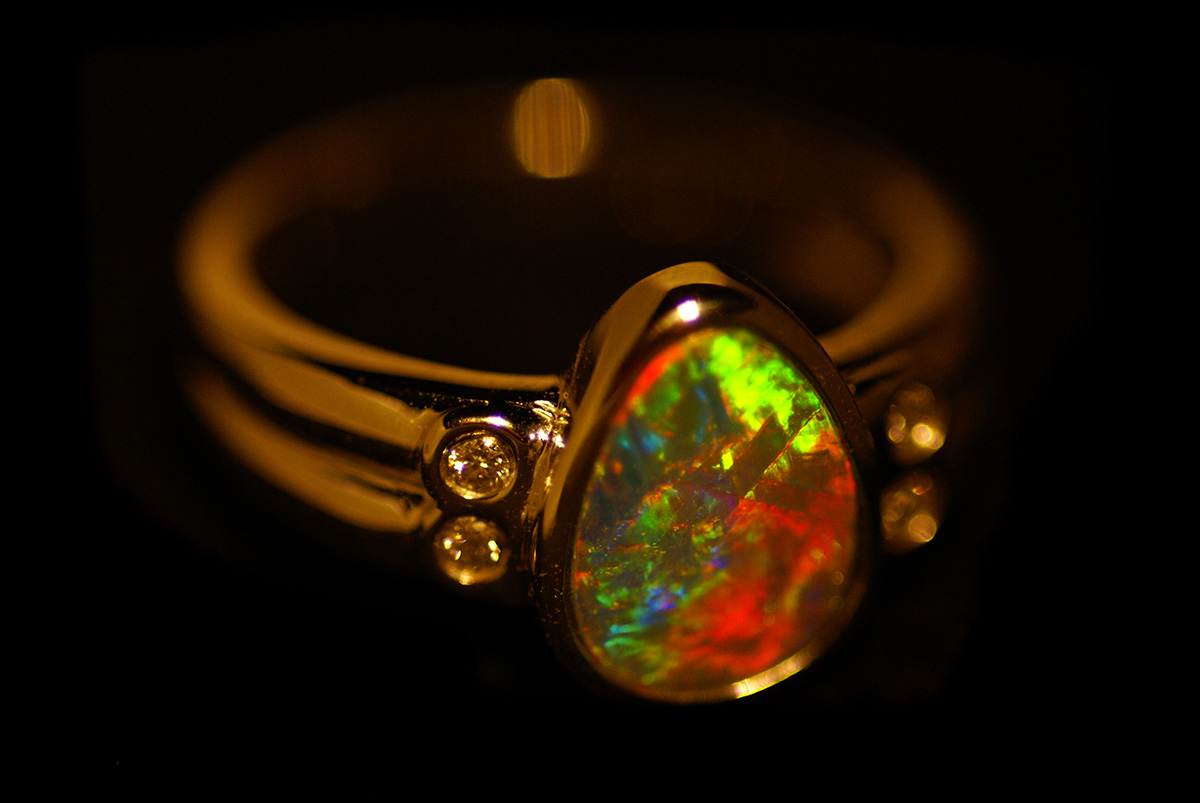
In the 19th century, an opal deposit discovered in Australia revived the stone’s popularity. Queen Victoria herself made it her favorite jewel. A prime showcase for this mineral, which thus entered a new era of fame. Opal has traditionally been prized for its aesthetic qualities and is mainly dedicated to jewelry and decoration. Lithotherapy has also taken an interest in this exceptional rock and interprets its psychic and physiological virtues in the service of the human being.
The Properties of Opal in Lithotherapy
The main symbol of opal is light. Thanks to mineralogical phenomena such as iridescence and opalescence, this stone offers us a delicate and hypnotic spectacle blending iridescent reflections and pearly effects. Endowed with this powerful characteristic, opal carries with it many virtues drawn from its vibration and its luminosity, such as clairvoyance, clarity, concentration, intuition and joy.
A second element symbolizes this magnificent mineral: water. An important part of its composition, water contributes to its unique brilliance. In terms of physical health and psychic balance, the element of water, ever-present in the structure of opal as it is in the human body, brings beneficial and stabilizing effects.
The chakra mainly associated with this stone is the brow chakra. It is naturally in connection with the notions of intellectual clairvoyance and clarity of mind that its resonance with opal takes shape.
Opals possess numerous virtues that align with the concerns and needs of the astrological signs. Lithotherapists recommend their use to Geminis, Libras, Sagittariuses and Cancers.
The opal wedding anniversary is traditionally known as the celebration of 21 years of marriage.
Virtues Against Ailments of Physical Origin
The Balance of Fluids
Partly composed of water, opal quite naturally has a balancing effect on bodily fluids. It regulates hydration and is recommended for people who suffer from water retention. Through its hydrating action, this mineral also relieves rheumatism and other joint conditions.
Diuretic Properties
Lithotherapy considers opal to be an excellent natural diuretic. Its use is appropriate for cleansing and purifying the kidneys and the bladder.
Skin Care
Through its hydrating virtues, this stone is a choice of predilection for nourishing and protecting the health of the skin. In therapeutic contact with opal, better-hydrated skin retains its suppleness and its elasticity. Cell regeneration is also activated, which slows aging and the appearance of wrinkles.
A Purifying Action
All bodily fluids benefit from the virtues of opal, whether blood, perspiration, urine or the mucous membranes. Still in connection with its water content, it exerts a purifying and regenerating action on the liquids that flow through the human body and ensure its balance.
Access to Pleasure
Fire opal, whose hues blaze between yellow and red, has the reputation of opening the doors to physical pleasure. For men and women alike, this stone is said to facilitate a more spontaneous access to sexuality.
Virtues Against Ailments of Psychic and Psychological Origin
A Source of Mental and Spiritual Clarity
The symbol of light expresses all of opal’s ability to illuminate the challenges and visions of the mind. Clairvoyance, mental clarity and spiritual intuition are all benefits derived from a therapeutic use of the stone. It is also said to be a source of premonitions and visions of the future, whether they take shape through dreams or through intuitions.
Support for Peaceful Communication
Andean opal in particular is renowned for its support of constructive and peaceful communication. It accompanies the person in a considered and composed way of speaking, in order to foster self-expression in a gentle and constructive perspective.
Artistic Inspiration
No doubt inspired by its undeniable visual assets, one of opal’s virtues is oriented toward art and taste. It is said to develop artistic sense, the appreciation of beauty, good taste and the ability to identify aesthetic quality.
A Revealer of Talents
Opal acts in support of people who lack confidence or clairvoyance about themselves. Through its luminous power, it reveals hidden talents, bringing to light unsuspected inner riches, both for oneself and in the eyes of others. In a spiritual extension, this mineral is said to encourage the emergence and the awareness of truth.
Which Stones to Combine with Opal?
In the pairing of stones in lithotherapy, lithotherapists agree that the properties of minerals of similar colors are amplified when brought into synergy. From this standpoint, blue opal, alongside lapis lazuli, aquamarine or chrysocolla, exerts a liberating effect on the throat chakra and the capacity for self-expression.
Opal is also paired with obsidian to obtain a beneficial action on all of the chakras. This combination fosters inner balance and harmony in the flow of energies.
How to Cleanse and Recharge Opals?
True to its liquid component, opal is eager for contact with water. This is why you can give it baths of distilled water as often as you like. It will thus be cleansed and optimized in its balance and its vibrations.
To recharge opal, in order to preserve its balance and to avoid damaging it by exposing it to potentially too intense sunlight, opt for exposure to moonlight, a source of energetic balance and soothing.





Leave a Reply