 English
  Français
 Español

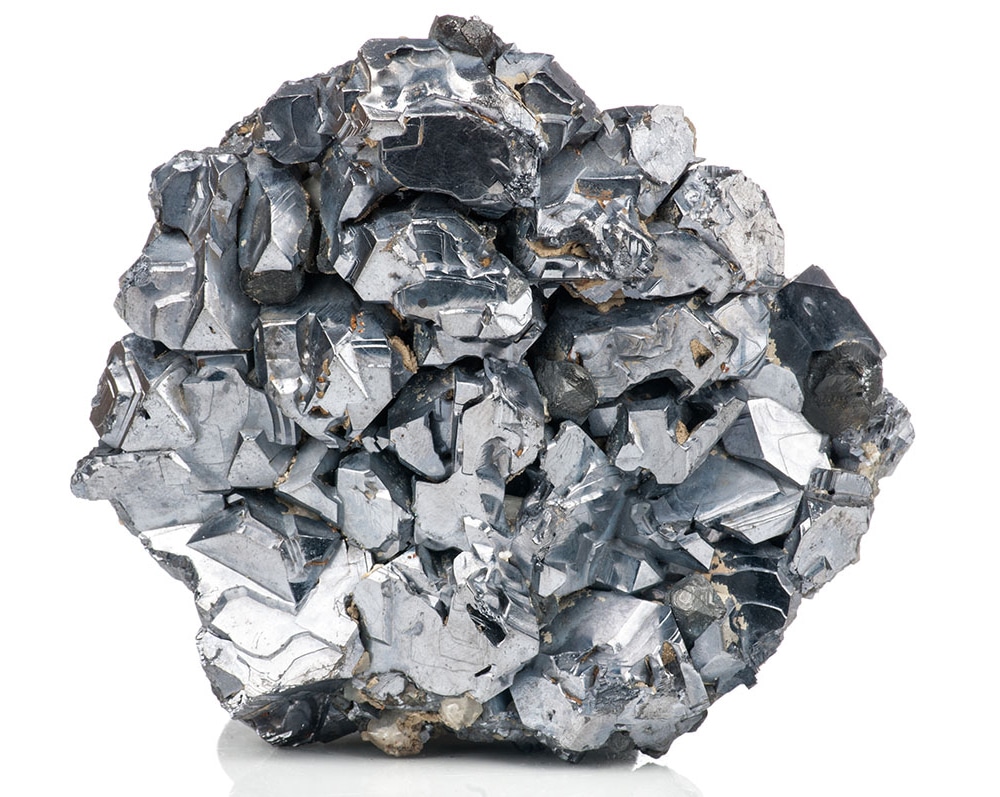
Also known as Lodestone, magnetite is a mineral endowed with a strong magnetism which, on both a physical and symbolic level, translates into various phenomena of attraction. A stone of grounding and protection, its black colour makes it an excellent neutraliser prized by healers. In this article, discover the properties and virtues of magnetite in lithotherapy.
Characteristics of magnetite
Mineralogical properties of magnetite
Rich in iron (up to 72% of its composition), this mineral is directly linked to the magnetism of Mother Earth and conveys it through its absolutely perfect form waves. Magnetite crystals are easily distinguished from other minerals by the singularity of their shapes. Their crystallisation fosters good waves.
| Group | Spinel. |
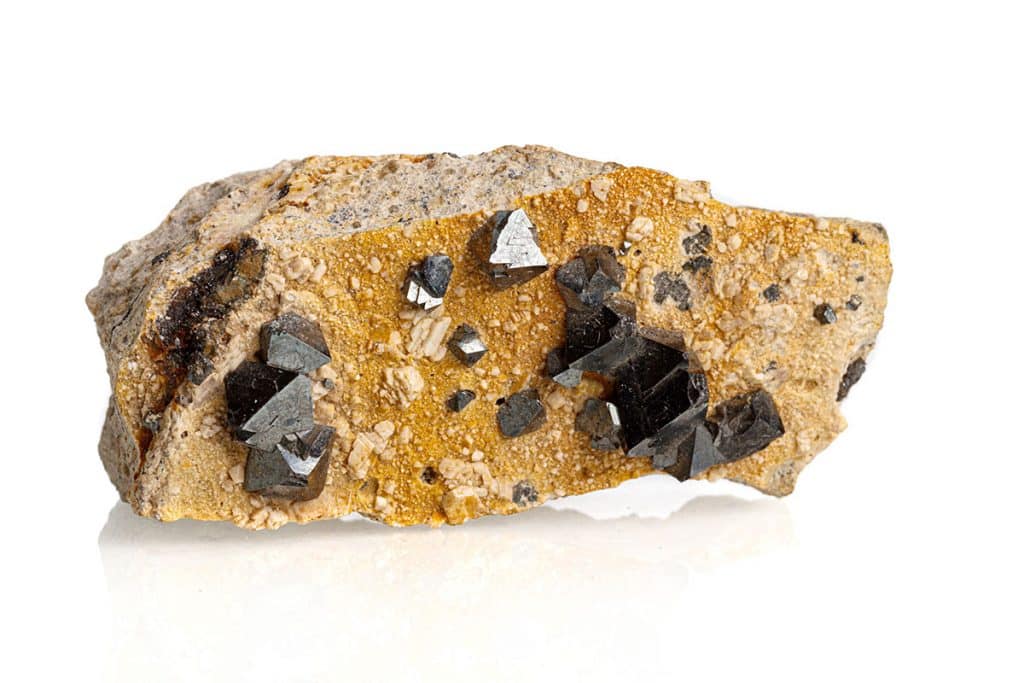
| Crystal system | Cubic, free crystals or embedded in the rock (octahedrons and rhombic dodecahedrons). |
| Composition | Iron oxide, Fe₃O₄. |
| Colour | Black. |
| Density | 5.2. |
| Hardness | Between 5.5 and 6.5. |
| Transparency | Opaque. |
| Lustre | Metallic, dull, greasy. |
| Form | Octahedron, dodecahedron, twin crystal. |
| Deposits | Numerous and mainly in iron mines: Scandinavia, South Africa, Germany, Brazil, Finland, France, Russia (in the Urals), USA, Canada, Sweden, etc. |
Magnetite jewellery and objects

Where does the name “Magnetite” come from?
Etymologically, magnetite takes its name from the Greek magnes, which means “magnet”. The origins of this name are presumed and may be various: it could be a reference to the Greek Mount Magnetos, where it was found in abundance, to the seaside resort of Magnesia in Thessaly, or else the city of Magnesia in Asia Minor. Magnetites are surprising and powerful natural magnets.
Regarded as the stone of Horus in Egypt, magnetite was sacred and reputed to balance the movements of any celestial body. While this type of crystal was used in black magic to attract love or as a good-luck charm, it is today credited with many other virtues.
History and origins of magnetite
It was in 1845 that the mineralogist Wilhelm Karl Ritter von Haidinger officially described magnetite for the first time. The magnetic properties of stones were then discovered, at roughly the same time as magnets, and it was understood that this iron ore forms naturally during volcanic activity in eruptive rocks. It is, moreover, frequently found in nature, dispersed in sedimentary rocks, more often volcanic ones, and in certain crystalline schists. During the process of differentiation of the Earth’s magma, this stone becomes concentrated in massifs of metamorphic rocks arising from fusion, and forms through the transformation of hematite and limonite.
Nevertheless, the magnetic properties of this mineral had already aroused the interest of naturalists in Greek and Roman Antiquity. In China, it was known in the 11th century BC. Its properties were experimented with there, and Hanfucio designed the first compass made of magnetite stone, cut in the shape of a spoon. An orientation towards the North was then considered an omen of misfortune by the local populations. During the same period, these crystals were used for the divinatory arts and geomancy.
Six centuries before Christ, the philosopher Thales of Miletus (author of the famous theorem of the same name) took an interest in the properties and virtues of minerals that exert a phenomenon of attraction. He championed the idea that these hold a soul, because they have the ability to move and to attract iron. The work of Pliny the Elder, Naturalis Historia (the Encyclopaedia of Natural History), mentions metallic elements attracted by these stones, even though the notion of the Earth’s magnetic field was not yet known.
Virtues and properties of magnetite in lithotherapy

Physical properties and benefits
Thanks to its composition, magnetites are a valuable aid against the effects linked to iron deficiencies: anaemias, drop in concentration, irritability, lack of energy, or even heart palpitations, etc. For the same reason, it is not recommended for people fitted with a pacemaker or metal bone prostheses (particularly iron ones).
Magnetic, this stone is able to turn the needles of a compass. A lodestone hung from a thread naturally orients itself North-South when at rest, which can allow a person to find their way again.
Just like malachite, this type of crystal also offers many benefits at the joint level and helps to soothe many physical ailments: cramps, fractures, stiffness, traumas and other injuries, etc. It also acts on the muscles and the entire circulatory system, can relieve the irritation of certain tissues and act as a natural pain reliever.
More broadly, magnetite can provide a sensation of warmth, balance the energies of the human body, and promote the regeneration of cells. Linked to the blood and its iron content, it also acts on the liver, the pancreas, the heart, and the sexual organs. It can also have an effect on the hormonal system.
Psychic properties and benefits
On the emotional and mental level, magnetite also bestows virtues linked to its powerful magnetism. It considerably influences social attractions, fosters friendships, and the consolidation and durability of emotional bonds. Like rose quartz, it can foster the resolution of relationship problems by facilitating dialogue and confidence, as well as the development of one’s potential for seduction.
The magnetite stone can also help lost people find their way again. This can be in the concrete reality of everyday life, but also on a psychological level: magnetite can help a person who feels lost to “find themselves” again. Strongly linked to telluric energies, it fosters the clarification of ideas and proves conducive to meditation as well as to the development of the sense of direction.
A stone of polarity, it allows the circulation of the energies from the lower chakras (root chakra and sacral chakra) up to the upper chakras (solar chakra, heart chakra, throat, third eye and crown). By way of the spinal cord and starting from its base, it fluidifies and multiplies this circulation of energy in the meridians, and contributes to their distribution among the various energy centres of the body. These stones also have the ability to regulate the emotions and moods of their holder.
Magnetite is a favoured healing stone for magnetisers and other healers, whether for in-person or distance treatments. It is a protective stone conducive to well-being as well as to a number of ailments.
Use of magnetite in lithotherapy
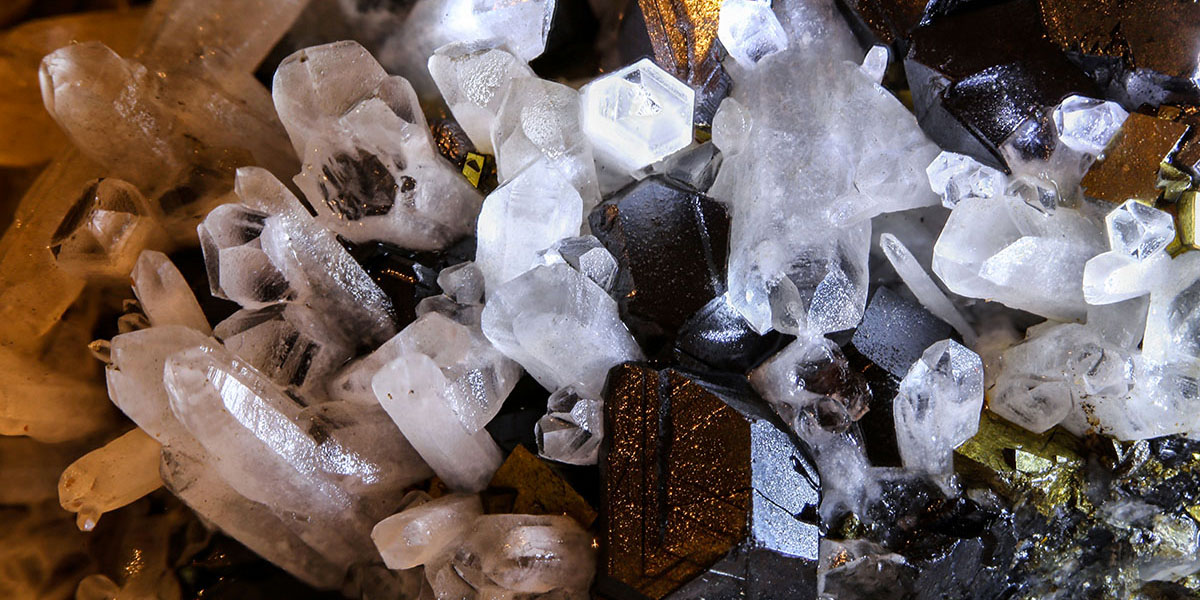
Magnetite crystals can be used as a stone elixir at high dilution. They can then be applied directly to the skin, or ingested to provide well-being.
Worn as jewellery (bracelet, pendant, etc.), magnetite diffuses its energies to whoever holds it. The same goes for polished or tumbled stones, which you can easily carry and use anywhere. You simply need to hold the mineral in your hand for a few moments and with awareness to feel its benefits. Beaded bracelets are also very conducive to the practice of meditation.
Outdoors, a polished magnetite stone can be freely suspended from a thread. Its natural magnetism can act like a compass and thus help you get your bearings in space. Many products will soon be available in our mineral shop.
In a lithotherapy treatment, several magnetites can be placed along the spine to relieve its pains or soothe tensions. A massage stone or a pebble can also be used to massage sore areas.
Chakras, stones and astrological signs associated with magnetite
Like all black stones, magnetite is associated with the base chakra, also called the root chakra. Located at the perineum, it is the starting point of our vital energy and strongly connected to the energies of Mother Earth through its powerful magnetism. It also corresponds to our primary physiological needs as well as to the need for security. On the bodily level, it is located at the genital organs. Magnetite will therefore have an effect on this area of the body, whether on the organs, the reproductive system in general, or on certain phenomena such as menstruation or hormonal disorders. It is a grounding stone and a stone of stability.
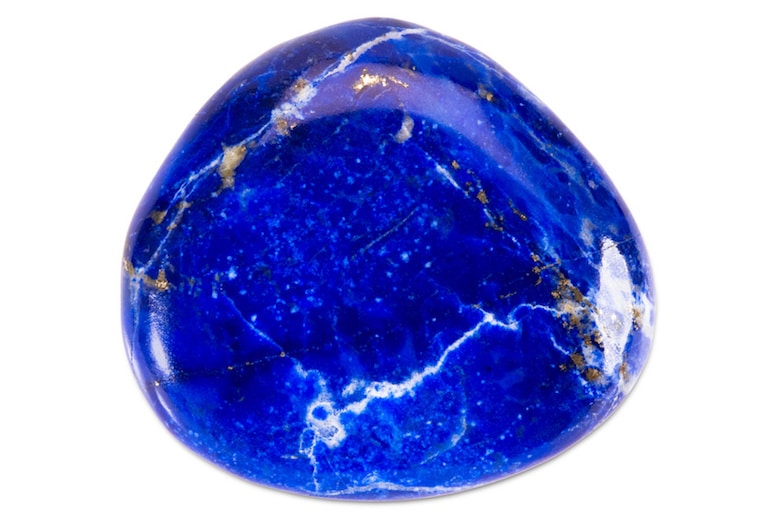
The synergy of stones can be very beneficial in lithotherapy, particularly for certain pains. You can, for example, use a magnetite in combination with a lapis lazuli to relieve cramps, or with a malachite for joint pain.
While all stones are beneficial to everyone, some correspond more to certain signs. As regards magnetite, it is a stone that is particularly favourable to the signs of Capricorn and Aquarius. On the professional level, it is particularly suited to sailors or other seafarers and airline personnel.
How to cleanse and recharge magnetite?
Because of the quantity of iron it contains, it is better to cleanse a magnetite by smudging with incense or sage. It can, however, also be cleansed in a little distilled water, briefly and without salt, so as not to alter it. In that case, it must be quickly and thoroughly dried.
Magnetite will preferably be recharged on a quartz cluster, but can also be recharged through simple exposure to bright sunlight. It is a dark, opaque mineral that tolerates light very well. To recharge a stone with energies, it can also be buried underground for a few days. If the mineral is of considerable size or has been little used, you can rely on its power of self-regeneration.





Leave a Reply