 English
  Français
 Español

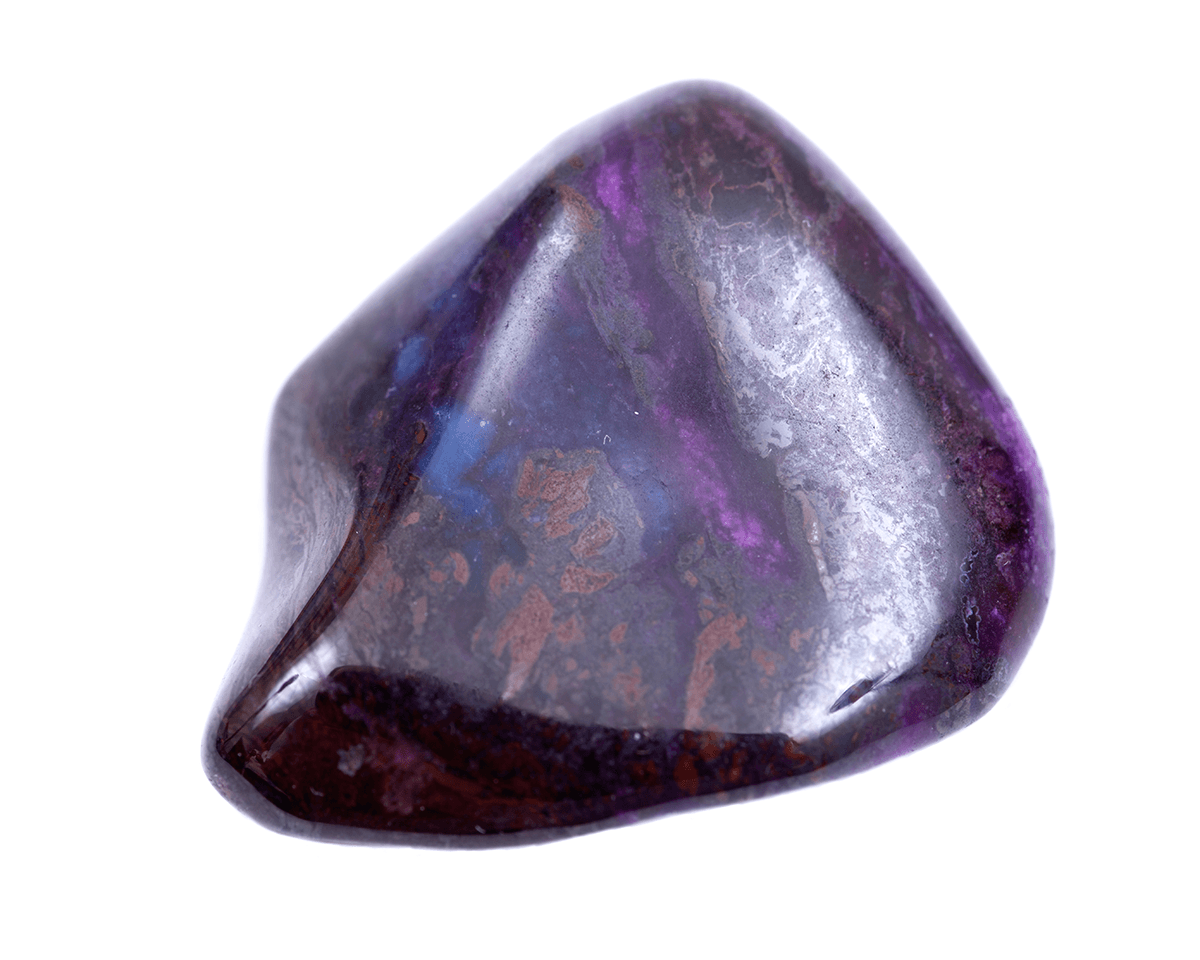
A stone of the soul and spirit, sugilite is a rare gemstone that has only recently come to light. Its properties and virtues in lithotherapy are nonetheless numerous and have already proven their worth. Hailing from South Africa, this natural stone is found in many deposits around the world, and its benefits continue to attract growing attention.
Characteristics of Sugilite
Mineralogical Properties
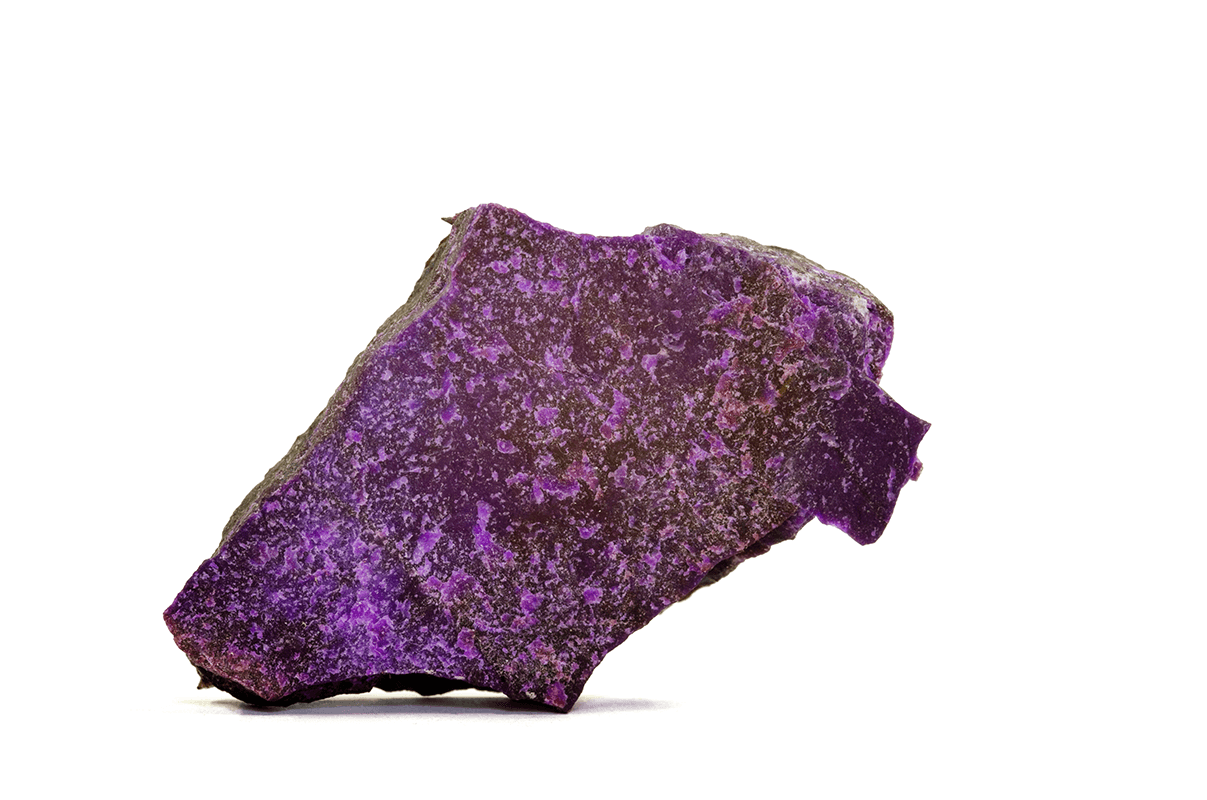
Sugilite is primarily found in manganese deposits or alkaline rock formations. It is mainly sourced from South Africa, in the Wessels mine.
| Group | Cyclosilicate of the osumilite group. |
| Crystal System | Hexagonal |
| Composition | Mixture of silicate, potassium, lithium, iron, manganese, aluminum |
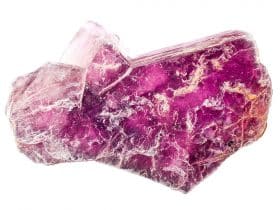
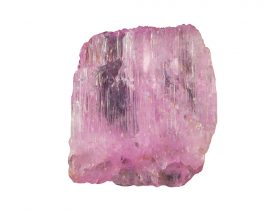
| Colors | Light to deep purple-violet, with possible black or white traces |
| Density | Between 2.75 and 2.80 |
| Hardness | Between 6.5 and 7 on the Mohs scale |
| Transparency | Translucent or opaque |
| Luster | Vitreous |
| Form | Massive, raw crystals of various shapes, with or without points |
| Deposits | Japan, Cape Province (South Africa), New South Wales (Australia), Quebec, India, Italy |
Where Does the Name “Sugilite” Come From?
The name of this crystal is believed to derive from Sugi Kenichi. This Japanese geologist is thought to have been the first to discover it in 1944. Initially named “sugilit” by the International Mineralogical Association (IMA), sugilite goes by many other names across the world and its various deposits: in the Wessels mines in northwestern South Africa, it is called “Wesselite“; in the Hotazel region, the name “Royal Azel” is preferred. Elsewhere, it is also known as “Lavulite” because of its color.
History and Origins
It was near Kyoto, on the small island of Iwagi, that sugilite was first found in the 20th century. Its discovery is therefore quite recent and is not surrounded by any particular myths.
The New Age movement associates it with psychic energy, regarding it as a spiritual stone of the “cosmic dance.” The New Age trend helped spread awareness of these minerals that were still little known in mineralogy but widely used in lithotherapy and in jewelry. Sugilite is a symbol of holistic consciousness, meaning consciousness in all its aspects.
Sugilite Jewelry and Objects
-
 Select options This product has multiple variants. The options may be chosen on the product pageQuick View
Virtues and Properties of Sugilite in Lithotherapy
Physical Properties and Benefits
On the physical level, sugilite is known for relieving headaches as well as the stress caused by serious or incurable illnesses. This stone restores energy and endurance.
Sugilite crystals also have beneficial effects on the brain, eyes, and heart. They strengthen these organs, facilitate healing, and can soothe pain. Additionally, they have a positive influence on the immune system, blood circulation, and lymphatic fluid flow.
This mineral also has an influence on the hormonal system, the kidneys, the bladder, and the reproductive system. It can therefore prove useful for a wide range of ailments, particularly those related to urinary or genital disorders, as well as those affecting weight, appetite, or mood.
If it is also called the “healer’s stone,” it is because sugilite facilitates scarring and healing processes. It is also widely used by healers for distance healing, and has the ability to repel negative energies.
Psychic Properties and Benefits
Sugilites are natural stones deeply connected to the spiritual realm and to calming the mind. They have the ability to help detach from the material world in order to elevate the spirit. These minerals are therefore particularly beneficial for acceptance — of oneself and of various events, especially the most difficult ones. Using sugilite also helps gain perspective, put things into proportion, accept what is, and push negative energies out of oneself.
Much like its neighbor amethyst, sugilite is conducive to developing the imagination and artistic potential. It helps find the inspiration needed for creative work. This stone is also highly valued in meditation, as it facilitates the practice by allowing the mind to settle. Its high vibrations also make it easier to access higher planes.
On the spiritual level, sugilite is known for its benefits on awakening consciousness. It fosters the development of a holistic awareness of the self, enabling deeper feeling and understanding of the energies within one’s own body. Thanks to this stone, it becomes easier to sense the flow of energies through our system and to become conscious of their effects.
Experienced spiritual practitioners will know how to harness it to make direct contact with Cosmic Forces in order to address certain existential questions and their relationship to the Universe. This is perfectly suited for introspective work.
This stone is also conducive to daydreaming and helps dispel the feeling of a dull life in favor of evanescent dreams. Some say that sugilite brings a feeling of near-ecstatic serenity, while also being energizing. Indeed, this stone can also strengthen the etheric body’s defenses through the flow of high vibrations it bestows.
How to Use Sugilite in Lithotherapy?
Sugilite is often used for distance healing by practitioners. This requires placing an “emitting” mineral with the therapist and a “receiving” one with the person undergoing treatment. These sessions often aim to raise the vibrational frequency of patients and strengthen their subtle bodies (causal and etheric).
Natural stone jewelry made with sugilite is very common and widely appreciated, worn as pendants, bracelets, or other stone-set pieces.
Stone elixirs prepared with sugilite can also be made, with or without other minerals. They can then be drunk or applied to the skin depending on the desired effect.
Polished or tumbled sugilite stones can also be used in lithotherapy treatments. A mineral placed between the eyes, for example, can help relieve headaches or unblock the third eye chakra.
Chakras, Stones, and Astrological Signs Associated with Sugilite
Which Chakras Are Associated with Sugilite?
Sugilite acts on the entire physical and etheric plane, and therefore on all energy centers. The frequency of its violet color corresponds particularly to that of the third eye chakra. This chakra relates to consciousness and spirituality, as well as wisdom and intuition.
Which Stones Can Be Combined with Sugilite?
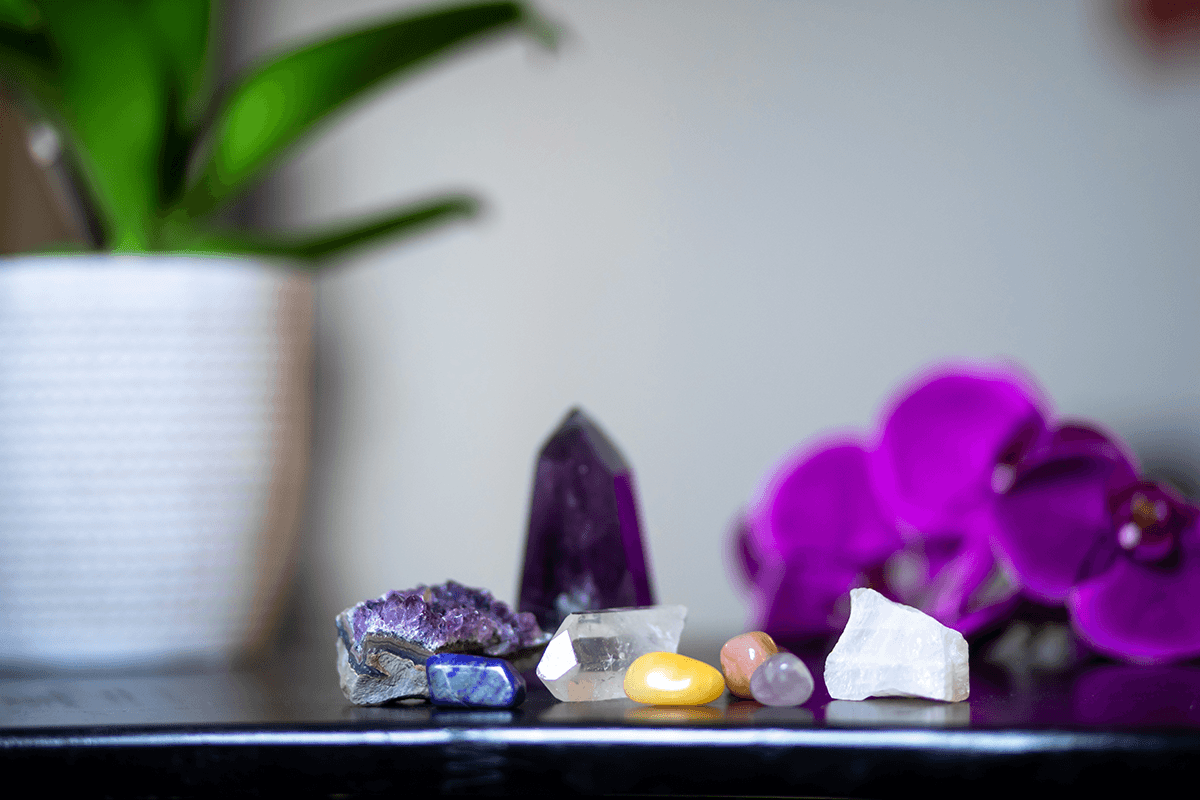
Sugilite can easily be combined with other stones to multiply its virtues, in several different ways. Minerals of the same color, for example, pair very well with it. This is notably the case with amethyst, fluorite, certain chalcedonies, kunzite, or violet diamond.
Stones associated with the third eye chakra can also be placed in contact with sugilite. They are most often violet, but not exclusively. Among them, you will also find yellow or dark blue stones. These may include yellow calcite, citrine, tiger’s eye, as well as hawk’s eye, labradorite, blue aventurine, blue apatite, azurite, sodalite, or sapphire.
Which Astrological Signs Are Associated with Sugilite?
The energies of sugilite resonate most strongly with the sensibility of people who tend to be nonconformist, idealistic, individualistic, and tolerant. As for astrological signs, this stone is particularly well suited to Capricorn, Aquarius, and Cancer. However, you will feel its benefits and virtues regardless of your sign!
How to Cleanse and Recharge Sugilite?
To cleanse a sugilite stone, distilled water without salt is preferable. Alternatively, the mineral can be rinsed under a little cold water, preferably spring water. Incense or Native American sage are also very effective for mineral cleansing and can be used as well.
Recharging stones is best done under full moon light, depending on the mineral’s color. Indeed, the lighter a crystal is, the less it tolerates light. Therefore, the lighter a sugilite is, the less it should be exposed to sunlight. Early morning sun will be suitable, however. Unlike grounding stones that are connected to the Earth, burying is not the most appropriate method for sugilite, which is a stone of the spirit.






Leave a Reply