 English
  Français
 Español

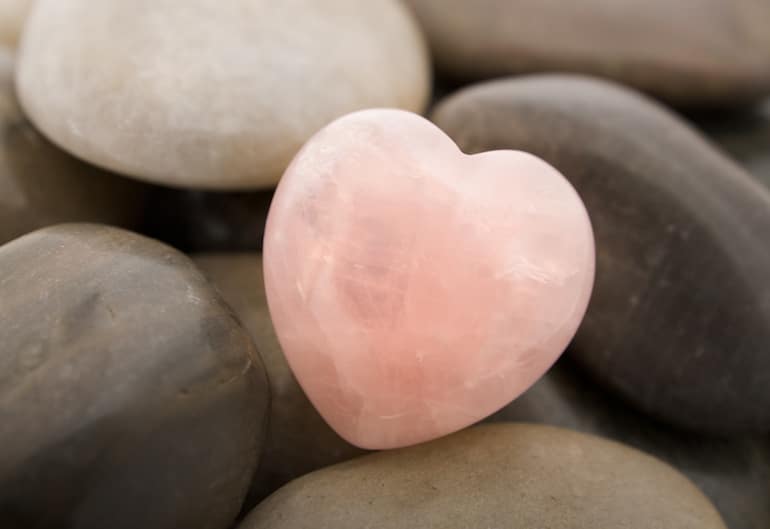
Quartz is the most abundant mineral in the Earth’s crust, and it comes in a great many varieties. Pure, perfectly transparent rock crystal contains nothing but silicon. Coloured crystals owe their appearance to the presence of other elements, for example manganese, titanium oxide and dumortierite in the case of rose quartz.
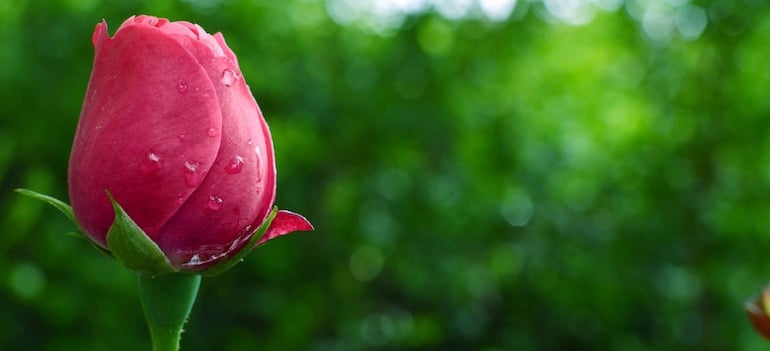
Scientific explanations take nothing away from simple contemplation: rose quartz displays a splendid palette of soft, gentle shades: pale or deep pink, tinged with orange, peach or lavender. Thanks to its cool, pastel tones, rose quartz has always evoked calm and tender feelings. It has been awarded the loveliest and most coveted of titles: that of the stone of love!
The famous American firm Pantone, creator of a printing-ink process and of various colour charts, has been “setting the tone” for 16 years. It picks the star colour of the year that will inspire every fashion trend. In 2016, Pantone chose a pairing of two shades reflecting warm well-being and tranquillity: Rose Quartz and Serenity blue.
Rose quartz jewellery and objects

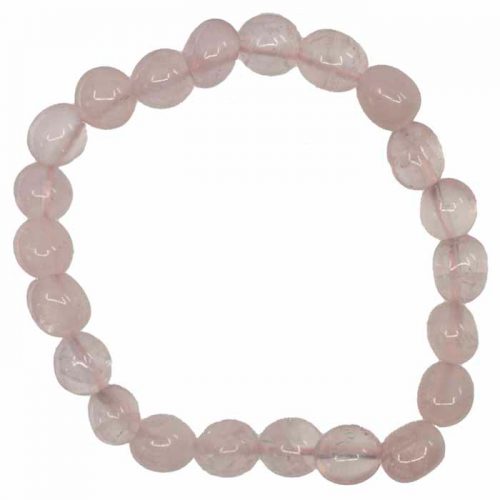


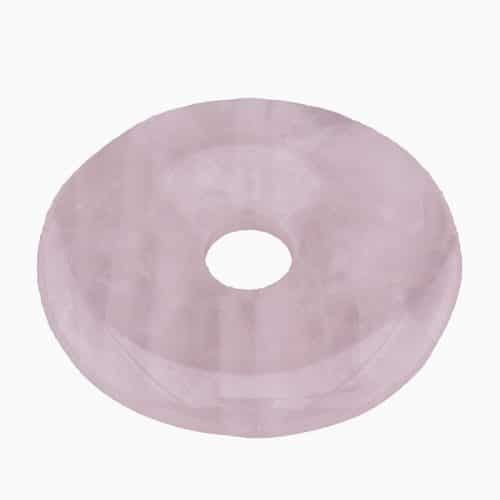
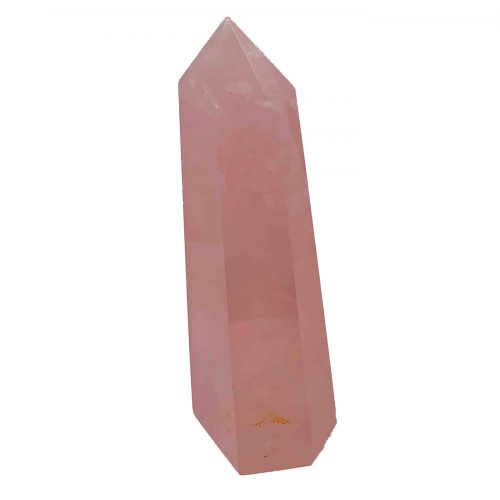
Mineralogical characteristics
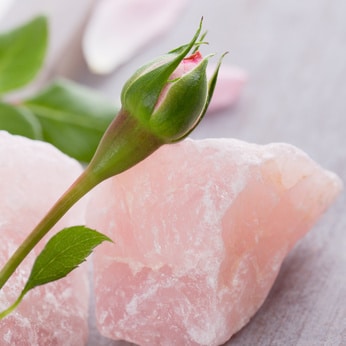
Rose quartz belongs to the large family of silicates-tectosilicates. It has a relative hardness of 7/10 on the F. Mohs scale. Most often translucent, it frequently appears fissured, with a more or less cloudy look. It is commonly found in massive aggregates, sometimes as prismatic crystals.
It can be confused with other lithotherapy minerals of roughly similar hues, for example:
- pink topaz (the most precious of the topazes)
- kunzite (a spodumene)
- morganite (a beryl)
- pink sapphire (a corundum)
- rubellite (a tourmaline)
- pink petalite
Every magmatic and hydrothermal environment suits it, and deposits are worked all over the planet: Brazil, Mexico, USA, Madagascar, Mozambique, Namibia, China, India, Japan, Sri Lanka, Russia, Germany, Scotland, Spain, Sweden, Switzerland, France (the Margabal mine at Entraygues-sur-Truyère, Aveyron).
The leading producing country is Brazil. In particular, in a small village in the state of Minas Gerais, there is an exceptional deposit of rose quartz with a very pronounced colour. Beyond its almost violet hue, it displays a composition of exceptional purity. This rose quartz now bears the name of the place where it is mined: Angelândia quartz.
It was also in Minas Gerais that a very famous quartz crystal about 40 cm tall was extracted around 1950. It is a smoky quartz surrounded by rose quartz, given the name “Madona Rosa”.
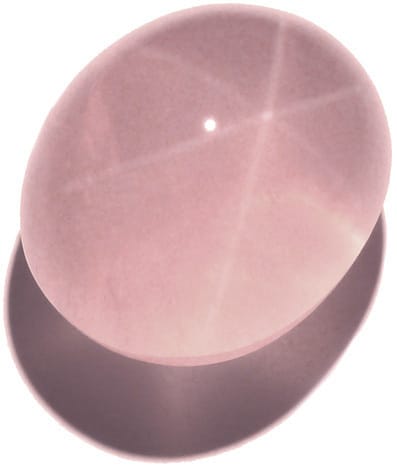 The asterism of rose quartz
Rose quartz, like ruby and sapphire, can display a rare and sought-after feature: the apparent presence of bright rays forming stars with 6 or 12 arms.
A six-pointed star can sometimes be found in rose quartz, which is then called “star rose quartz“. This effect, known as asterism, gives it an almost magical appearance. The presence of microscopic titanium-oxide needles called “rutile” explains this property, revealed after a cabochon cut.
The official name “rose quartz” is relatively recent. In earlier times, rose quartz was sometimes called: Ancona ruby, Bohemian ruby, Silesian ruby… These names are no longer in use today.
In the 18th century, mineralogists referred to rose quartz under various formulations. In Latin: “cristallus colorata rubra“, or in French “cristal de roche couleur de rubis” (ruby-coloured rock crystal). André Brochant de Villiers, who gave his name to another mineral species (brochantite), called it: milky quartz or rose quartz.
Rose quartz throughout history
The earliest traces of rose quartz use appear in Mesopotamia (Iraq) and date back some 7,000 years.
Rose quartz is present in every civilisation on earth, most often in the form of jewellery and carved figurines. It was also cut to make tools: chisels, polishers and arrowheads have been found in North America (as far as Greenland) and South America (Mexico, Argentina).
Everywhere, amulets, talismans, lucky charms and even love potions drew on the love-related virtues of rose quartz.
Rose quartz in ancient Egypt
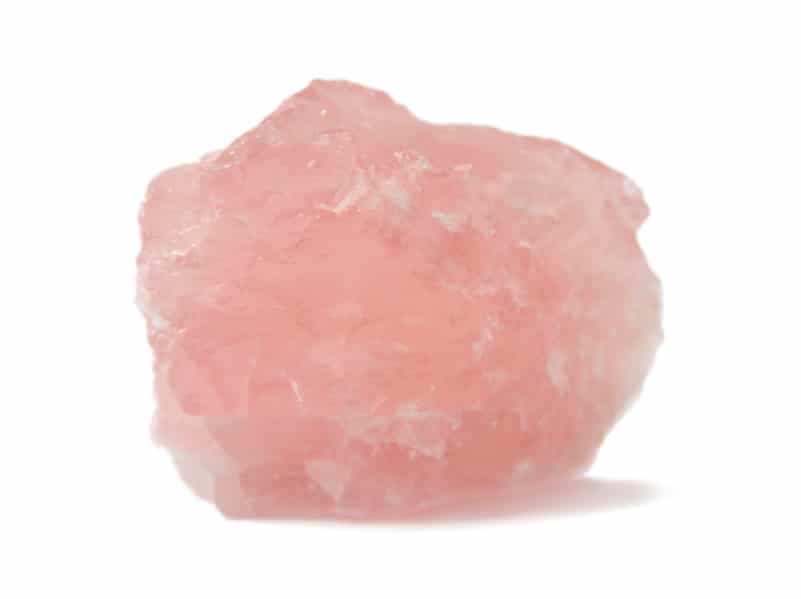
In ancient Egypt, rose quartz was used in various cosmetics for its softening and purifying properties. It brightens the complexion, prevents ageing and quite simply enhances beauty! Finely ground rose quartz powder makes an excellent scrub for skin weathered by the sun.
Excavations have brought to light beauty masks, in the form of an ointment, placed in tombs. Rose quartz reduced to powder, sometimes combined with myrrh, was mixed with a plant- or animal-based fat. The resulting salve was kept in an alabaster or marble pot closed with a small lid.
We now know that silicon protects the skin’s collagen and elastin fibres. Today, rose quartz is frequently used in beauty products, which still tout the same benefits: a fresh complexion, softness and youthful skin.
Egyptian mythology seems to have dedicated rose quartz to the cult of Isis, goddess of divine youth, loving sister and wife of Osiris.
Rose quartz in Greek and Roman civilisations
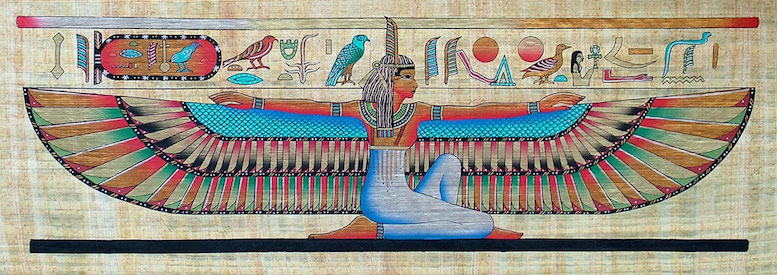
Other ancient civilisations also dedicated rose quartz to the goddess of love. This universal goddess bears different names according to her origins: Aphrodite in Greece, Venus in Rome, Astarte in Phoenicia, Ishtar for the Assyrians and Turan for the Etruscans.
From Greek mythology, the unhappy tale of the lovers Aphrodite and Adonis is very often recounted: a wild boar, sent by the jealous husband Ares, mortally wounds the handsome Adonis. Aphrodite, rushing to save him, cuts herself on a thorny bush, mingling her blood with that of Adonis. The lovers’ blood crystallises and gives birth to rose quartz.
This mythological version does not appear in the only text that relates the episode: Ovid’s “Metamorphoses”. The Latin poet, a specialist in Greek mythology, writes: “…from this blood springs a flower of the same colour as that of the pomegranate.” It would therefore be a plant (often identified as a rose or an anemone) and not a mineral. No matter: thanks to this mythological story, rose quartz takes on its full symbolism of love and reconciliation.
Before our era, the Romans already used all sorts of seals. Rose quartz was the stone most commonly used to carve ring-shaped seals known as “annulus” (ring). The Romans thoroughly mastered the intaglio technique adopted for wax sealing. The designs are engraved in hollow relief, the opposite of the cameo, whose engraving stands out in relief. These rings bear various inscriptions or feature distinctive marks decorated with plants or animals.
In the Middle Ages, Roman seals were frequently reused to adorn all kinds of objects: crowns, vases, reliquaries…
Rose quartz in China and Asia
Rose quartz also holds a major place in the art of Eastern civilisations. In China, jade carving has been practised for 3,000 years. Jade, the stone of immortality, is associated with nephrite, agate, malachite, turquoise, rock crystal and rose quartz. Master lapidaries sometimes take years to complete their work! Rose quartz poses a particular difficulty: it can only be cut in a single direction; one clumsy move causes a fracture that spreads as a milky streak throughout the stone.
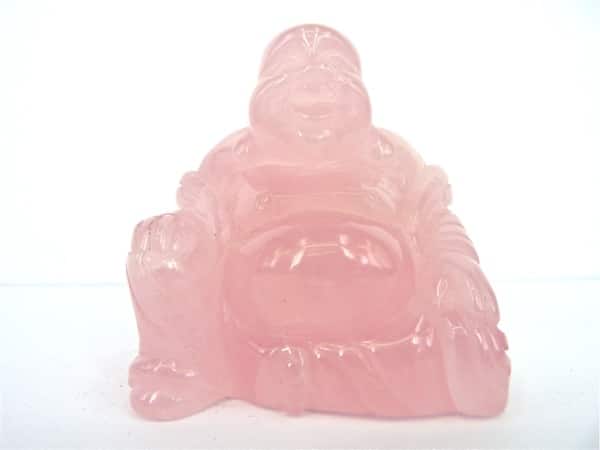
The statuettes depict Buddha, the compassionate goddess Guanyin, warriors or all kinds of chimeras. Rose quartz figurines also draw inspiration from nature: various animals, often birds, peonies…
Rose quartz comes mainly from the island of Hainan. The intensive working of the local rocks gave this island another name, renaming it Qiongzhou (Kingdom of the Quartz Jewel).
Tibetan Buddhism also makes abundant use of rose quartz for Buddha sculptures, and for making malas (a kind of prayer beads), bracelets, singing bowls and incense burners.
In France, from the 17th century onwards, “chinoiseries” in rose quartz were all the rage and filled the cabinets of curiosities in châteaux. Louis XIV became the first collector, as the ambassadors of Siam (Thailand) sent, by ship, around 1685, a large number of diplomatic gifts.
The virtues of rose quartz in lithotherapy
Rose quartz has always been defined as the stone of the heart, of love and of peace. It has the privilege of easing the physical ailments of the heart, our body’s driving organ, and the disturbances of our emotional core. Through its detoxifying and calming virtues, rose quartz spreads its gentleness over our body and throughout our relationships with others.
The benefits of rose quartz against physical ailments
- Headaches
- Fibromyalgia
- Superficial burns and blisters
- Healing
- Tachycardia, palpitations
- Dizziness
- Blood circulation
- Blood pressure
- Restless sleep, sleepwalking
- Insomnia
- Depressive states
- Convalescence
- Healing of wounds
- Wrinkles and fine lines
The benefits for the mind and relationships
- Promotes calm and inner peace
- Restored serenity and tranquillity
- Repairs emotional wounds
- Calms states of anxiety
- Soothes heartbreak
- Eases a lack of confidence and restores self-esteem
- Helps overcome emotional deprivation in childhood and past traumas
- Smooths over relationship difficulties
- Fosters empathy
- Helps overcome jealousy
- The stone of artists, it fosters an understanding of art
- Helps bring feelings to the surface
- Keeps nightmares away
How to use rose quartz in lithotherapy?
Place rose quartz stones in your home, in the bedrooms for example: the quartz will then gently absorb negative energies and radiate beneficial vibrations conducive to restful sleep. You can, of course, also wear it on you, either as a pendant or as a fragment or tumbled stone that you slip into your pocket.
Naturally, rose quartz is associated with the 4th chakra, that of the heart. Place the stone at this level to benefit as closely as possible from its soothing virtues. It is associated with the astrological signs of Libra and Taurus.
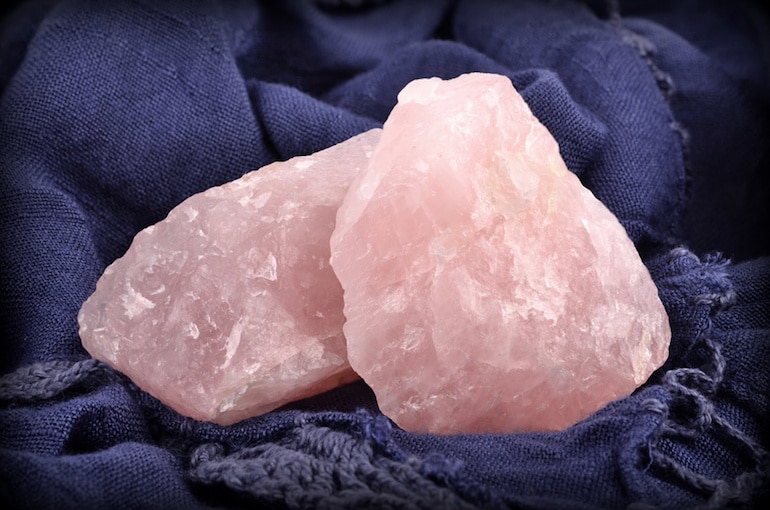
You can prepare an elixir by letting rough rose quartz infuse in a sterilised container holding 30 dl of mineral or distilled water, protected by cling film. Place the container outdoors in a sunny spot for at least half a day. To keep this elixir for a few weeks, you will need to add 30° alcohol (1/3 of the volume prepared).
You can also make a relaxing massage oil by letting rose quartz macerate for a few days in calendula oil (or another oil).
Cleansing and recharging rose quartz
Rose quartz should be cleaned and purified regularly. Place your stone in a glass or earthenware container, filled preferably with distilled, salted water. You can also hold it for 10 minutes under running tap water.
Recharging is done inside an amethyst geode or, more simply, in the morning sun or under the rays of the moon. Absolutely avoid leaving it for long under a scorching sun, as rose quartz risks losing its lovely colour! Should that happen, try to restore its good looks by keeping it in the shade for as long as possible. Finally, rose quartz appreciates a light spray of rose water, which brings back all its freshness.






Leave a Reply